Keen for Zucchini

Imagine you are a 10 year old girl from Hong Kong and tasting lots of strange food, like anemic cottage cheese, peanut butter and banana sandwiches, cheese with fruit, now throw in CHOCOLATE ZUCCHINI CAKE???????  Chocolate with a vegetable? No, no, no!  But once I had a bite and didn’t taste vegetable,  just chocolate cake, my mind was boggled and intrigued.  Later I realized zucchini essentially added moisture without flavour to the cake.  This might have been one of my earliest lightbulb moments that delicious dessert can also mean healthy.

As part of the summer squash family, the zucchini, also known as a courgette in other parts of the world, orginated in Italy, hmmmm it seems {kale} and I are on an Italian theme this summer.  We’ve got some growing to gigantic proportions as usual, because they grow so easily and sometimes we just forget the squash is secretly growing under their children’s umbrella sized leaves.  It is best to eat them when they are smaller because they are sweeter, but alas.  So with our bounty I’ve been making frittatas, baked zucchini sticks, zucchini muffins and stuffed zucchini blossoms.

One of the bonuses of having your own zucchini plant is having access to the blossoms.  I remember the heavenly stuffed blossoms we had in Italy.  The blossoms were filled with a creamy ricotta and then lightly breaded and fried.  I did make a vegan version, substituting with tofu and mushrooms, which turned out quite nicely.  But for a quick lunch, I dip the blossoms first in egg, then seasoned bread crumbs, and fry in a little oil.  Now before you go and pluck off all the blossoms from your zucchini plant, pluck only the ones that do not have the actual zucchini ”fruit” growing out of them. These are considered the male flowers. They should be eaten on the same day as they are picked because of their delicate quality.

Zuchini Bread 2 Kake2Kale

Years ago I had clipped a recipe out of a magazine that has served me well, a nutty seed quick bread.  Hmmmm, what if I added zucchini to this classic.  So I did and it turned out pretty well, I’ve cut down the sugar, but if more sweetness is needed, feel free to increase the sugar.  I like to serve this bread with jam.  And in this case, we’ve got {Kale’s} homemade blueberry jam.


The Superfoods in my recipe:
Zucchini – contain a high amount of vitamin C, vitamin B6, riboflavin, manganese, potassium and also lutein, which protects the eye against light damage and macular degeneration.
Black sesame seeds – are a good source of calcium, phosphorous, protein, magnesium, iron and is rich in vitamin E, which is an antioxidant.  In Chinese medicine prescribed to reverse black hair going grey.
Pumpkin seeds –  Good source of protein, minerals, Omega 3, tryptophan (which is an amino acid which helps with sleep). Because of the high amount of zinc in this seed, not only is it good for immune health, it can also have positive results for prostate health.
Flax – Has a high amount of Omega 3’s. High in soluble fibre, which lowers cholesterol, and a good of the bone strengthening mineral boron. Contains lignans which helps your body to rid itself of toxins ie. xenoestrogens (see broccoli). Make sure the flax seeds are ground/milled when you eat them, if not, the whole seed will just pass through your system undigested. Also, I store mine in the freezer, as they have oils in them and can go rancid quickly.

Zuchini Bread 3 Kake2Kale

  Zucchini Bread makes one 9” x 5 “ loaf

  • 2 eggs
  • ½ cup grapeseed oil (or any other vegetable oil)
  •  1 cup light spelt flour
  • 1 cup oat flour1/4 cup coconut sugar (can add more if desire)
  • 1 t. baking powder
  • 1 t. baking soda
  • ½ t. salt
  • 1 cup grated zucchini
  • 1/3 cup chopped nuts*
  • 2 T. each: flax, sesame seeds, pumpkin seeds*

Directions:

  • Preheat oven to 350 F.  Line 9″x5″ loaf pan with parchment paper.
  • Whisk egg and oil together in a large bowl.
  • Combine the dry ingredients in another bowl.
  • Then add the dry to the wet ingredients until just mixed.
  • Then add the zucchini, nuts, and seeds to the batter, stir to mix.
  • Pour into the loaf pan and bake 50-60 mintues, or until toothpick inserted in the centre comes out clean.
  • Cool 10 minutes, then remove from pan and cool on wire rack.

*Feel free to substitute other nuts and seeds.
Eat well, live great! {Kake}
From the Culinary Trail – Ciaoing Down in Italy Part 3

A Tale about Tomatoes From Tuscany

Santa Luce Kake2Kale
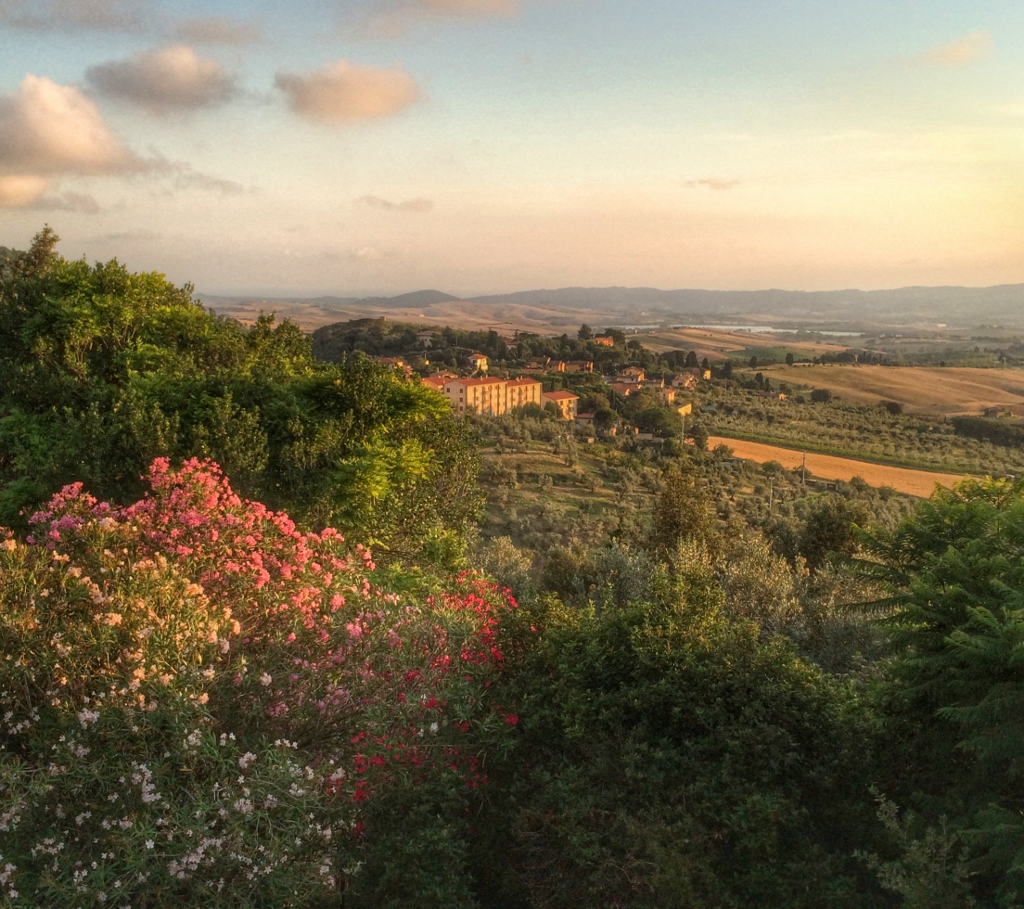
During my university days, a friend affectionately nicknamed all guys as spuds and girls as tomatoes.  The lingo kinda went viral and was used in everyday conversations on and off campus by a large network of students.  As an example, a bachelor pad was referred to as the spud pad and good looking girls were called hot tomatoes. I trust you get the idea.  To this day, I sometimes refer to my university girlfriends as tomatoes!  Getting back to this Italy trip, our group of tomatoes traveled to Tuscany following our awesome stay in Cinque Terre.  For a week, our base was a rustic Tuscan villa, surrounded by vineyards and olive trees.  We idled away the days with pool time, games, reading, visiting medieval villages, finding interesting markets and cooking up incredible meals.  There were too many culinary finds and experiences to sum up in this post. Instead, this third part of my adventures with superfoods in Italy is focusing on delicious Italian tomatoes, that is – the vegetable, but botanically classified as a fruit.

If there is one edible item that unifies Italy, I think it’s the tomato or pomodoro! Italy is the most important country in Europe for the production of tomatoes.  The tomato plant originally was brought to Italy, specifically Tuscany, by the Spaniards around 1548 from South America.  At that time, tomatoes were ornamental and they didn’t become a food staple until 200 years later.  Today, there are  hundreds of varietals in Italy; but I heard the most popular is the San Marzano pomodoro.

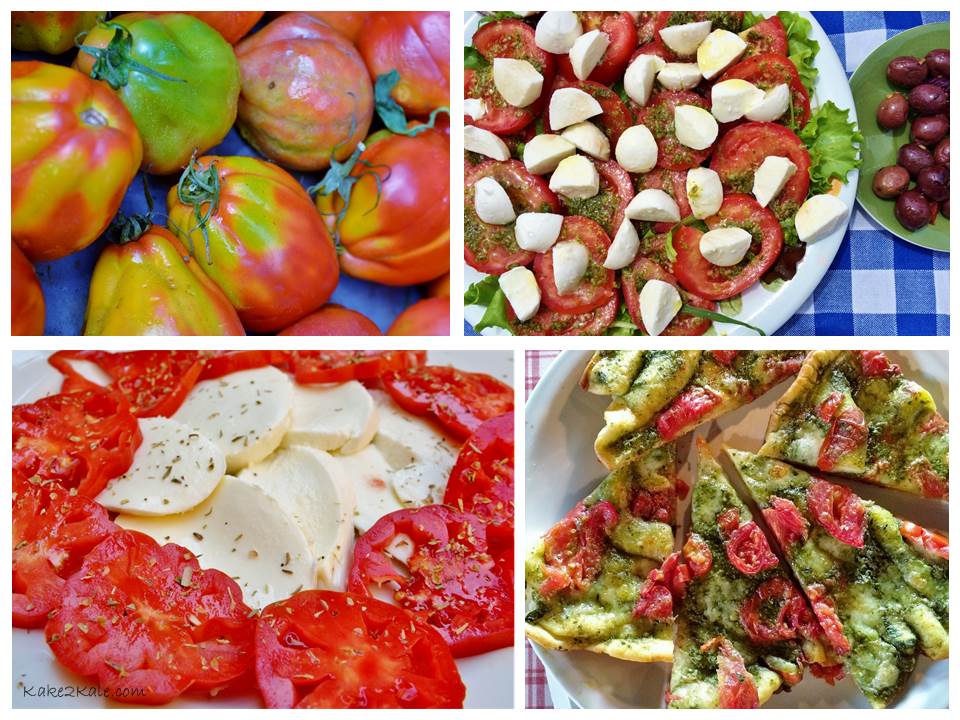
There is something about Italian tomatoes. They are all incredibly tasty – plump and juicy – compared with the mainstream varietals that we get in North America.  When possible, I spend a bit more money and buy heirloom tomatoes because of their delicious flavours. In Italy, all their tomatoes are like hyper-heirloom tomatoes. So, it was a joy to eat an abundance of yummy tomatoes during our time in Tuscany with Caprese salad, anchovies on bruschetta, pasta sauce and pizza…to name a few.  Just when I thought we had exhausted ways to prepare tomatoes, I stumbled across something that I had not seen before.  While sitting at the pool and flipping through a local food magazine, I saw an article about a hand mill for making fresh tomato puree. There was no doubt in my mind, I had to get one while in Italy!

Tuscany 3 Kake2Kale

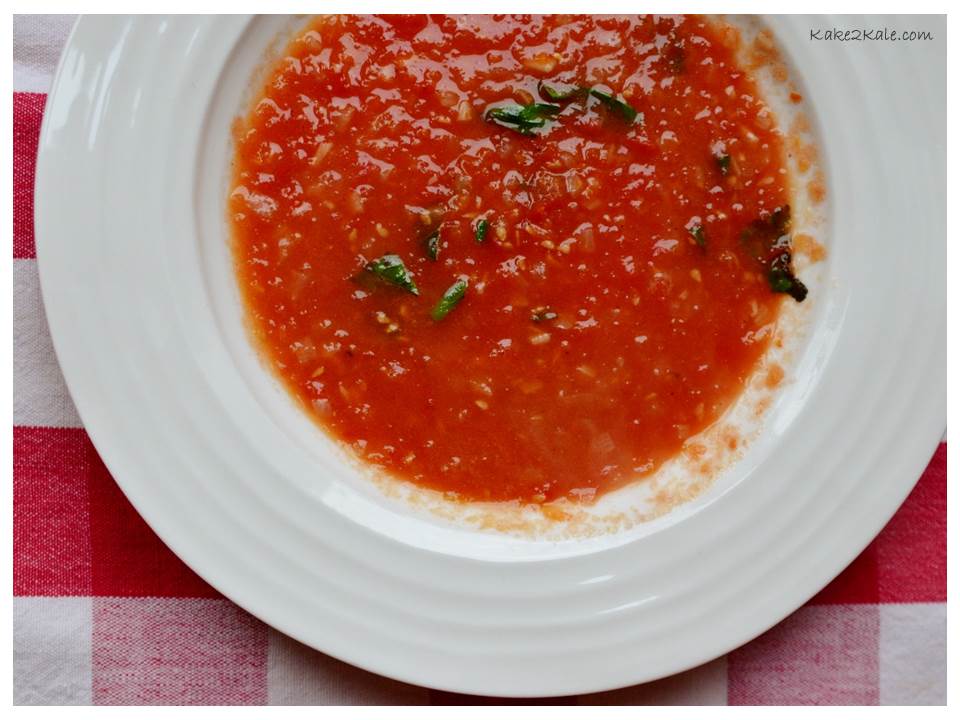
Sante Luce was the closest village and it had a tiny hardware store which could order the mill for 26 euros, but it wouldn’t arrive in time.  Then I searched for the mill at the next local outdoor market, and presto, I found the mill at a stall (actually, it was a converted truck) selling household goods. The stainless steel version cost me 11 euros!  Although I was anxious to try it out at the villa, I ran out of time before flying home to Vancouver.  It took me several weeks before I could face a regular tomato in our food shops.  Even my favourite heirloom versions are not close to the quality that I enjoyed in Italy.  Nevertheless, I used the mill to make a fresh puree for a tomato soup and it turned out to be quite delicious.  Imagine how much better it could be if I had real Italian tomatoes!

I liked the texture of the soup without the tomato skin (filtered by the mill); but note that the skin has flavonols which are healthy for you.   As a superfood, tomatoes are high in nutrients, vitamins (E and C ), beta-carotene, potassium, and fibre. They also contains zea-xanthin, which is good for eye health. Tomatoes are known to protect against various forms of cancer.  They are chock-full of lycopene, an antioxidant that provides the red colour and fights free-radicals, supports prostate health, and protects skin from sun damage. Interestingly, lycopene is best absorbed in our bodies when tomatoes are cooked or processed eg. puree or sauce.  Hence, having tomato soup is a great option!  However, vitamin C is retained when tomatoes are eaten raw; therefore, it is better to strike a balance of consuming cooked and raw tomatoes.

Below is my simple fresh tomato soup recipe, based on my trial usage of the hand mill.   Adding pesto as a topping is a fun option!

Tomato Soup – serves 2

Tomato Soup 3 Kake2Kale

 Ingredients and Directions

Tomato Soup 1 Kake2Kale

– 6 medium tomatoes
– 1 food or vegetable mill (with 3 discs)
– 1 small bunch of basil
– 1 small onion (diced)
– 1 garlic clove
– Salt and pepper to taste

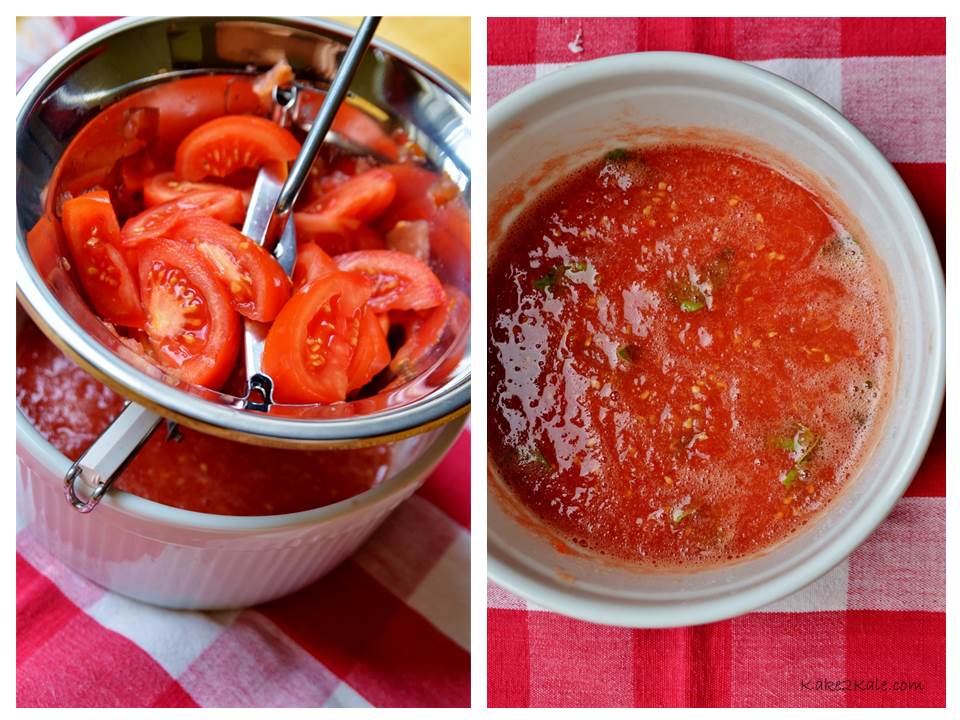
Assemble the mill with the coarse disc. Place the mill securely on top of a bowl with the mill’s feet resting on the rim. Quarter tomatoes and place in mill. Turn the blade and grind tomatoes until the peels are left in the mill. Place chopped basil in the tomato puree bowl. In a separate pan, saute the diced onions and pressed garlic. Combine the tomato puree with infused basil, cooked onions and garlic into a pot and simmer till hot. Stir in a dollop of butter.


Tomato Soup 2 Kake2Kale

After two weeks of hiking, relaxing, exploring, photographing, feasting, drinking, loading up on superfoods and catching up with dear friends, our Italy trip came to an end.  It was hard to leave Italy and much harder to say good-bye to my friends whom I admire and think are some of the most caring, smart, and gifted people I know.  On the sunny side, there will be future trips to look forward to…sooner than later I hope.

Travel Far, Explore More! – {Kale}

Tuscany 2 Kake2Kale


From the Culinary Trail – Ciaoing Down in Italy Part 2

Cool Villages, Hot Hikes and Tasty Treats!

Cinque Terre Kake2Kale
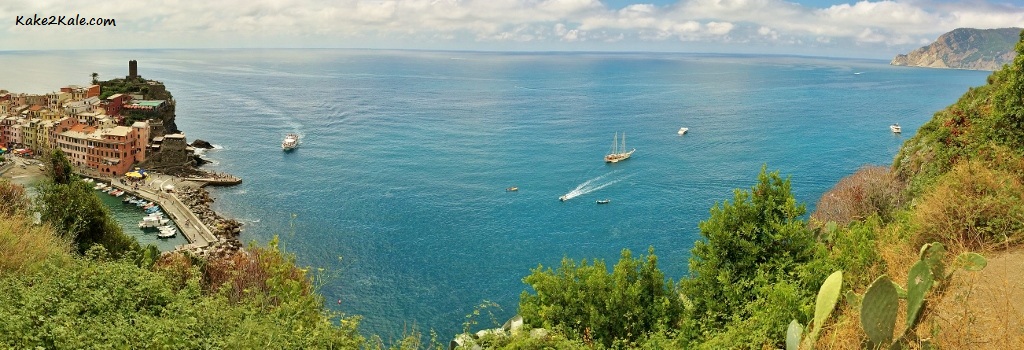
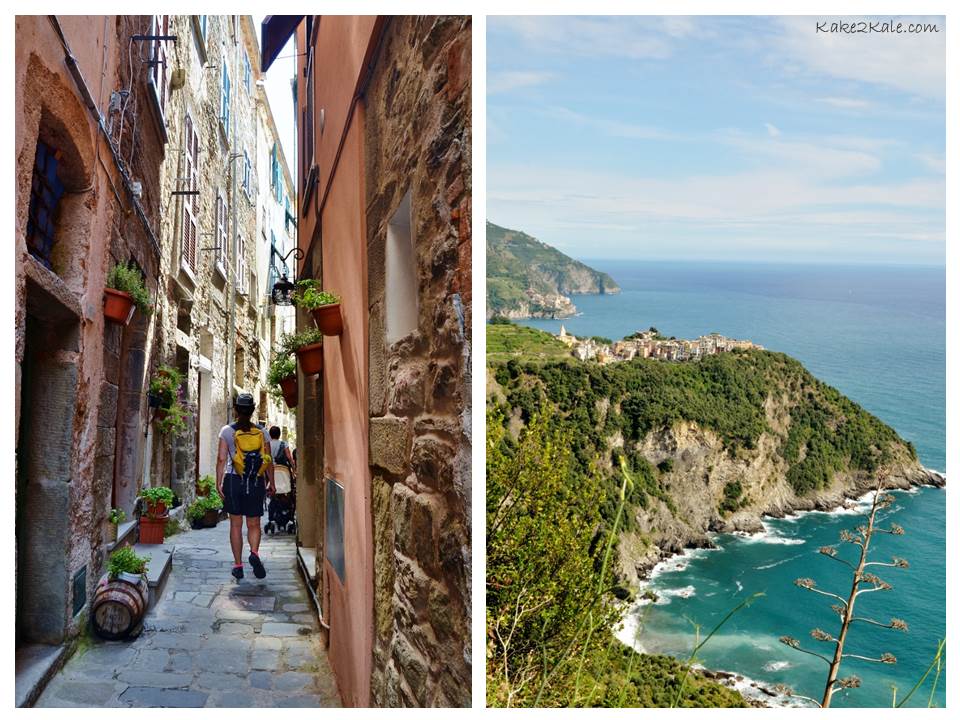
As I stand on an exposed ridge, under a blazing Italian sun, enjoying the vistas of the Ligurian coast, I couldn’t help but conclude that life in Cinque Terre is pretty superb!  First, there are five charming villages, then there is the trail system that connects them, but best of all….wait for it…there is the food and wine!  In this part 2 of 3 posts about my adventures with superfoods in Italy, I am delighted to share my perspective/tips on the hikes and my culinary finds in each of the Cinque Terre villages, plus a few train fiascos along the way.

Thanks to Trenitalia, our trip got off to a bumpy start. I landed in Pisa and my girlfriends landed in Milan. The plan was to catch trains and meet up in Monterosso al Mare. But, wouldn’t you know it, there was a nation-wide train strike on the one day we had to rendezvous. Thankfully, my train was unaffected; but my friends in Milan had to endure a 4 hour taxi ride (the only option in the train chaos) to reach Monterosso al Mare.   Their train/taxi mishap was quickly forgotten when they arrived and were greeted with a sea breeze, coastal views and a bottle of Prosecco. Incidentally, it was not the only train debacle we had on this trip.  That comes later.

When planning a trip to Cinque Terre, there are three main decisions about a stay – length of stay, village(s) for an overnight, and trails to hike.  If you like small quaint villages, the seaside, rugged coastal terrain and hiking, then you should stay at least five nights.  The five villages of Monterosso al Mare, Vernazza, Corniglia, Manarola and Riomaggiore (in order from West to East) and coastline are all part of the Cinque Terre National Park and is a UNESCO World Heritage Site.  We were happy with our decision to stay three nights in Monterosso al Mare and two nights in Riomaggiore. It was the perfect blend of days, hikes and variety.  But we also agreed that staying five nights in Monterosso al Mare as a base is another great option, especially if you find good accommodation like our groovy beachfront apartment!

Monterosso apartment kake2kale
Lemons of Monterosso al Mare

Monterosso al Mare Kake2Kale
I thought Monterosso al Mare was the most hospitable of all five villages – great vibe, good dining options, quaint artisan shops, and interesting areas to explore in/around the village.  It is also the only Cinque Terre village with a long stretch of beach.  As if that wasn’t enough, it is the village of lemons! There are lemon soaps, a local lemon pie (torta al limone), lemon gelato, preserved lemons, limoncino and much more, but my favourite was lemons soaked in their own juice with a touch of sugar – super tasty and the rind practically melted in our mouths. Limoncino is a sweet liquor, like lemoncello, but made from Ligurian lemons. Lemons are superfoods. Like other citrus fruits, lemons contain vitamin C, folic acid and a range of phytochemicals (under the antioxidant family). These all support one another in anti-cancer activity, and strengthening cardiovascular health, along with other benefits.

Gelato from Vernazza

Vernazza Kake2Kale
I cannot imagine a day in Italy without gelato.  Based on a friend’s tip, we enjoyed possibly the best gelato in Cinque Terre, in Vernazza.  To walk to Vernazza from Monterosso al Mare, hikers would take the popular scenic coastal trail no. 2. It took us about 1.5 hours with photo stops for the 4 km stretch.  In the height of summer, the trail is pretty busy.  Although Vernazza is cute, we’re glad we didn’t stay overnight because it was unbearably crowded and touristy.   But, gelato at Gelateria Il Porticciolo (Piazza Marconi, 12) made the trip worthwhile.  The chocolate, lemon, coconut and pistachio choices were  phenomenal.

Basil in Corniglia

Corniglia Kake2Kale
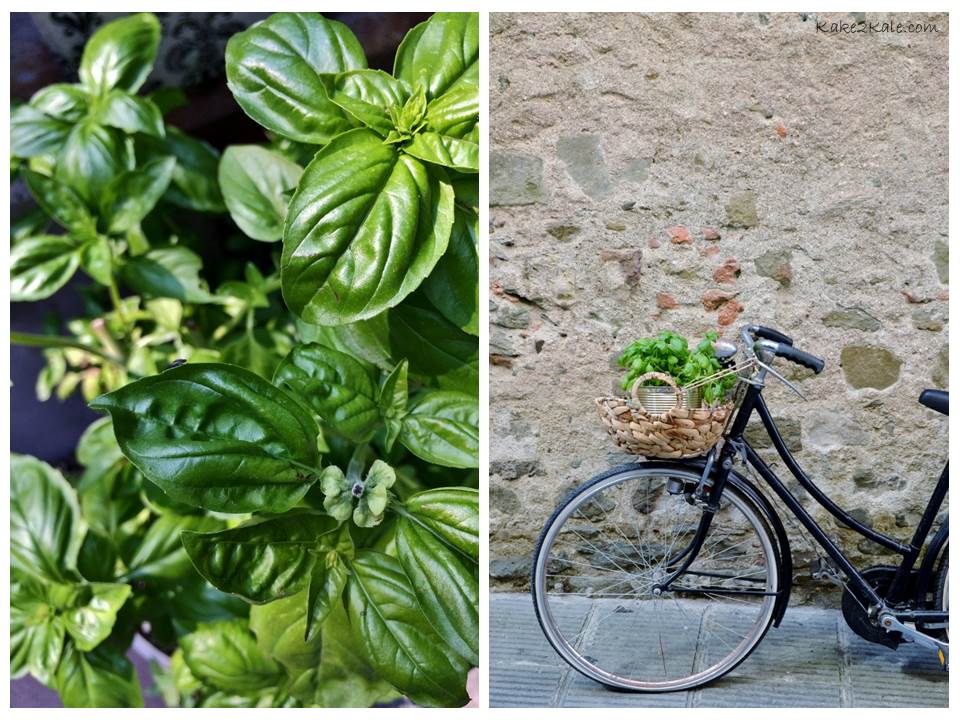
From Vernazza to the next village, Corniglia, the coastal trail no.2 is about 3.5 km and we hiked it in 1.5 hours with photo stops.  Corniglia is the only Cinque Terre village higher up on the cliff and not by the water.  This small village is a basil haven.  There is even a basil festival! Pots of the herb hang or sit everywhere you look.  At first, I thought they were for decoration but I later found out that basil grown by front doors and windows help to repel mosquitoes and flies.

Corniglia Basil Kake2kale

Sciacchetrà near Manarola

Cinque Terre 2 kake2kale
If you’re an avid hiker, the two trails that I mentioned so far are not hard.  However, they are narrow, at times rocky and there are plenty of steeper climbs and descends.  You don’t need serious hiking boots; light weight hiking shoes worked well for us.  The Cinque Terre trail system is quite extensive and impressive.  We hiked between the villages on different days but I heard that some people hike all five in one day.  The coastal trail no. 2 is the most popular because of its proximity to the water and vistas; but, sections of this trail have been closed for years because of landslides.  When we were there, trail no. 2 was closed between Corniglia, Manarola and Riomaggiore. Instead, we hiked alternate trails which are higher and in most cases, longer and harder than no. 2.  As an example, we hiked from Riomaggiore to Manarola on no. 531.  While it was not long (1.2 km), it was intense and challenging because of 32C temperatures with no shade, climbing up a steep mountain side and down into Manarola.  It took us about 1.5 hours with photo stops and panoramic views.  Manarola is as charming as the other villages but what stood out was the lovely harbour filled with sun bathers and swimmers.   While visiting Manarola, we discovered the Sciacchetra wine, a sweet wine produced in Cinque Terre from Bosco, Albarola and Vermentino grapes.  There’s a Cooperativa Agricoltura outside of Manarola where you can taste variety of wines, liquors, olive oils, jams, and other food products made from local food artisans.  It’s a bit off the beaten track and worth a visit if you’re looking for a non-touristy spot.

Seafood Cones at Riomaggiore

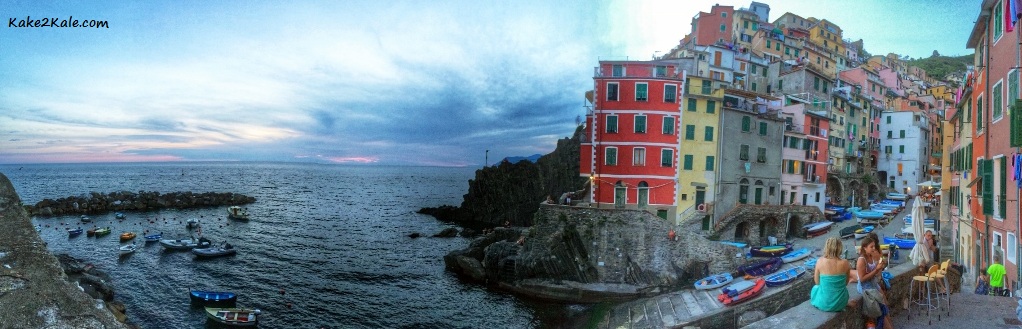
Riomaggiore Kake2Kale
As previously mentioned, we stayed a couple of nights in Riomaggiore. It is the fifth and most easterly Cinque Terre village.  For me, the two memorable food experiences in this village are: i) our amazing dinner at Enoteca Dau Cila (located in the harbour), and ii)the fried seafood cones, filled with sardines, anchovies, calamari, shrimp and veggies, from Il Pescato Cucinato.  Sure, it is deep fried and take out food but it was unique and tasty!  And, in case you didn’t know, anchovies and sardines are superfoods.  They have similar nutritional value and are a good source of protein, calcium, zinc, phosphorus, magnesium, iron, omega-3, vitamin B, and riboflavin.  These properties are good for neurological, cardiovascular, digestive, skin, bone, muscle, vision and blood health.  As sardines and anchovies are low on the ocean food chain, they also contain little mercury.

Seafood take out Riomaggiore Kake2Kale.com

From Riomaggiore, I also recommend the epic hike to Portovenere (Unesco World Heritage listed) on trails no. 3 and no. 1 with a return boat ride to Riomaggiore.  This 13 km hike takes between 5-6 hours and the last 1/3 of the hike is along steep cliffs with stunning views.

For non-hikers, the Cinque Terre villages are accessible by car, boat and train. By train, each village is connected by a 5 minute train ride with the exception of Manarola-Riomaggiore which takes 2 minutes.  However, this brief 2 minute ride can turn into a 2 hour misadventure if you’re not careful.  We had no idea that the Riomaggiore station platform is shorter than the length of the trains.  There were no announcements.  So, while on the train we got stuck in the last car which was nowhere near the platform.  Because the trains were packed, we could not move to a car near the platform; hence, we couldn’t get off the train.  Worse yet, the next stop was Portovenere – a 15 minute ride away, plus an hour wait for a train back to Riomaggiore!  Luckily, we managed to jump on a train back without waiting but beware if you go!

If you haven’t been to Cinque Terre, then I hope you’ll get the chance one day.  The hikes, the villages and the food will not disappoint!

Travel Far, Explore More! – {Kale}

From the Culinary Trail – Ciaoing Down in Italy Part 1

The Trofie al Pesto Trail of Cinque Terre

You say pesto, I now say trofie! Let me explain. Despite all of us living in different parts of the world, my closest girlfriends from our university days continue to meet up whenever and wherever possible.  I was thrilled when Italy was selected as the get-together destination this year.  The land of  ‘dolce vita’ is likely number one or two on my list of countries worth visiting umpteenth times.   Italy feeds not only my travel photography appetite, but also a craving for my favourite cuisine.  I adore all Italian food, but my best-loved item is pesto. It is simple to make, is healthy for you and produces a luscious flavour for so few ingredients. I add this bold green, fragrant sauce with nearly everything – from salad dressing, sandwich spread, to chip dip.  With pasta, Pesto with angel hair pasta was my combo of choice; but now, it is Trofie al Pesto!  This part 1 of 3 posts, covering my adventure with superfoods found in Italy,  focuses on Trofie al Pesto from Cinque Terre.

Early this July, our group of friends met up in Cinque Terre which is a portion of the Liqurian coast (stretching from Genoa to Pisa) in north-western Italy.   When people think of Cinque Terre, the popular perception is about hiking between the five colourful villages perched on the rugged coast. This was our main reason for going.  And, lucky for me, I found out that Liquria is also a pesto paradise!  Originating in Genoa, around the 16th century, the name is derived from the Genose word pestâ, meaning to pound or crush.  The traditional pesto is made from fresh Genovese basil, garlic, sea salt, extra virgin olive oil, pine nuts, Parmigiano-Reggiano and Pecorino cheeses.  I’ve tried pesto after pesto variations – from sun dried tomatoes to kale, but I still prefer the classic Pesto Genovese.  Below is the easy pesto perfect recipe that I use.

Basil Cinque Terre kake2kale
Pesto Genovese
– makes 1 cup

  • 2 cups fresh basil (add more as desired)
  • 1/3 cup pine nuts
  • 1/4 cup grated Parmigiano-Reggiano cheese
  • 1/4 cup grated Pecorino cheese
  • 2 garlic cloves
  • 1/2 cup extra virgin olive oil
  • 1 t. sea salt (add more to taste)

Directions:

  •  Combine the first four ingredients in a food processor and pulse until blended.
  • Add the olive oil in a steady stream as the processor is running on slow. Blend until smooth.
  • Add sea salt to taste.

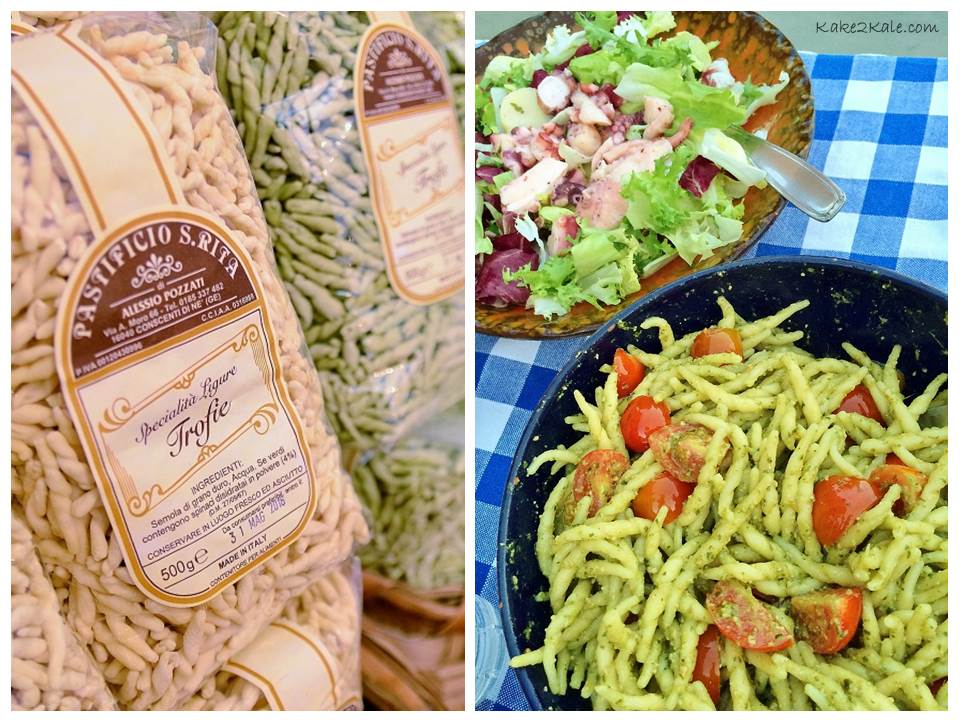
I have visited Italy on many occasions, but only discovered the wonderful trofie pasta on this trip.   Trofie also originates from Genoa and is a small, thin squiggly pasta that is made from flour and water (no eggs).  It is best accompanied with Pesto Genovese.  I love the pasta’s texture and the way the pesto wraps around its twisted form.  A popular version of Trofie al Pesto includes potatoes and green beans.  We enjoyed adding tasty Italian tomatoes when we made it on the trip. During our time in Cinque Terre, I couldn’t get enough of Trofie al Pesto and ate it every day.  It was already a dream to hang with my friends in Italy, but being on the trail of trofie and pesto was a special treat!

Trofie Pasta Kake2kale
To my surprise, we didn’t see the trofie pasta again on the rest of the trip in Italy and I have yet to find it in Vancouver.  However, it is easy to make.

Trofie Pasta 
– serves 4

  • 2 cups all-purpose flour
  • 1 t. sea salt
  • 3/4 cup water

Directions:

  • Place the flour and sea salt in a bowl, then make a well in the middle.
  • Add the water in the well and create the dough by mixing the ingredients in a bowl with a fork then with your hands, adding more water or flour as needed to avoid the dough being too sticky or dry.
  • Place dough on floured flat surface, then knead it with your hand by folding and turning repeatedly until the dough is smooth.
  • Create a ball and wrap it in plastic.  Let it rest in the fridge for at least 1 hour.
  • After the dough has rested, place a small portion (eg 1/4) of the dough on a floured surface and roll the dough into a 1/3″ roll or rope with your hands.
  • Cut the roll into 1/4″ pieces and sprinkle flour over them.
  • To shape, pick up each piece and roll it quickly between the palms of your hands, in one direction, to create a twisted tube with tapered ends.
  • Open your palms to drop the trofie piece onto a floured cookie sheet but pieces should not touch.
  • Repeat with remaining dough.
  • Cook fresh the pasta in boiling water (usually a few minutes for al dente) within 1-2 hours or refrigerate for later use.  As an option, I like adding a bit of salt and olive oil to the boiling water.

Superfoods to highlight are:

Basil – Rich in vitamin C, A, K, Magnesium, potassium and calcium.  Basil’s antioxidants are good for heart health.  Loaded with beta-caryophyllene, basil offers anti-inflammatory benefits.  It also has high anti-bacterial and anti-aging properties.  Basil can help fight against various medical conditions.  Its phenolics (specifically, vicenin and orientin) are a DNA protector.  It is a  great source of essential omega 3 and 6 fatty acids.
Garlic – The major player in the allium family ( includes, leeks, onions, shallots, chives, green onion) contains sulphuric compounds that may help with lowering blood pressure and destroy cancer cells.  Allicin, one of these compounds in garlic is not only anti-bacterial, anti-viral and anti-fungal, but research has shown that allicin helps your body to neutralize dangerous free radicals.
Olive Oil – The benefits of olive oil are extensive and best described on the Olive Oil Times website. To summarize, olive oil has been found to be effective against heart disease, cancer, stress, blood pressure, diabetes, obesity, rheumatoid arthritis, and osteoporosis.
Pine Nuts – This seed has the highest amount of protein found in any nut.  They are the only source of pinoleic acid, an appetite suppressant.  They contain a high concentration of oleic acid which is good for heart health. Pine nuts are also rich in iron and packed with antioxidants.

Buon Appetito!   Travel Far, Explore More! – {Kale}