From the Culinary Trail – An Appetite for Argentina Part 2

Cruising Ruta 40 from Cafayate to Cachi.
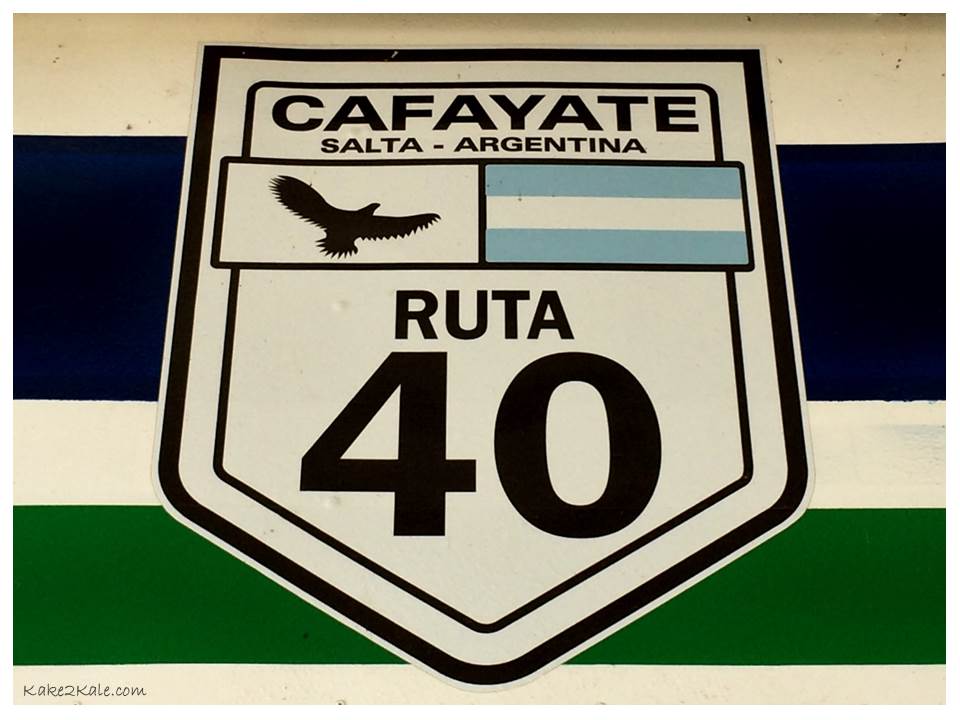
ruta 40 kake2kale

Our car bounced and tossed on the single track dirt road for what felt like hours.   We were in the middle of nowhere and the urge to turn around grew stronger with every lurch and blinding bend. Then, ahead of us we saw water running across the road. Find out more, later.

If you like road trips, then you may be interested in Ruta 40 (RN40).  It is one of the world’s longest highways and is Argentina’s longest national route, stretching 5000 km along the spine of the Andes Mountains between the southern and northern tips of the country. As a fun comparison, America’s famous Route 66 is roughly 4000 km long (east to west).  Outside of Argentina, awareness of RN40 likely grew because of the ‘Motorcycle Diaries’ movie which popularized Ernesto ‘Che’ Guevara’s motorcycle trip through South America, including RN40.   Considered one of the wildest and most remote roads on the planet, RN40 crosses 27 Andean passes (as high as 5000 m), 20 national parks, and numerous UNESCO World Heritage sites. Much of the route covers desolate topography with a scattering of frontier villages.  This is not an ordinary route.

I have been fascinated with RN40 for a while. However, I haven’t had the time or means to do the entire trip, which I suspect would take 4 weeks at a leisurely pace.  Instead, I am content to drive shorter portions over several visits.  My first segment was completed in 2007 when I visited Patagonia. Recently, I cruised the portion from Cafayate, Molinos, Seclantes to Cachi.  This last trip was, without exaggeration, one of the best scenic drives of my travel life. But, in Kake2Kale style, let’s talk about the food first!   Then, I will retrace our epic drive and provide a glimpse of what I discovered.

Traditional Cuisine

One would expect the food in these remote villages of the RN40 to be pretty basic. Instead, I was pleasantly surprised by the range and quality of the meals, from traditional to fusion.  Because I was craving typical dishes, I found the local specialties more interesting. Aside from the empanadas (described in the previous post, part 1), I thought the goat soup, locro, tamale and humita were all exceptionally tasty and good value! And, they included a variety of superfood ingredients.

Cachi Goat Soap kake2kale

I don’t have the statistics, but based on a visual survey I think there are more goats than cows in the northwest. And, judging from the amount of goat cheese (Queso de cabra) available, I think I’m right. Besides, the terroir is more suited for goat farming.  Because of the high altitude and cooler mountain weather, it is easy to understand why goat soups (pictured above) and stews are popular.

Cafayate Goat Stew kake2kale

Locro (pictured above) is a heartier and thicker stew that is made from corn, white beans, and potatoes.  It can include chorizo, beef, pork or goat. Or, the vegetarian options include chickpeas and pumpkin.

At first, I thought tamales and humitas were the same since they are both wrapped in corn husks and boiled.  But, they are different. There are variations of the stuffed ingredients, depending on the village or region; but, in general I found the following.  A humita is stuffed with a dough mixture of fresh corn, onion, garlic, and spices. Sometimes goat cheese is added.  It is most often wrapped in a rectangular shape with a tie in the middle (pictured below, left). On the the other hand, a tamale is stuffed with a dough of cornmeal and ground or shredded meat. Other ingredients could be boiled eggs and/or cheese.  The parcel is rounder and tied on one end or both ends (pictured below, right).

Now that the gastronomic highlights have been covered, the rest of the post is all about the beauty of the route.

tamale humita kake2kale

Wines of Cafayate

Armed with a sense of adventure and a regular rental car, with no 4×4, GPS or maps (just a few Google Map screen shots), our party of four friends set out from Salta airport and headed south (190km on a paved highway) to the high-altitude wine region of Cafayate in the Calchaquí Valley.  Although the region is not as famous as Mendoza, Cafayate’s reputation is improving.  The area is best known for the Torrontés white wine, and rarely seen canopy trellis vines. The relatively obscure Torrontés varietal is produced only in Argentina and is a genetic hybrid of two varieties – criolla and muscat of Alexandria –  brought to the country in colonial times.  As a fan of muscat grape, I enjoyed the Torrontés wines’ aromatic, fragrant and floral notes.  Sitting at an elevation of 1700 metres, I understand that grapes develop  thicker skins as protection against the intensive sunlight and radiation; hence, allowing the grapes to ripen more completely.  Besides Torrontés, other popular varietals include Cabernet Sauvignon, Malbec, Tannat and Merlot.  Most memorable and best valued wines on this trip are: i) Bodega Nanni Rosado, Syrah and Tannat Reserve, ii) Bodega Quara Malbec and Torrentes Tardio, and iii)  Bodega El Porvenir Cabernet and Malbec. Sadly, these are not readily available in Western Canada.

Cafayate 1 kake2kale

The wine region’s setting is remarkably dramatic. Situated at the edge of the Andes Mountains, the massive green vineyards are a strong contrast to an area that is largely desert-like and sparsely populated.  At its heart is the quaint and sleepy town of Cafayate.  Here, sampling the Torrontés and Malbec ice cream is a must.

From Cafayate, we picked up the RN40 and travelled north to the villages of Molinos and Cachi as overnight stays.   The route is a barely maintained gravel road (sometimes grated) that is prone to flooding because it crosses river beds of all sizes.  We decided to travel in September because it is the season between the winter melt and summer rains.  We hoped for dry weather, but knew there was a risk of the road being impassable, especially since we didn’t have a 4×4 truck.  As we set out and heard there was a storm brewing, I secretly wished we had rented the more expensive all-terrain vehicle.

Molinos and Colomé
molinos kake2kale

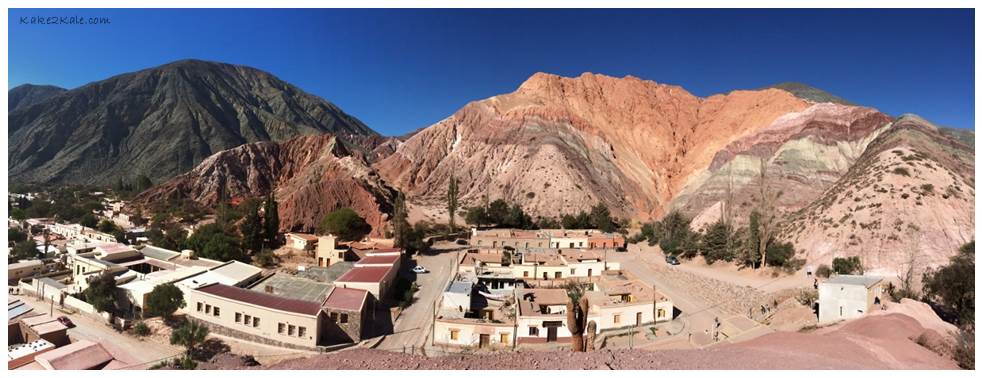
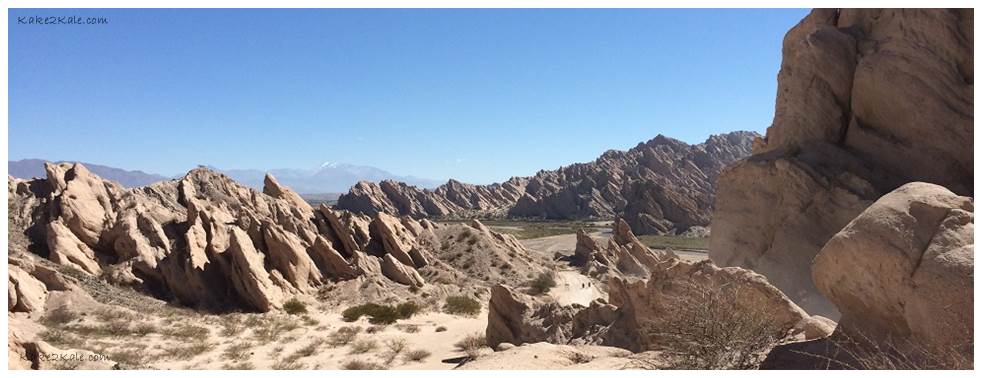
When driving the RN40, it really is the journey that matters and not just the destination.  The terrain along the drive between Cafayate and Molinos is surreal, particularly through the Quebrada de las Flechas (Canyon of the Arrows) around the 4308 km marker.  As far as the eye could see, jagged rock formations reached sharply into the air – like arrows – to heights of 20 metres. The strange landscape was covered with pink and ochre colours, depending on the sun’s angle during the day.  As we drove, the lunar-like topography felt like a scene from a sci-fi movie.  Believe it or not, UFO sightings are frequent in the area!

After a punishing and dusty 3-hour ride (including photo stops) that covered 116 km, we made it to Molinos.  But, we were not done.  We deviated off the RN40 and continued to drive another 24 km to Bodega Colomé on a more inferior road.  It was on this drive that I contemplated turning around. I really thought the suspension would break or the wheels would fall off with all the grinding and bumping of the car against the road. The water that crossed the road, which I mentioned in the opening, turned out to be minor.  We persevered and hoped there were no deeper streams ahead.  Luckily, there were none.  It felt like hours but it took one hour to drive 24 km. When we arrived, my first thought was – ‘why build a winery in the middle of nothing and make it so hard to get to’?

Founded in 1831, Bodega Colomé is the oldest winery in Argentina.  It was purchased and restored by the Hess family in 2001.   Of all the Hess wineries (US, South Africa and Australia) it’s their Colomé estate and wines (biodynamic) that are the most unique. With vineyards at elevations between 2300m – 3000m, Colomé is also famous for having the highest altitude wines in the world. Yes, the wines were good and we carried a 2012 Malbec (special lot, 2600 metres) back to Canada; but, the most impressive part about the winery is their amazing art museum.  The owner, Donald Hess, built and dedicated this museum to the works of James Turrell, an American artist specialising in light and space.  The James Turrell Museum opened in 2009 featuring 9 experimental installations which can only be visited by appointment and accompanied with a trained art guide from the Bodega.  On the day of our visit, there were only a dozen visitors (not surprising considering the crazy road) and six of us had the museum to ourselves.  Upon leaving, I understood why Hess rebuilt Colomé.  He, like me, appreciated the remote beauty of the area; however, I’m guessing he takes a helicopter to get there!

Cachi 2 kake2kale

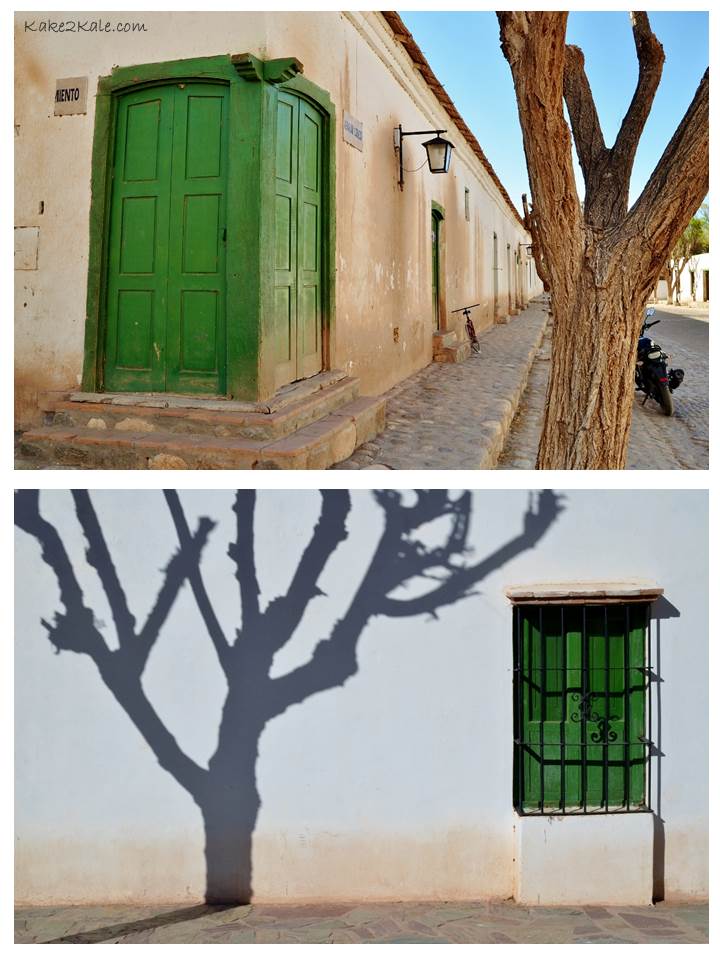
Molinos (pictured above) is a tranquil and pretty town with colonial and adobe houses.  Despite its charm, Molinos felt like a ghost town with its abandoned streets.  Stranger than that, were the corner doors in buildings.  The few people we met could not shed any light on the design and a Google search turned up empty.  For now, it remains a mystery to me.
Cachi kake2kale

Seclantás and Cachi

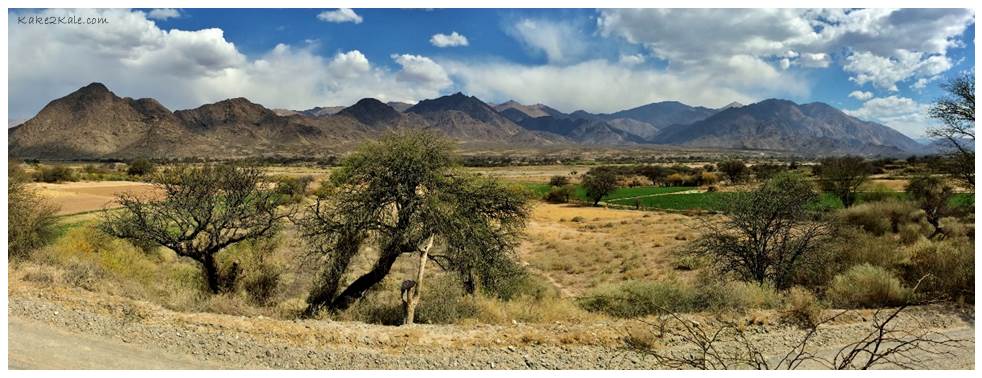
Carrying on from Molinos, we drove along the RN40 and passed more beautiful barren landscapes on route to the village of Seclantás and the ‘artisan route’.  Both are slightly off track from the RN40 but worth the detour to visit the homes of weavers selling their beautiful goods.    The main products were hand-woven ponchos, blankets, scarfs, and shawls made from llama, vicuña or alpaca wool.
Seclantas kake2kale

Seclantas 2 kake2kale

The last town on the RN40 that we visited and stayed overnight was Cachi (2280 m).  It was the antithesis of Molinos. The streets were abuzz with people strolling, shopping or dining.  There were kids riding horses, artisans selling their wares, and families gathering at sidewalk cafes.   Tour buses filled with day visitors were part of the mix, likely because of Cachi’s proximity to Salta, and most of them were Argentinian.   Even though Cachi is livelier, it retained its primitive charm.

Cachi 3 kake2kale

The distance that we drove along and off the RN40 was only 250 km. Relative to the size of Argentina, this is a short distance.  Reflecting back, the slow speed of travel on the relentlessly bumpy road was a blessing.  The pace encouraged us to soak in the views and stay longer.   As expected, the things that amazed us were the endless big scenery, the rough road, the simple villages, traditional cuisine and the isolation.  What I didn’t expect was the silence, the beautiful silence of nothingness.  When we were leaving Cachi, someone told us that the local government had approved to pave the road.  My heart sank….when they finished paving, the silence will be lost.

Travel Far, Explore More! – {Kale}


From the Culinary Trail – An Appetite for Argentina Part 1

In Praise of Salta & Jujuy.

Argentina 2 kake2kale

There’s something about Northwest Argentina that is hard to define. Vast. Mesmerizing. Remote. Diverse. Unforgettable. These, to me, are the best ways to describe the region, particularly around Salta and Jujuy.  I love Argentina and think it’s one of the more unique countries to visit. It is not overrun with tourist but offers good travel value, and experiences are still authentic. People’s first impressions about Argentina are about tango and beef.  They would miss out if that’s all they wanted to experience. While the country is receiving more international travellers, most of them are unaware of the special spots around Salta and Jujuy.   Having already travelled to Argentina’s other popular areas, like Buenos Aires, Mendoza, Patagonia, and Iguazu Falls, I feel the Northwest’s countryside is far more interesting because it’s undiscovered. There’s nothing I like more than being off the grid in a destination.

Argentina 3 kake2kale

Why is this area appealing? The top experiences are all in the higher altitude backcountry of the Andes.  These are places where time stands still and landscapes have infinite horizons.  The scenery is a feast for the eyes.  You cannot miss seeing the eerie rock formations, massive valleys and gorges, mountainsides covered with giant cacti, multicoloured slopes illuminated by the sun, salt flats that stretch forever, wild vicunas or llamas grazing,  rustic adobe villages and preserved Inca ruins.  Each place we visited contrasted with the next. We drove along winding dusty dirt roads and through dried river beds for hours with few cars in sight. Some of the mountain switchbacks were a bit nerve-racking when steep, single lane tracks were at the mercy of soil erosion.

Argentina 4 kake2kale

Beyond the arid and deserted mountains, but closer to Salta, we discovered fertile valleys with beautiful bodegas, vineyards, tobacco plantations, and colonial estancias or haciendas where gauchos ride Paso horses.  The setting is simply stunning.

Argentina 1 kake2kale

Although a good problem to have, it felt like the scenery was overwhelming and too much to absorb in 10 days. To really appreciate the distances and stops to soak in the local culture, I recommend 15 days if you like having the freedom to explore by car.  Aside from the visual stimulation, some of our nicer moments were because of the warm hospitality from the locals.  And, the regional food and wine really surprised us! Over several upcoming blog posts, I will share some of our more memorable moments.  One of them was our obsession with empanadas – we had them daily.

15 Days of Empanadas

Empanada kake2kale

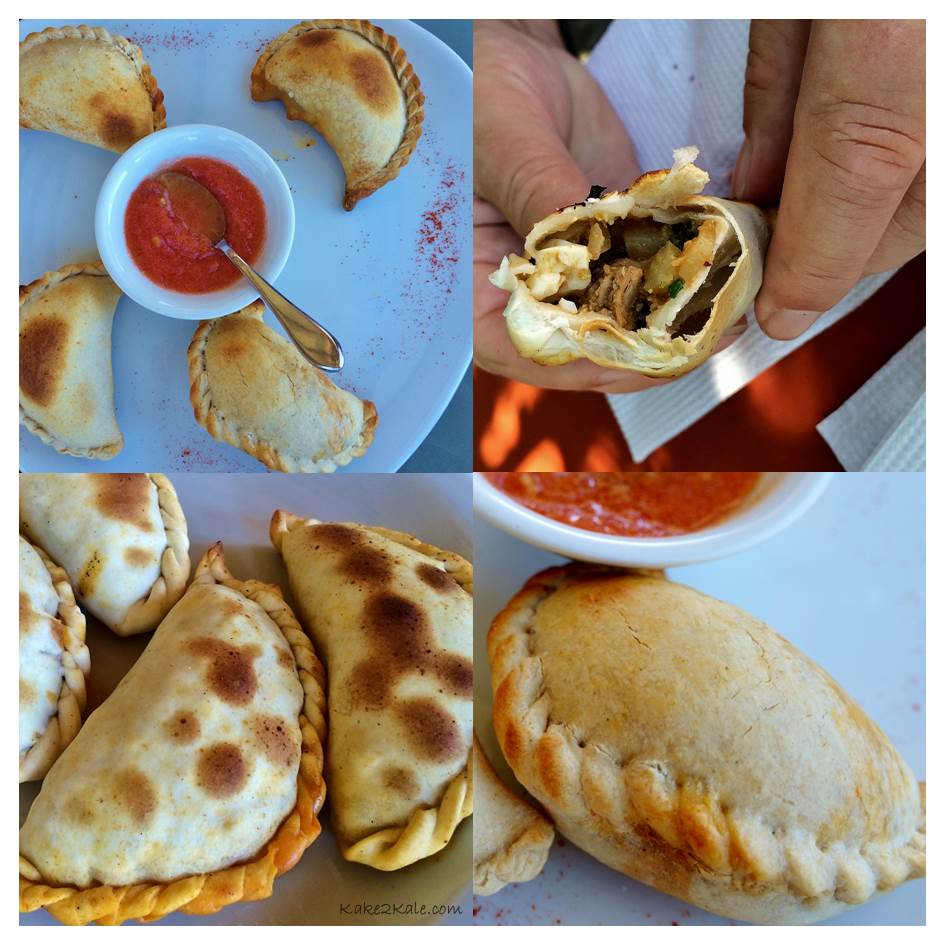
Empanadas are stuffed pastries that have a Spanish origin and are a traditional dish in many Latin American countries. The name is based on the Spanish word “empanar” and roughly means to coat or wrap with bread.  Empanadas differ slightly from country to country. In Argentina, the empanada is typically made with flour-based dough, not corn.  There are also variations in different provinces. In the Salta region, these pastries are called empanadas saltenas and are baked, not fried.  They are commonly filled with ground or cubed beef, chicken, goat, llamas, or ham.  Other ingredients include cheese, onion, boiled eggs, cumin, paprika, olives, peppers, potato, and peas. OK, some of these are superfoods so I was satisfied.

Empanada 4 kake2kale

I have always liked empanadas.  Perhaps it’s because I like anything that is wrapped – perogies, gyozas, dumplings, wontons, samosas, etc.  There are other wrapped food in Argentina, namely tamales and humitas; but, I’ll save that for another post.  Knowing that I was going to be in a country of empanadas, I vowed to have them every day.  And so I did, at least once a day for 15 days!

Empanada 3 kake2kale

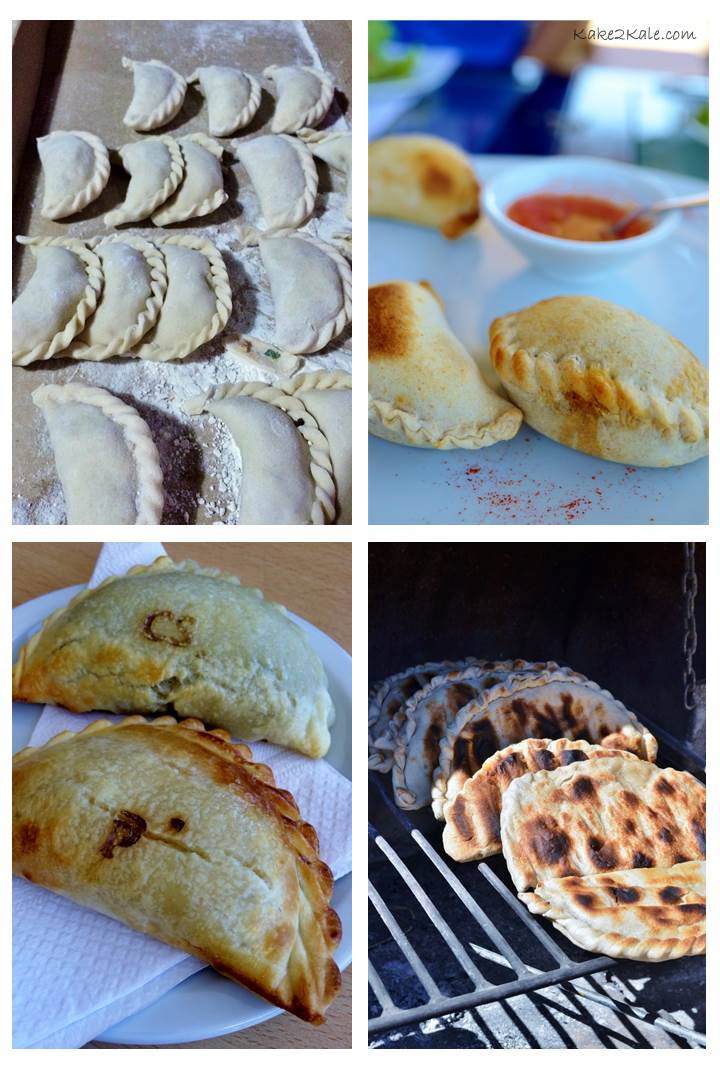
Driven by curiosity, every empanada I had was different with a range of fillings.  My favourite had ground beef fused with blue cheese. There were empanadas of varying sizes but I liked the smaller ones the best – easier to eat more! Some empanadas were accompanied by sauces of which the spicy red pepper was the most popular. More or less, all the empanadas looked pretty similar, but interestingly, some were decorated with a branding iron.

Empanada 2 kake2kale

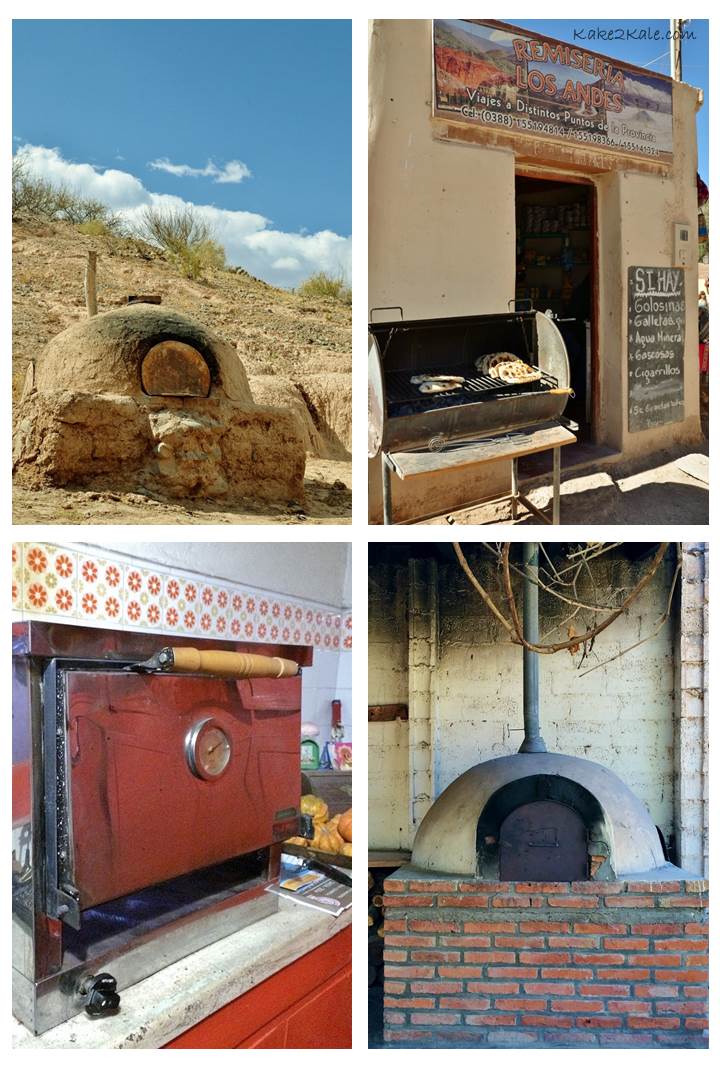
I was told the key to perfect empanadas is in the baking.  The oven had to be super hot!  No matter where we were on the trip – small settlement or large town, modest or fancy house – we always saw a mud or clay oven (wood burning) outside the homes.  Sometimes, I saw empanadas on BBQ grills.  Then, I discovered that there are special stainless steel ovens built for emapanadas, which can bake them at 450C!  The penny dropped – Argentinians are very serious about their  empanadas.

I wanted to learn how to make empanadas and signed up for a cooking course, but to my disappointment, it fell through.  Instead, I was given a local recipe passed down from generations, which I have yet to try.  I hope I can live up to the standards of this recipe. When I make them, I will blog it!

Travel Far, Explore More! – {Kale}

From the Culinary Trail – Ciaoing Down in Italy Part 3

A Tale about Tomatoes From Tuscany

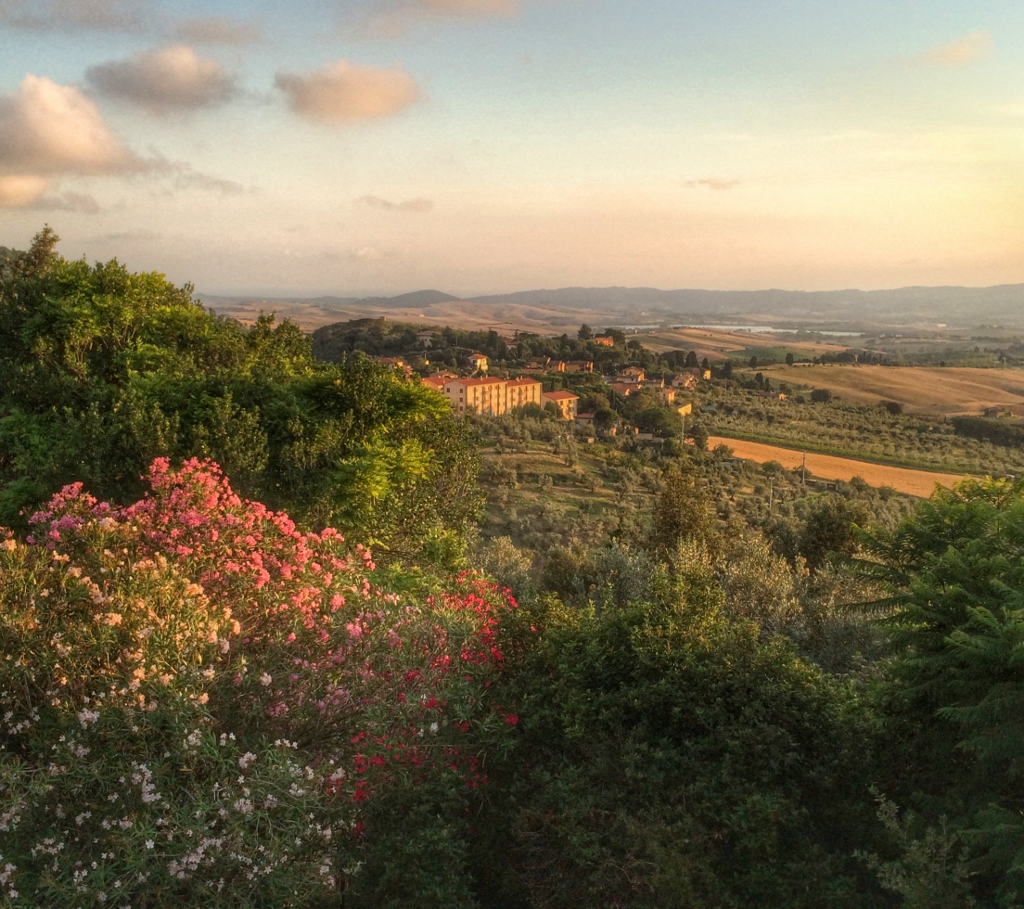
Santa Luce Kake2Kale
During my university days, a friend affectionately nicknamed all guys as spuds and girls as tomatoes.  The lingo kinda went viral and was used in everyday conversations on and off campus by a large network of students.  As an example, a bachelor pad was referred to as the spud pad and good looking girls were called hot tomatoes. I trust you get the idea.  To this day, I sometimes refer to my university girlfriends as tomatoes!  Getting back to this Italy trip, our group of tomatoes traveled to Tuscany following our awesome stay in Cinque Terre.  For a week, our base was a rustic Tuscan villa, surrounded by vineyards and olive trees.  We idled away the days with pool time, games, reading, visiting medieval villages, finding interesting markets and cooking up incredible meals.  There were too many culinary finds and experiences to sum up in this post. Instead, this third part of my adventures with superfoods in Italy is focusing on delicious Italian tomatoes, that is – the vegetable, but botanically classified as a fruit.

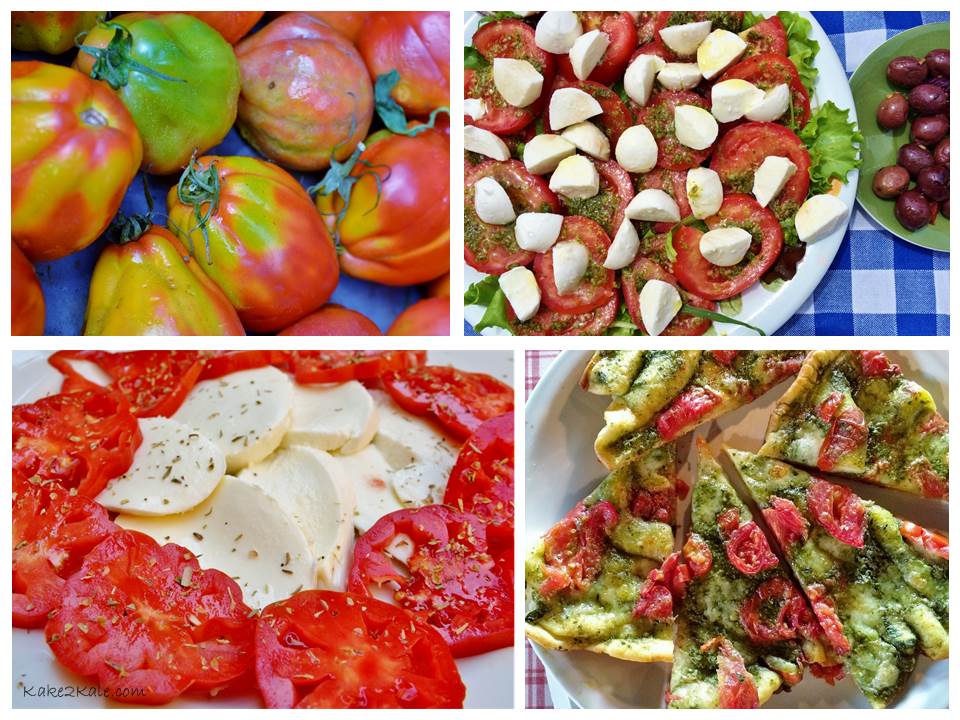
If there is one edible item that unifies Italy, I think it’s the tomato or pomodoro! Italy is the most important country in Europe for the production of tomatoes.  The tomato plant originally was brought to Italy, specifically Tuscany, by the Spaniards around 1548 from South America.  At that time, tomatoes were ornamental and they didn’t become a food staple until 200 years later.  Today, there are  hundreds of varietals in Italy; but I heard the most popular is the San Marzano pomodoro.

There is something about Italian tomatoes. They are all incredibly tasty – plump and juicy – compared with the mainstream varietals that we get in North America.  When possible, I spend a bit more money and buy heirloom tomatoes because of their delicious flavours. In Italy, all their tomatoes are like hyper-heirloom tomatoes. So, it was a joy to eat an abundance of yummy tomatoes during our time in Tuscany with Caprese salad, anchovies on bruschetta, pasta sauce and pizza…to name a few.  Just when I thought we had exhausted ways to prepare tomatoes, I stumbled across something that I had not seen before.  While sitting at the pool and flipping through a local food magazine, I saw an article about a hand mill for making fresh tomato puree. There was no doubt in my mind, I had to get one while in Italy!

Tuscany 3 Kake2Kale

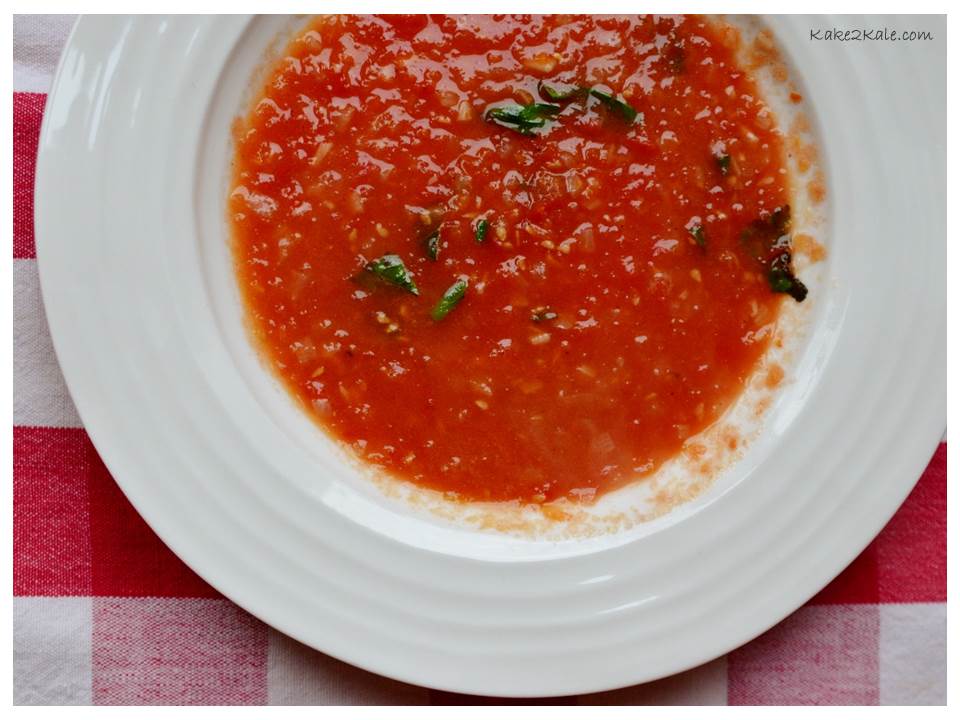
Sante Luce was the closest village and it had a tiny hardware store which could order the mill for 26 euros, but it wouldn’t arrive in time.  Then I searched for the mill at the next local outdoor market, and presto, I found the mill at a stall (actually, it was a converted truck) selling household goods. The stainless steel version cost me 11 euros!  Although I was anxious to try it out at the villa, I ran out of time before flying home to Vancouver.  It took me several weeks before I could face a regular tomato in our food shops.  Even my favourite heirloom versions are not close to the quality that I enjoyed in Italy.  Nevertheless, I used the mill to make a fresh puree for a tomato soup and it turned out to be quite delicious.  Imagine how much better it could be if I had real Italian tomatoes!

I liked the texture of the soup without the tomato skin (filtered by the mill); but note that the skin has flavonols which are healthy for you.   As a superfood, tomatoes are high in nutrients, vitamins (E and C ), beta-carotene, potassium, and fibre. They also contains zea-xanthin, which is good for eye health. Tomatoes are known to protect against various forms of cancer.  They are chock-full of lycopene, an antioxidant that provides the red colour and fights free-radicals, supports prostate health, and protects skin from sun damage. Interestingly, lycopene is best absorbed in our bodies when tomatoes are cooked or processed eg. puree or sauce.  Hence, having tomato soup is a great option!  However, vitamin C is retained when tomatoes are eaten raw; therefore, it is better to strike a balance of consuming cooked and raw tomatoes.

Below is my simple fresh tomato soup recipe, based on my trial usage of the hand mill.   Adding pesto as a topping is a fun option!

Tomato Soup – serves 2

Tomato Soup 3 Kake2Kale

 Ingredients and Directions

Tomato Soup 1 Kake2Kale

– 6 medium tomatoes
– 1 food or vegetable mill (with 3 discs)
– 1 small bunch of basil
– 1 small onion (diced)
– 1 garlic clove
– Salt and pepper to taste

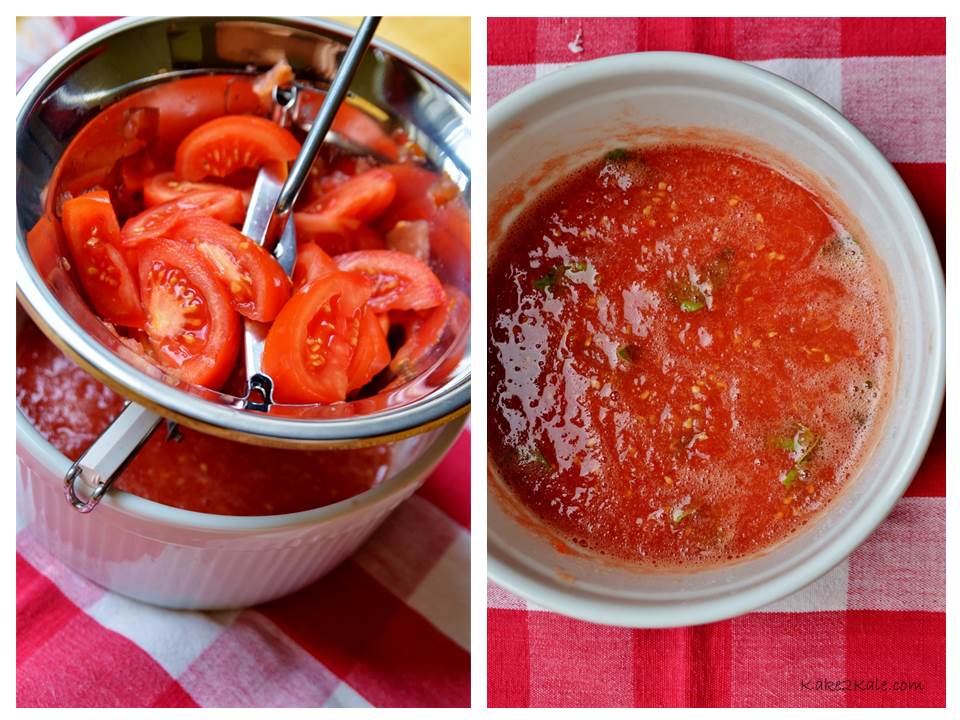
Assemble the mill with the coarse disc. Place the mill securely on top of a bowl with the mill’s feet resting on the rim. Quarter tomatoes and place in mill. Turn the blade and grind tomatoes until the peels are left in the mill. Place chopped basil in the tomato puree bowl. In a separate pan, saute the diced onions and pressed garlic. Combine the tomato puree with infused basil, cooked onions and garlic into a pot and simmer till hot. Stir in a dollop of butter.


Tomato Soup 2 Kake2Kale

After two weeks of hiking, relaxing, exploring, photographing, feasting, drinking, loading up on superfoods and catching up with dear friends, our Italy trip came to an end.  It was hard to leave Italy and much harder to say good-bye to my friends whom I admire and think are some of the most caring, smart, and gifted people I know.  On the sunny side, there will be future trips to look forward to…sooner than later I hope.

Travel Far, Explore More! – {Kale}
Tuscany 2 Kake2Kale


From the Culinary Trail – Sailing and Savouring the Gulf Islands Part 2

Does kitchen size matter? In Amsterdam (The Netherlands), we lived in a small top floor apartment of a canal house that was built in the 17th century.   My partner and I loved this cozy flat particularly for its location, that is – in the historic center of the city and overlooking one of the grand canals.   It had a lot of nice features, such as a roof deck and a wood-burning fireplace.  But, like so many small flats in the city, our place had a teeny-tiny kitchen. It measured roughly 3 x 4 feet and included a dual burner electric stove, sink, short counter, and mini-fridge.  Only one person could squeeze into the L-shaped space to prep/cook; but we managed to make elaborate and gourmet meals….and, without an oven!  I didn’t miss the baking…after all, I’m the {Kale} in this blog and prefer savoury dishes.

Typical sailboat galleys are no bigger than our old Dutch kitchen. There is a common misconception that the confined galley space limits your cooking to simple or camp-like meals.  Not at all.  In my view, the quality of our culinary creations has never been affected by the size of the kitchen or galley.  Even though I am pretty creative with menu planning and provisioning for our sailing trips, I am always interested in cookbooks that focus on galley-friendly options.  I recently discovered a cookbook that is fantastic and worthy of sharing with our blog circle.  It’s a fairly new cookbook from Vancouver Island called “Sea Salt: Recipes from the West Coast Galley“.  This cookbook has received rave reviews and won ‘Best Fish + Seafood Cookbook in Canada’ and ‘Third Best Fish + Seafood Cookbook in the World’ by Gourmand International.   During our Gulf Islands sailing trip on the Amritha Catamaran, we had the pleasure of meeting two of the cookbook’s authors.  We were sailing with a friend from a yachting magazine and because he was preparing an article about the cookbook and interviewing the authors, our group was able to experience a unique dinner prepared by the authors and based on the cookbook’s recipes.  This part 2 of 2 posts is my recap of our spectacular culinary evening and includes a recipe of a dish that we sampled from the cookbook.
sea salt cook book - kake2kale
The mother-daughters collaboration behind this successful cookbook is made up of Lorna, Hilary and Alison Malone.  They are a family of sailors and reside in Nanaimo on Vancouver Island.  Alison, an accomplished lifestyle writer and editor, is one of the daughters but was not available to join us. We met Lorna, the mom and avid racer, and the other daughter, Hilary, a chef and an expert food styler.  Both are incredibly down to earth and their passion for their project and the local food/wine scene shows when you meet them.

The award-winning Sea Salt cookbook is a collection of over one hundred sea worthy recipes which are fast and delicious, whether aboard in the galley or at home on land.  I love that the eight chapters are logically organized by the time frame of a sailing trip.  My favorite chapters include: i) Chapter one (Breakaway) highlights recipes with fresh ingredients on the first nights, ii) Chapter five (Entertaining: On the Dock and Rafting Up) showcases recipes for appetizers, dinners and desserts that are ideal for sharing, and iii) Chapter six (North) features recipes of food with a longer shelf life that can be used near the end of a trip.  There is a lot more to enjoy from their cookbook, from stocking and provisioning tips, suggestions about markets to the stunning food photography by Christina Symons.  But, what stands out is that the recipes are inspired by the freshest local flavours of Vancouver Island and the Gulf Islands. Products from twenty artisan producers of food, beer and wine are featured and stories of the producers are included with various recipes. Our 4-course Sea Salt dinner comprised of:

Balsamic Beets and Goat’s Cheese Crostini with beets from a Nanaimo farmers market, chive flowers from the Malone garden, goat cheese from the Salt Spring Island Cheese Company, and red fife sourdough bread from Bodhi’s Artisan Bakery
sea salt cook book 2 - kake2kale
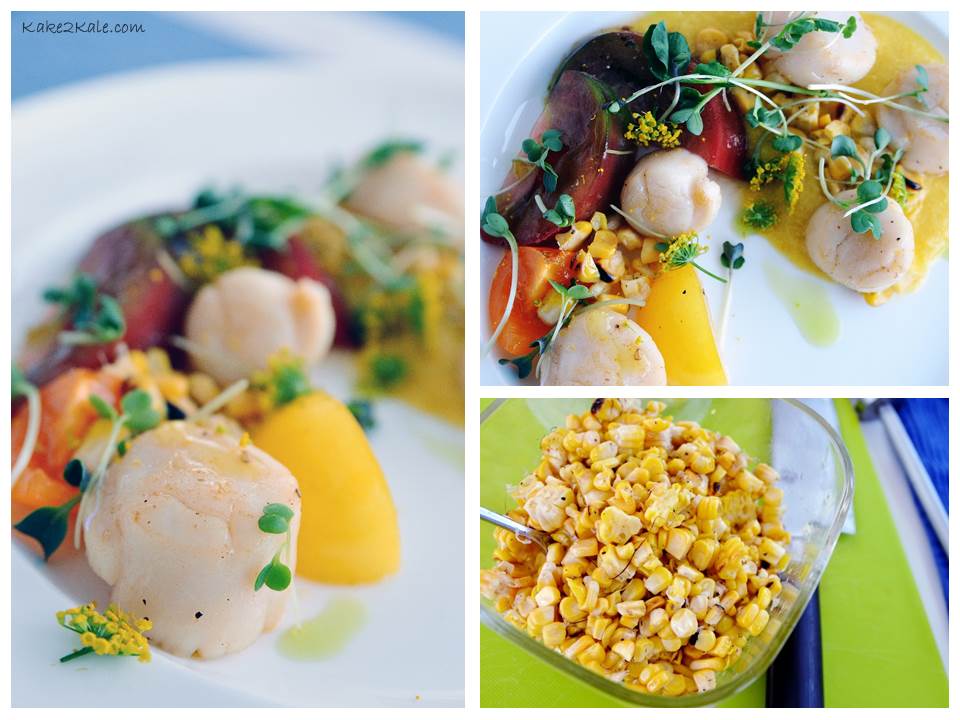
Seared Qualicum Beach Scallops with Sweetcorn-Basil Purée and Heirloom Tomato Salad with Qualicum Beach scallops from Island Scallops Ltd.
sea salt cook book 3 - kake2kale
sea salt cook book 4 - kake2kale
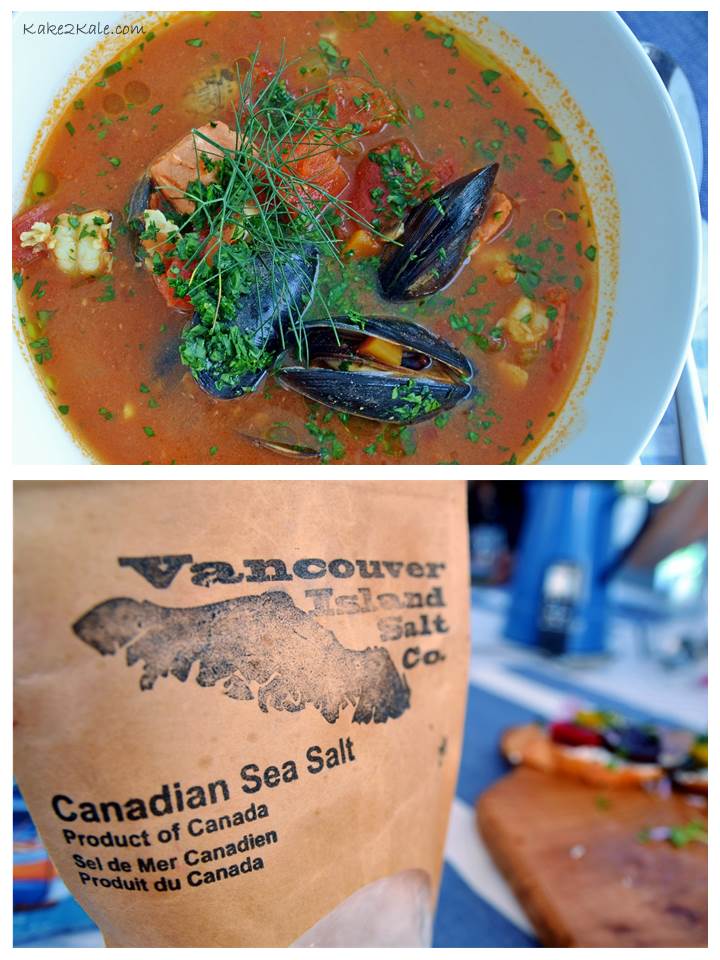
Pacific Cioppino
with mussels from Island Sea Farms on Salt Spring Island and sea salt that is hand-harvested and natural from Vancouver Island Salt Co.
sea salt cook book 5 - kake2kale
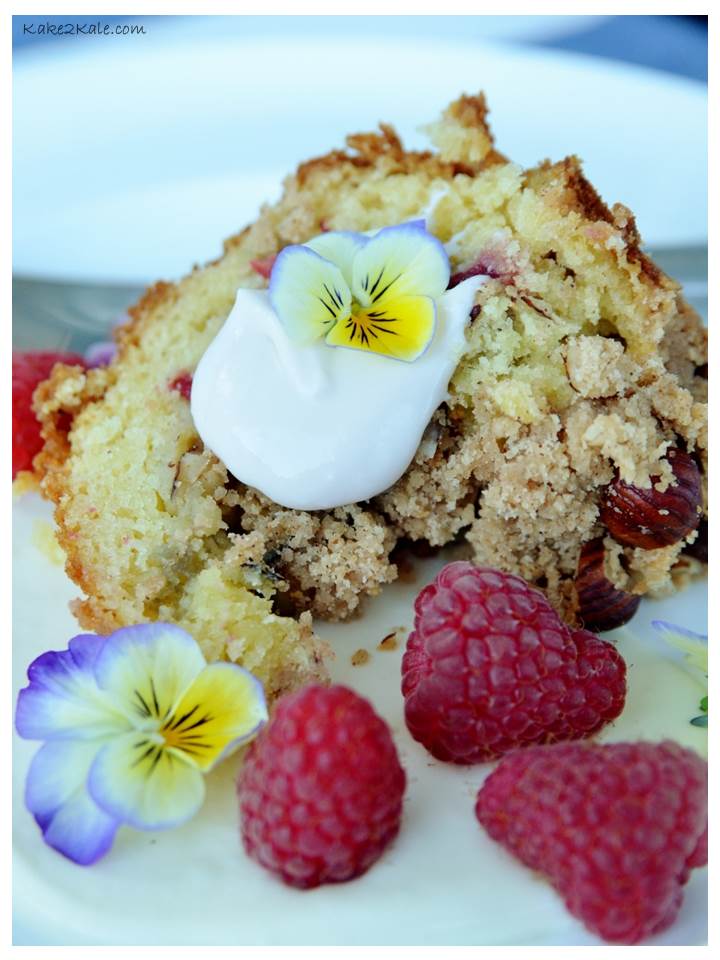
Cranberry and Hazelnut Coffee Cake
with hazelnuts from Foote’s Hazelnut Farm
sea salt cook book 6 - kake2kale

Four wines, handpicked by Lorna, accompanied this amazing meal.  My favourites were the Averill Creek’s Cowichan Black and Joie Farms 2011 Pinot Noir.

There were so many superfoods in our Sea Salt dinner.  Scallops, clams, mussels, salmon, prawns, beets, tomatoes, hazelnuts and cranberries were just a few of them. Go to our list of favourite superfoods to see the nutritional benefits.

I highly recommend the Sea Salt cookbook, whether you’re a sailor or not, and regardless if you cook in a small or large kitchen.   I wish the Malones continued success with their cookbook and I look forward to trying all of their recipes!  Thank you to Lorna and Hilary for an unforgettable culinary experience.

The Seared Qualicum Beach Scallops with Sweetcorn-Basil Purée and Heirloom Tomato Salad recipe and cookbook cover photo are courtesy of Sea Salt: Recipes from the West Coast Galley by Alison Malone Eathorne, Hilary Malone and Lorna Malone, with photographs by Christina Symons, Harbour Publishing, 2013, www.harbourpublishing.com

Travel Far, Explore More! – {Kale}