From the Culinary Trail – Ciaoing Down in Italy Part 3

A Tale about Tomatoes From Tuscany
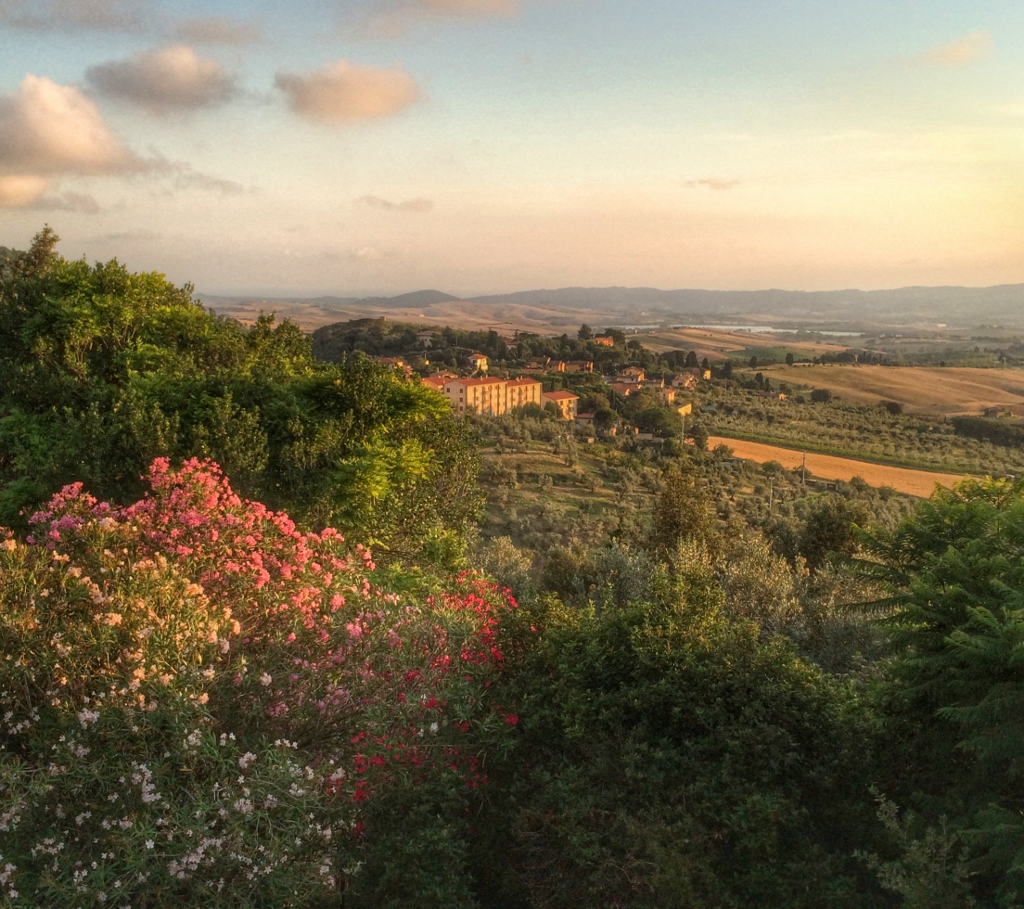
Santa Luce Kake2Kale
During my university days, a friend affectionately nicknamed all guys as spuds and girls as tomatoes.  The lingo kinda went viral and was used in everyday conversations on and off campus by a large network of students.  As an example, a bachelor pad was referred to as the spud pad and good looking girls were called hot tomatoes. I trust you get the idea.  To this day, I sometimes refer to my university girlfriends as tomatoes!  Getting back to this Italy trip, our group of tomatoes traveled to Tuscany following our awesome stay in Cinque Terre.  For a week, our base was a rustic Tuscan villa, surrounded by vineyards and olive trees.  We idled away the days with pool time, games, reading, visiting medieval villages, finding interesting markets and cooking up incredible meals.  There were too many culinary finds and experiences to sum up in this post. Instead, this third part of my adventures with superfoods in Italy is focusing on delicious Italian tomatoes, that is – the vegetable, but botanically classified as a fruit.

If there is one edible item that unifies Italy, I think it’s the tomato or pomodoro! Italy is the most important country in Europe for the production of tomatoes.  The tomato plant originally was brought to Italy, specifically Tuscany, by the Spaniards around 1548 from South America.  At that time, tomatoes were ornamental and they didn’t become a food staple until 200 years later.  Today, there are  hundreds of varietals in Italy; but I heard the most popular is the San Marzano pomodoro.

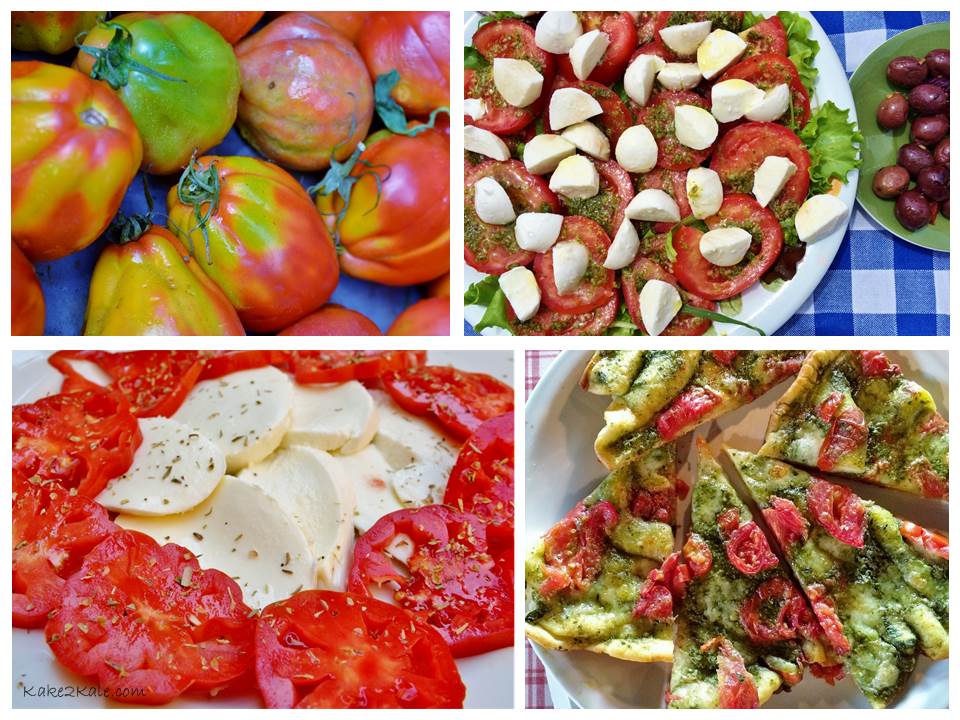
There is something about Italian tomatoes. They are all incredibly tasty – plump and juicy – compared with the mainstream varietals that we get in North America.  When possible, I spend a bit more money and buy heirloom tomatoes because of their delicious flavours. In Italy, all their tomatoes are like hyper-heirloom tomatoes. So, it was a joy to eat an abundance of yummy tomatoes during our time in Tuscany with Caprese salad, anchovies on bruschetta, pasta sauce and pizza…to name a few.  Just when I thought we had exhausted ways to prepare tomatoes, I stumbled across something that I had not seen before.  While sitting at the pool and flipping through a local food magazine, I saw an article about a hand mill for making fresh tomato puree. There was no doubt in my mind, I had to get one while in Italy!
Tuscany 3 Kake2Kale

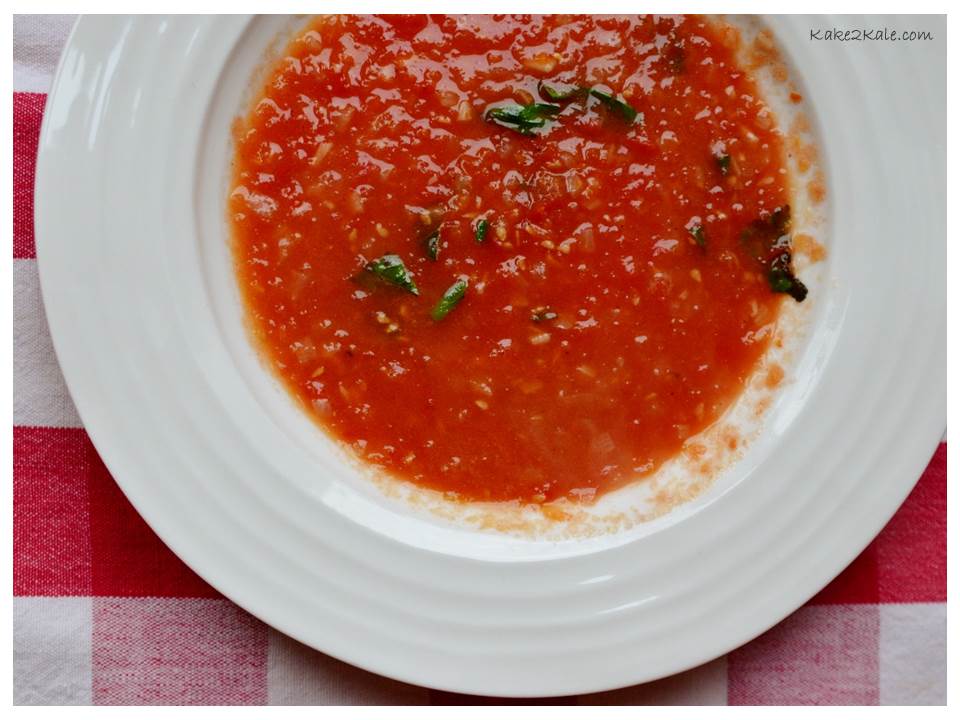
Sante Luce was the closest village and it had a tiny hardware store which could order the mill for 26 euros, but it wouldn’t arrive in time.  Then I searched for the mill at the next local outdoor market, and presto, I found the mill at a stall (actually, it was a converted truck) selling household goods. The stainless steel version cost me 11 euros!  Although I was anxious to try it out at the villa, I ran out of time before flying home to Vancouver.  It took me several weeks before I could face a regular tomato in our food shops.  Even my favourite heirloom versions are not close to the quality that I enjoyed in Italy.  Nevertheless, I used the mill to make a fresh puree for a tomato soup and it turned out to be quite delicious.  Imagine how much better it could be if I had real Italian tomatoes!

I liked the texture of the soup without the tomato skin (filtered by the mill); but note that the skin has flavonols which are healthy for you.   As a superfood, tomatoes are high in nutrients, vitamins (E and C ), beta-carotene, potassium, and fibre. They also contains zea-xanthin, which is good for eye health. Tomatoes are known to protect against various forms of cancer.  They are chock-full of lycopene, an antioxidant that provides the red colour and fights free-radicals, supports prostate health, and protects skin from sun damage. Interestingly, lycopene is best absorbed in our bodies when tomatoes are cooked or processed eg. puree or sauce.  Hence, having tomato soup is a great option!  However, vitamin C is retained when tomatoes are eaten raw; therefore, it is better to strike a balance of consuming cooked and raw tomatoes.

Below is my simple fresh tomato soup recipe, based on my trial usage of the hand mill.   Adding pesto as a topping is a fun option!

Tomato Soup – serves 2
Tomato Soup 3 Kake2Kale

 Ingredients and Directions

Tomato Soup 1 Kake2Kale

– 6 medium tomatoes
– 1 food or vegetable mill (with 3 discs)
– 1 small bunch of basil
– 1 small onion (diced)
– 1 garlic clove
– Salt and pepper to taste

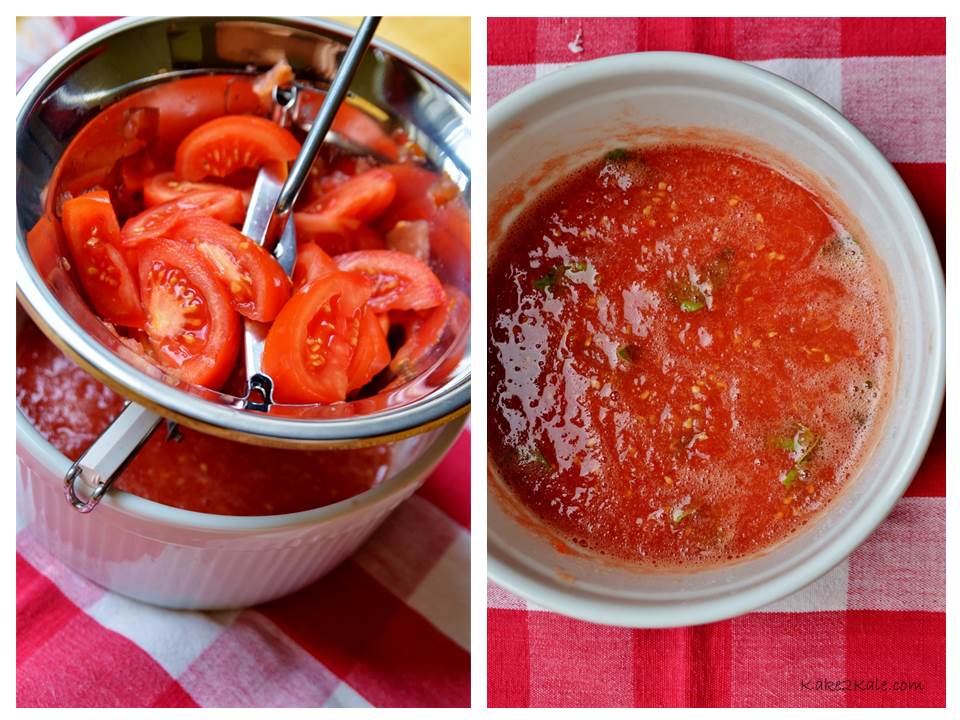
Assemble the mill with the coarse disc. Place the mill securely on top of a bowl with the mill’s feet resting on the rim. Quarter tomatoes and place in mill. Turn the blade and grind tomatoes until the peels are left in the mill. Place chopped basil in the tomato puree bowl. In a separate pan, saute the diced onions and pressed garlic. Combine the tomato puree with infused basil, cooked onions and garlic into a pot and simmer till hot. Stir in a dollop of butter.
 

Tomato Soup 2 Kake2Kale

After two weeks of hiking, relaxing, exploring, photographing, feasting, drinking, loading up on superfoods and catching up with dear friends, our Italy trip came to an end.  It was hard to leave Italy and much harder to say good-bye to my friends whom I admire and think are some of the most caring, smart, and gifted people I know.  On the sunny side, there will be future trips to look forward to…sooner than later I hope.

Travel Far, Explore More! – {Kale}

Tuscany 2 Kake2Kale


From the Culinary Trail – Ciaoing Down in Italy Part 1

The Trofie al Pesto Trail of Cinque Terre

You say pesto, I now say trofie! Let me explain. Despite all of us living in different parts of the world, my closest girlfriends from our university days continue to meet up whenever and wherever possible.  I was thrilled when Italy was selected as the get-together destination this year.  The land of  ‘dolce vita’ is likely number one or two on my list of countries worth visiting umpteenth times.   Italy feeds not only my travel photography appetite, but also a craving for my favourite cuisine.  I adore all Italian food, but my best-loved item is pesto. It is simple to make, is healthy for you and produces a luscious flavour for so few ingredients. I add this bold green, fragrant sauce with nearly everything – from salad dressing, sandwich spread, to chip dip.  With pasta, Pesto with angel hair pasta was my combo of choice; but now, it is Trofie al Pesto!  This part 1 of 3 posts, covering my adventure with superfoods found in Italy,  focuses on Trofie al Pesto from Cinque Terre.

Early this July, our group of friends met up in Cinque Terre which is a portion of the Liqurian coast (stretching from Genoa to Pisa) in north-western Italy.   When people think of Cinque Terre, the popular perception is about hiking between the five colourful villages perched on the rugged coast. This was our main reason for going.  And, lucky for me, I found out that Liquria is also a pesto paradise!  Originating in Genoa, around the 16th century, the name is derived from the Genose word pestâ, meaning to pound or crush.  The traditional pesto is made from fresh Genovese basil, garlic, sea salt, extra virgin olive oil, pine nuts, Parmigiano-Reggiano and Pecorino cheeses.  I’ve tried pesto after pesto variations – from sun dried tomatoes to kale, but I still prefer the classic Pesto Genovese.  Below is the easy pesto perfect recipe that I use.

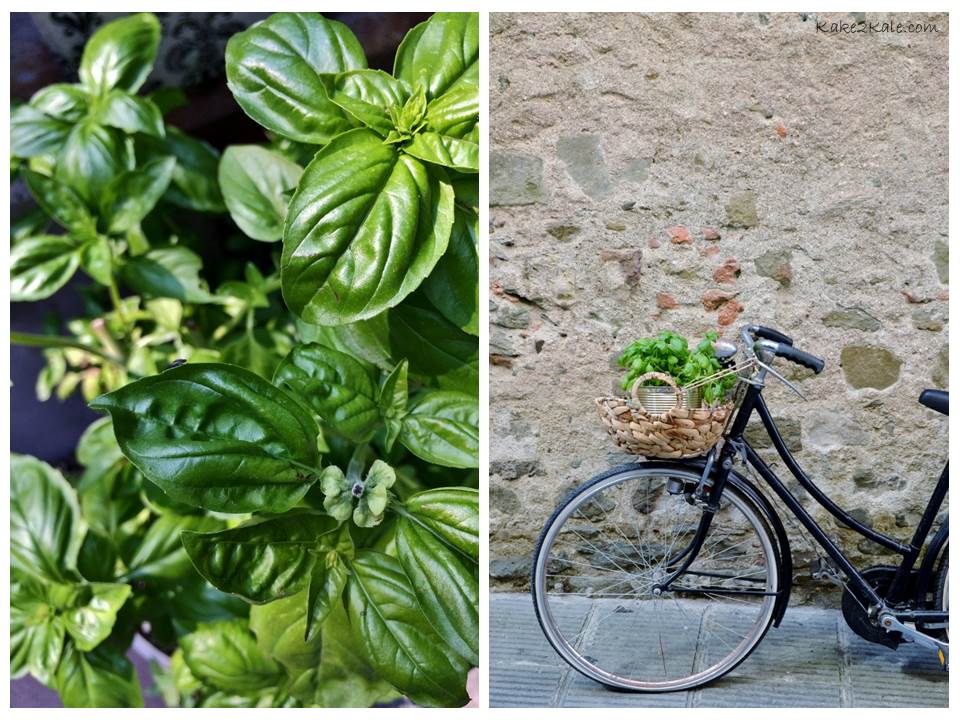
Basil Cinque Terre kake2kale
Pesto Genovese
– makes 1 cup

  • 2 cups fresh basil (add more as desired)
  • 1/3 cup pine nuts
  • 1/4 cup grated Parmigiano-Reggiano cheese
  • 1/4 cup grated Pecorino cheese
  • 2 garlic cloves
  • 1/2 cup extra virgin olive oil
  • 1 t. sea salt (add more to taste)

Directions:

  •  Combine the first four ingredients in a food processor and pulse until blended.
  • Add the olive oil in a steady stream as the processor is running on slow. Blend until smooth.
  • Add sea salt to taste.

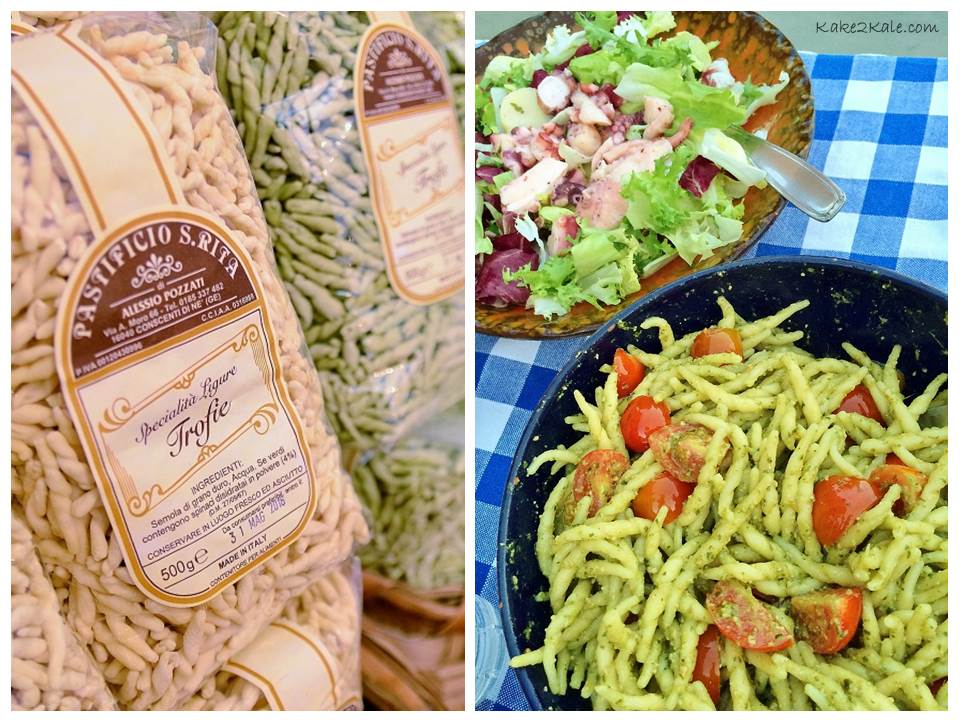
I have visited Italy on many occasions, but only discovered the wonderful trofie pasta on this trip.   Trofie also originates from Genoa and is a small, thin squiggly pasta that is made from flour and water (no eggs).  It is best accompanied with Pesto Genovese.  I love the pasta’s texture and the way the pesto wraps around its twisted form.  A popular version of Trofie al Pesto includes potatoes and green beans.  We enjoyed adding tasty Italian tomatoes when we made it on the trip. During our time in Cinque Terre, I couldn’t get enough of Trofie al Pesto and ate it every day.  It was already a dream to hang with my friends in Italy, but being on the trail of trofie and pesto was a special treat!

Trofie Pasta Kake2kale
To my surprise, we didn’t see the trofie pasta again on the rest of the trip in Italy and I have yet to find it in Vancouver.  However, it is easy to make.

Trofie Pasta 
– serves 4

  • 2 cups all-purpose flour
  • 1 t. sea salt
  • 3/4 cup water

Directions:

  • Place the flour and sea salt in a bowl, then make a well in the middle.
  • Add the water in the well and create the dough by mixing the ingredients in a bowl with a fork then with your hands, adding more water or flour as needed to avoid the dough being too sticky or dry.
  • Place dough on floured flat surface, then knead it with your hand by folding and turning repeatedly until the dough is smooth.
  • Create a ball and wrap it in plastic.  Let it rest in the fridge for at least 1 hour.
  • After the dough has rested, place a small portion (eg 1/4) of the dough on a floured surface and roll the dough into a 1/3″ roll or rope with your hands.
  • Cut the roll into 1/4″ pieces and sprinkle flour over them.
  • To shape, pick up each piece and roll it quickly between the palms of your hands, in one direction, to create a twisted tube with tapered ends.
  • Open your palms to drop the trofie piece onto a floured cookie sheet but pieces should not touch.
  • Repeat with remaining dough.
  • Cook fresh the pasta in boiling water (usually a few minutes for al dente) within 1-2 hours or refrigerate for later use.  As an option, I like adding a bit of salt and olive oil to the boiling water.

Superfoods to highlight are:

Basil – Rich in vitamin C, A, K, Magnesium, potassium and calcium.  Basil’s antioxidants are good for heart health.  Loaded with beta-caryophyllene, basil offers anti-inflammatory benefits.  It also has high anti-bacterial and anti-aging properties.  Basil can help fight against various medical conditions.  Its phenolics (specifically, vicenin and orientin) are a DNA protector.  It is a  great source of essential omega 3 and 6 fatty acids.
Garlic – The major player in the allium family ( includes, leeks, onions, shallots, chives, green onion) contains sulphuric compounds that may help with lowering blood pressure and destroy cancer cells.  Allicin, one of these compounds in garlic is not only anti-bacterial, anti-viral and anti-fungal, but research has shown that allicin helps your body to neutralize dangerous free radicals.
Olive Oil – The benefits of olive oil are extensive and best described on the Olive Oil Times website. To summarize, olive oil has been found to be effective against heart disease, cancer, stress, blood pressure, diabetes, obesity, rheumatoid arthritis, and osteoporosis.
Pine Nuts – This seed has the highest amount of protein found in any nut.  They are the only source of pinoleic acid, an appetite suppressant.  They contain a high concentration of oleic acid which is good for heart health. Pine nuts are also rich in iron and packed with antioxidants.

Buon Appetito!   Travel Far, Explore More! – {Kale}
 

No Grumble Blueberry Crumble

There is a delightful part in my favourite childhood book, Charlie and the Chocolate Factory, when a naughty, gum chewing girl, Violet Beauregard gets her just desserts (pun intended).  While at the factory, she deliberately pops an experimental piece of gum into her mouth after being warned against it.  As she chews this piece of gum it takes her through a three-course meal ending with blueberry pie, then she turns  into one humongous blueberry and has to be juiced to bring her back down to size.  Not only was Roald Dahl a wildly imaginative storyteller, but his views on child rearing were tucked in there as well.  After that, I am sure Miss Beauregard never put anything in her mouth that she wasn’t supposed to have.

The only blueberry issue I came across is really a non-blueberry one.  I will explain.  Once, when I was eating a store bought blueberry muffin, I discovered while reading the list of ingredients that no blueberries were in it at all.  That was a big head-scratcher.  Later, I realized there were more examples of this in the frozen food aisle when you pulled out a box of ubiquitous frozen blueberry waffles processed by one of the big industrialized food companies.  There were no real blueberries.  So what are these impostor blueberries made of?  It turns out, some are simply artificial colouring chemicals, hydrogenated oils and liquid sugars, ewwww!!!  All the more reason to read labels when grocery shopping.

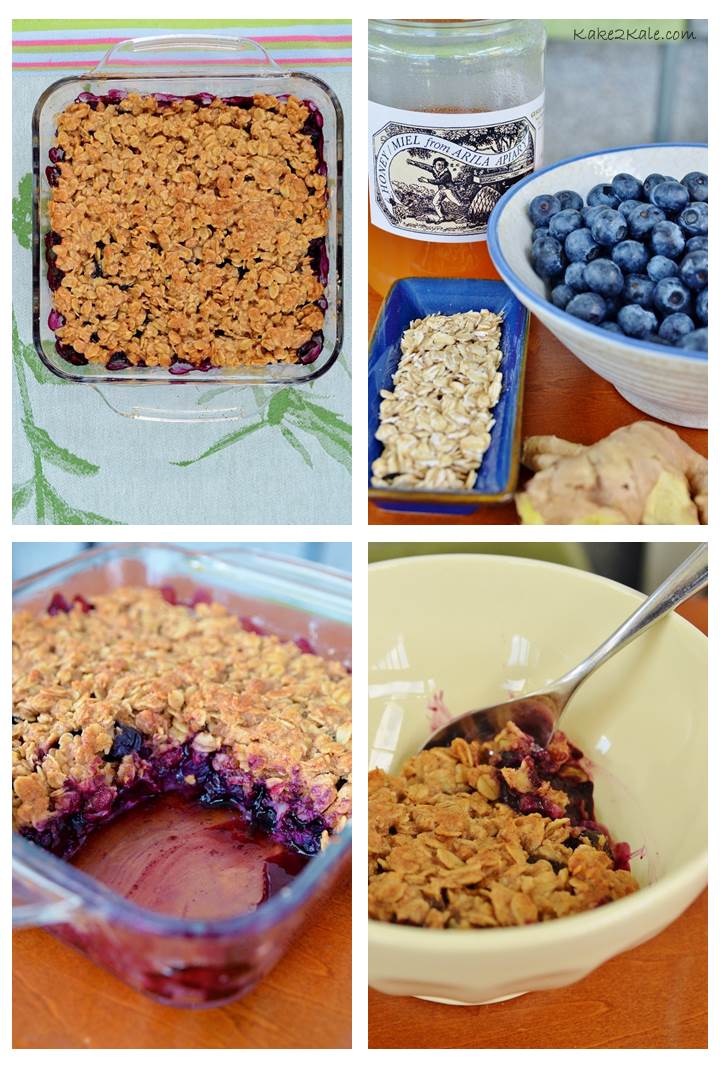
With blueberries in season (at least in our part of the world), I’m taking advantage of eating REAL, fresh blueberries and making a variety of dishes.  A blueberry crumble tops the list.  I call my version the No Grumble Blueberry Crumble because it is super easy….after all, no one wants to be slaving in the kitchen when it is gorgeous outside.  As a bonus, I’ve also included my Blueberry Waffle recipe at the bottom, so keep reading!

Blueberry Ginger Crumb Cake kake2kale

No Grumble Blueberry Crumble serves 8

Superfoods in the recipe are:
Blueberries – This little berry has a high amount of antioxidants.  They contain anthocyanin, vitamin C, B complex, vitamin E, vitamin A, copper (a very effective immune builder and anti-bacterial), selenium, zinc, and iron
Oats – Oats is a good source of fibre, and oat bran helps to lower cholesterol.
Ginger – Anti-nausea, anti-inflammatory, expectorant, antiseptic.
Cinnamon – Diets rich in cinnamon can help counter the effects of a high-fat meal on your body.  This spice may also balance blood sugar levels and can also help fight bacterial and fungal infections.

Filling:

  • 4 cups blueberries
  • ¼ cup gluten free flour
  • 2 t. sugar
  • 1 T. lemon juice

Preheat oven to 350 F degrees. Combine all of the above and place into greased 9” x 9” baking dish.

Topping:

  • ½ cup butter melted
  • ½ gluten free flour
  • 1 ½ cups gluten free oat flakes
  • ½ cup honey
  • 2 t. cinnamon
  • 2 t. grated ginger
  • ¼ t. salt

Combine the topping ingredients and spoon over the filling.  Bake for 30-40 minutes until the topping is golden brown.

My bonus recipe – Blueberry Waffle recipe makes 6-4″ waffles

They really aren’t complicated.  It takes me about 15 minutes from the time I start putting the ingredients together to eating the first waffle.  And if you don’t have a waffle iron, just make pancakes.  Here is a bonus recipe from my Fanny Farmer cookbook that has been engraved in my brain after probably making it hundreds of times over the years.

  • 1 cup flour (can be Gluten Free)
  • 1 t. baking powder
  • pinch of salt
  • 1 cup milk (can be dairy free)
  • 1 egg
  • *1 T oil or melted butter

Directions:

  • Whisk the dry ingredients together.  Then in another bowl beat the egg with the milk, and then add to the dry ingredients.  Stir the oil into the wet ingredients.
  • Combine until ingredients are just mixed, lumps are fine.  Then cook waffles according to your waffle iron instructions.

*If making pancakes, then omit the oil.  Spoon batter into preheated non-stick pan, or griddle and flip once when you see bubbles.  Try not to flip more than once, otherwise they will not be fluffy.
Add whatever you like, of course blueberries, but consider sliced bananas, chopped nuts, and/or chocolate chips.

Eat healthy, live great! – {Kake}

From the Culinary Trail – Sailing & Savouring the Gulf Islands Part 1

As a kid, my friends found it amusing that I wanted to sail yachts when we lived in a landlocked Canadian province.  I’m not sure how or when I got the sailing bug but I started with sailing lessons on Laser class sailboats at our small reservoir.   Back then, I must have been really brave or stupid because I also didn’t know how to swim.  I was terrified of going into the water and avoided the exercise of flipping the boat.   My fear of water is probably what drove me to like larger sailboats – to stay as high off the water as possible!  After years of travelling far for ocean sailing, I now live on the coast with easy access to cruising, and I am a better swimmer.

Gulf Islands
Gulf Islands Sailing kake2kaleSailing continues to be one of my favourite activities.  I feel lucky to live on one of the most spectacular coastlines in North America and one of the top cruising areas in the world.  There is an abundance of cruising destinations to enjoy and one of my top picks is the Gulf Islands in British Columbia, a beautiful archipelago located between Vancouver and Vancouver Island, comprising of 13 major and 450 smaller islands.  On a recent sailing trip through these islands, I took more time to explore the flourishing local food and wine scene, which I’m happy to share with you over two blog posts.  This is part 1 of 2 posts and captures our visit to the charming Saturna Island Winery.

Amritha Catamaran
Amritha kake2kale
Our group of six set sail in the Gulf Islands on a gorgeous Lagoon 400 catamaran named Amritha.  If you’re interested, she’s available for sailing charters – click here for more information about this catamaran, BC sailing and catamaran sailing.

Saturna Island Vineyards
Saturna Winery kake2kale
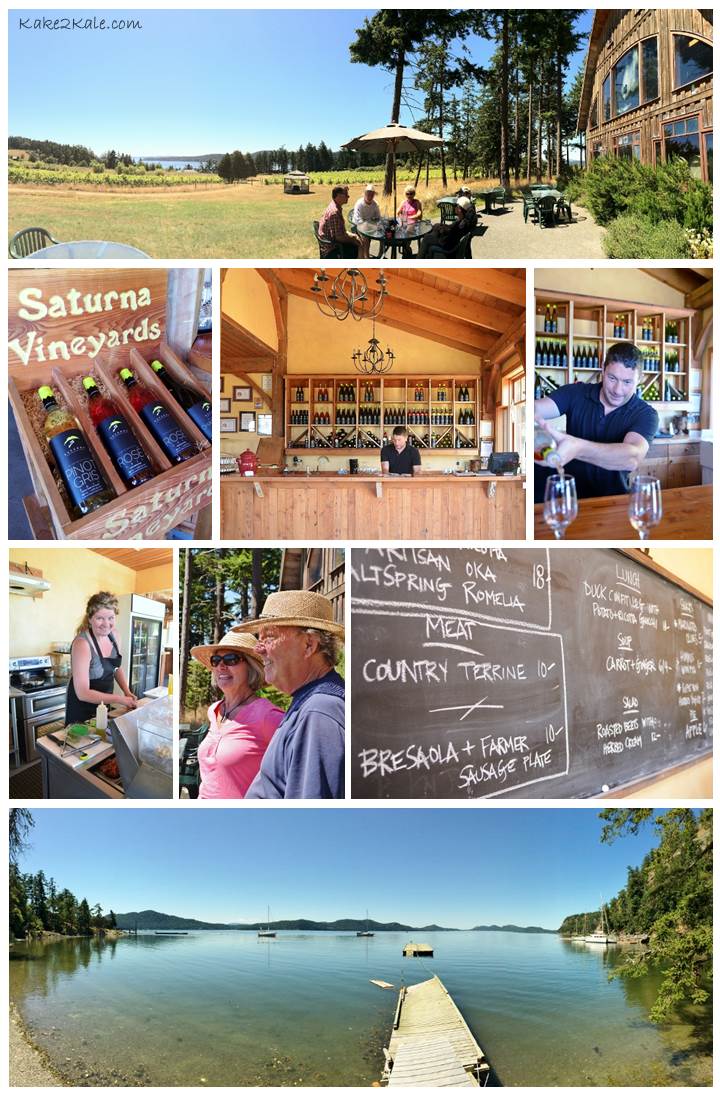
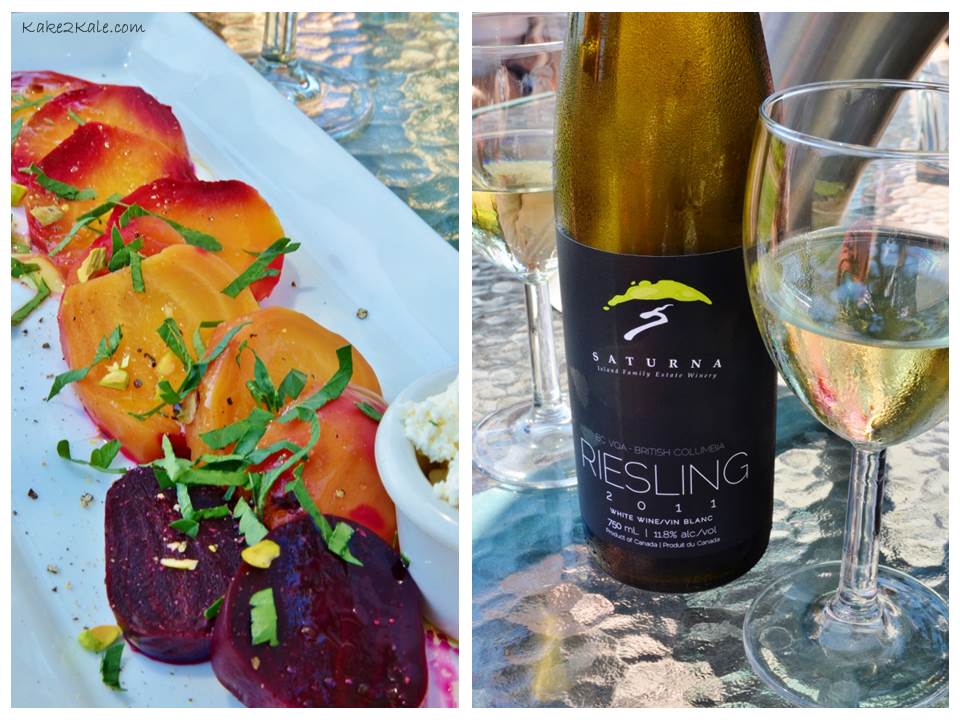
Each of the major islands has their own unique personality and special spots.  I’ve been to all of them, except Saturna Island.  The key attraction of this Island, and the main reason we wanted to go, is the Saturna Island Family Estate Winery which is one of ten wineries in the Gulf Islands and the largest with an annual production of 20,000 cases of wine.  If I’m not mistaken, it is the only island winery that has their own beach access, with an easy 15 minute walk to the vineyard.  We’ve tried several times to get there but one thing or another stopped us.  On the morning of our planned visit, there was an electrical issue on the boat and we almost didn’t make it.  I was beginning to think that the universe didn’t want us to go to Saturna Island!  Luckily, the problem got fixed. We sailed into and docked at Saturna Beach for a visit.   The uniquely hand-crafted barn (post and dowel frame with no steel nails) with their tasting room, wine shop and bistro is in a lovely spot, surrounded by vineyards and ocean views.   Forty acres of the property is planted with Chardonnay, Pinot Gris, Gewurztraminer, Pinot Noir, Pinot Meunier, and Merlot grapes. We sampled seven wines, all made on property from grapes grown on the island and from growers in the Okanagan.  The wines, which include a rose and port, are pleasant and good value compared to other BC wines.   The 2011 Riesling ($14.90) is fantastic and is my new favourite BC Riesling! We also sampled the food at the bistro.  The chef, Agi, is a locavore who strives to feature products grown or produced on the islands. I sampled her roasted beet salad, which was delicious.  Whether you’re sailing or visiting the Gulf Islands by ferry, I highly recommend a visit to this delightful and special island winery.  The owners, Larry and Robyn, and their team are amazing and look forward to welcoming all visitors.

Superfoods on this Visit
beets and wine kake2kale

Wine: Consumed in moderation, wine is considered one of the top 10 superfoods! Red wine contains resveratrol, an antioxidant that is thought to help fight cancer, prevent blood clots, lowers the risk of diabetes and hinders fat storage.  While white wine contains less resveratrols,  it has two antioxidants that are not found in red wine – tyrosol and hydroxytyrosol, which are in olive oil and considered good for the heart.

Beets:  Beets have a range of vitamins, antioxidants and minerals.  Beets are low in calories, zero cholesterol, known to lower blood pressure, and is packed with potassium, fiber, folate and vitamins A, B,C, B9. Red beets and Golden Beets have similar nutritional value but differ in pigment.  Red beets have betalains that help prevent cancer and degenerative diseases.  Golden beets, rich in b-xanthin, are thought to be good for the heart and helps cleanse the body. Best of all, golden beets do not stain your hands when you’re working with them!

Travel Far, Explore More! – {Kale}