Black is the New Black

My Mom was known for wearing a lot of black and she could have coined the word fashionista. She had hot pants, gogo boots, and an assortment of wigs for every look. Through my Mom, black became the symbol of everything chic, classic and timeless. Can you guess the predominant colour in my wardrobe? Yup. And I married a man who also has a love affair with black.  My affinity for black has transferred over to my taste buds.

How many of you can say that one of your favourite desserts is a bowl of black goo?  And I mean black, like shoe polish black, Aretha Franklin music black, sleeping in a tent miles away from the city, black. One of my fondest childhood memories of family dim sum in Hong Kong was the cart with the big cauldron of the deepest, darkest, blacker than all the hair on our heads, black. It is called Tsee Mah Woo, literally black sesame paste. “Woo” is Cantonese for any dessert made of nuts or seeds that are ground up, then cooked with water and sugar; it is a cross between a soup and a paste. It’s not the most visually appealing dessert, but in those days the look of food was pretty irrelevant next to taste. It basically looked like a bowl of hot black tar. Traditionally, almonds, walnuts or peanuts could also be made into a “Woo”. To this day, the memory of seeing the dim sum cart lady pushing that cauldron makes me feel like a 5 year old again, without a care in the world except how to get my brother to share his Batman toy’s with me. This dessert is like a hug for your taste buds. You can still have it at places that serve dim sum, and {Kale} and I always order it if it’s available.

{Kale}’s Mom used to make black sesame “Woo”. She would even grind the sesame seeds herself, using an old fashioned stone grinder. {Kale}’s Mom would fit right in with the Paleo lifestyle! Apparently it was quite the process, grinding it so fine to a smooth silky texture without any graininess. Well, I have made it myself successfully with a Vitamix, which replaces the stone grinder quite nicely.

Black Sesame Kake2Kale

What is the difference between white and black sesame seeds?  Well, black seeds still have the protective hull intact, while the white seeds have had the hulls removed.  White seeds are usually used for food preparations (ie. tahini paste) and the black seeds are usually pressed into oil.  Because the hull has been removed, the white seeds are less nutritious as the black.  It’s like comparing white bread with whole grain bread.

My grandmother would always tell me that eating black sesame will keep my hair from turning grey. She isn’t the only one who says this and is a common belief amongst the Chinese. But is there evidence for this? In my readings, I only came across one person who claims to have turned some of her graying hair to black after eating black sesame seeds for a year. In any case, black sesame seeds is a superfood as they are rich in calcium, magnesium, phosphorous, iron, protein and vitamin E.  In Chinese medicine these seeds support the kidney and liver meridians (pathways). The adrenal glands sit right above the kidneys, so by nourishing them you also do the same for the adrenals. These glands secrete hormones (ie. estrogen, testosterone and cortisol), and its main function is in helping your body react to stress. Over time our adrenal glands may become over taxed, and greying hair can be a sign of this. If black sesame seeds can help with my adrenals and perhaps darken some of my just-starting-to-grey hair, then bring it on. To read more about adrenal fatigue go to adrenalfatigue.org.

{Kale} challenged me to come up with a recipe for black sesame because it is rare to see it served anywhere apart from Tsee Mah Woo at dim sum.  So I came up with two – i) a green soup and ii) banana brulee.  Salads do not cut it for me now that the temperature has dropped and I don’t feel like eating stir fries; therefore, a soup with green veggies topped off with black sesame pesto seemed like a good idea.  And, I love a caramelized banana as a base for dessert and my fun recipe version is included below.

Other Superfoods in the two recipes are:

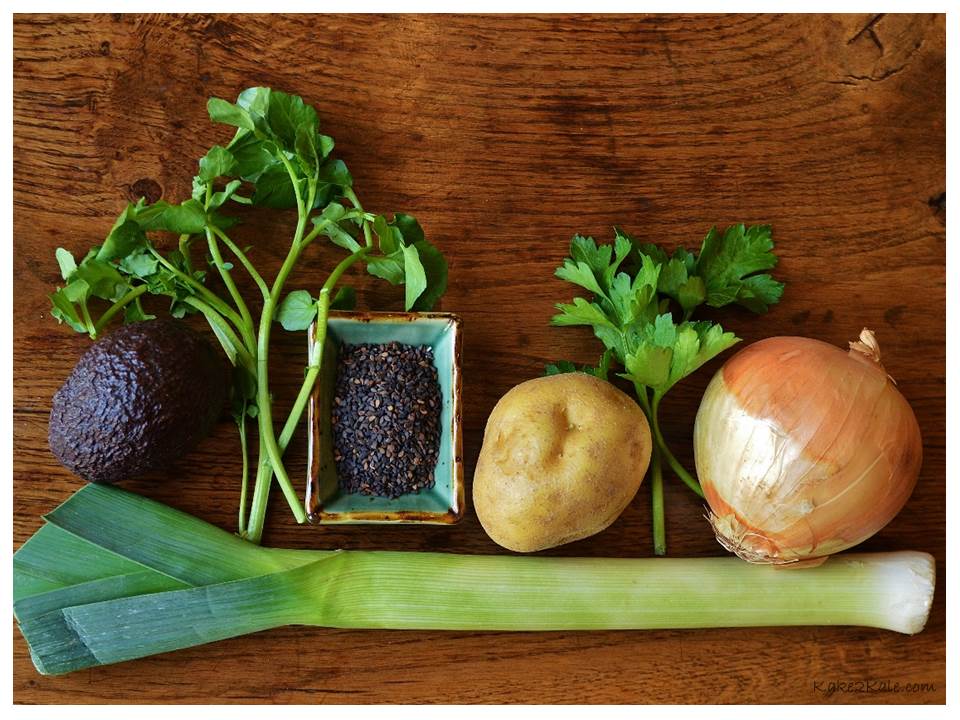
leek – Contains vitamins A,K, and B, also kaempferol, a phytochemical that may lower risk of cancer and other chronic diseases.
onion – Contains a high amount of quercetin, which is an anti-histamine and helps to combat allergies.
watercress – Has high amounts of vitamins C and A.  It also has strong detoxing properties, especially targetting heavy metals.
avocado – Besides being a good source of vitamins C, B’s, E and K, it is also a rich source of monosaturated fat, which can help lower cholesterol.
banana – Contains Vitamin C, fibre, and a significant amount of potassium. High potassium intakes are also associated with a reduced risk of stroke, protection against loss of muscle mass, preservation of bone mineral density and reduction in the formation of kidney stones.
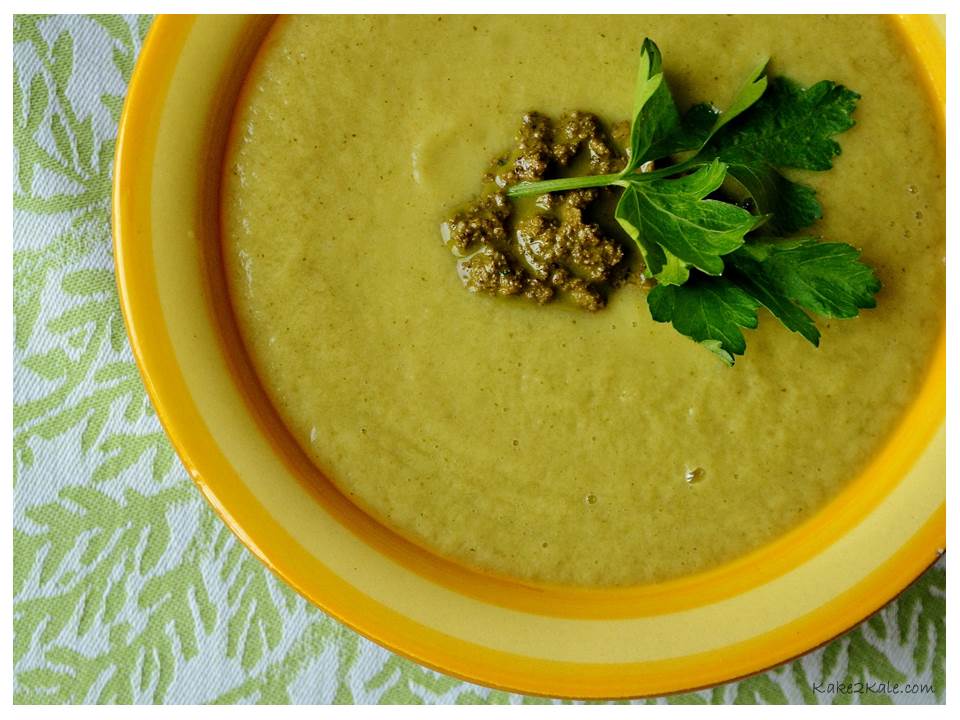
Black Sesame pesto leek soup 3 Kake2Kale

Green with a touch of Black Soup serves 6
Ingredients:

  • 2 T olive oil
  • 1 medium onion (coarsely chopped)
  • 1 leek
  • 4 cups of vegetable stock (coarsely chopped)
  • 2 medium potatoes (coarsely chopped)
  • 1 ripe avocado
  • 1 large handful of watercress

Directions:

  • Heat oil in a large pot at medium high heat then add onion and leek.  Sauté for 5 minutes until softened, then add the stock and potatoes. Bring to a boil and then simmer for 10-15 minutes or until potatoes can be broken up with a fork.
  • Add the avocado and watercress to the pot and then puree with a blender.
  • After pouring the soup into bowls put a dollop of the black pesto on top.

Black Pesto
Ingredients:

  • 1/3 cup black sesame seeds
  • ½ cup olive oil
  • A handful of Italian parsley
  • Salt and pepper
  • 2 T. applesauce or finely chopped apple
  • 2 T. lemon juice
  • Salt and pepper to taste

Directions:

  • Puree black sesame with olive oil and parsley, then add the rest of the ingredients and continuing pureeing until mixture is smooth.
Black Sesame pesto leek soup 2 Kake2Kale

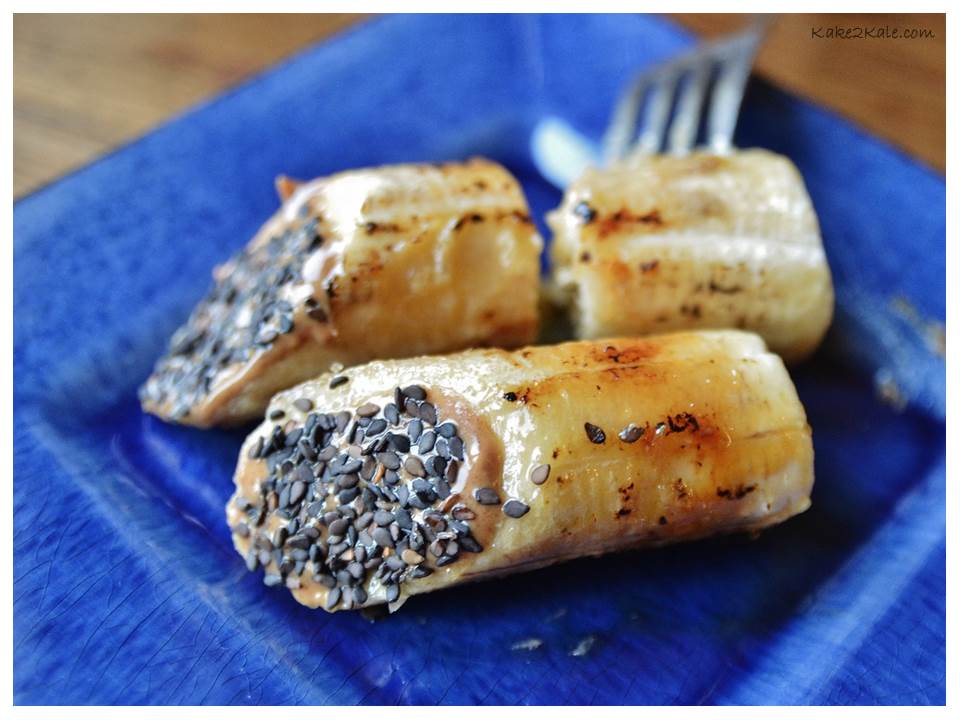
Banana Brulee serves 1

  • 1 banana
  • sugar (enough to sprinkle)
  • 1 T. almond
  • 1 T. black sesame seeds

Directions:

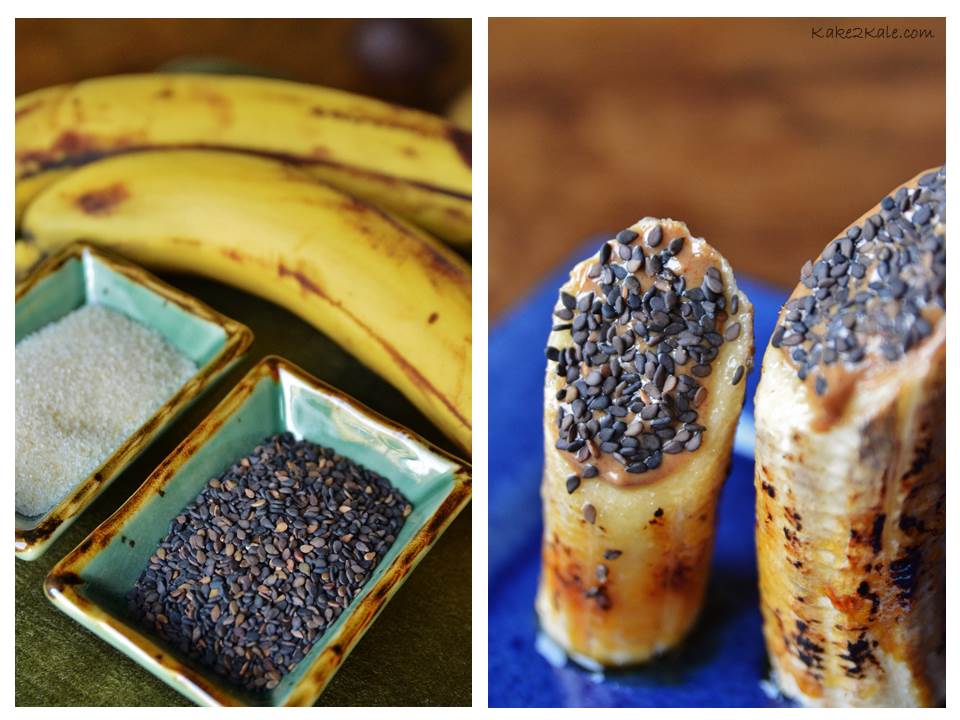
  • Cut a banana into two halves, dip in sugar.
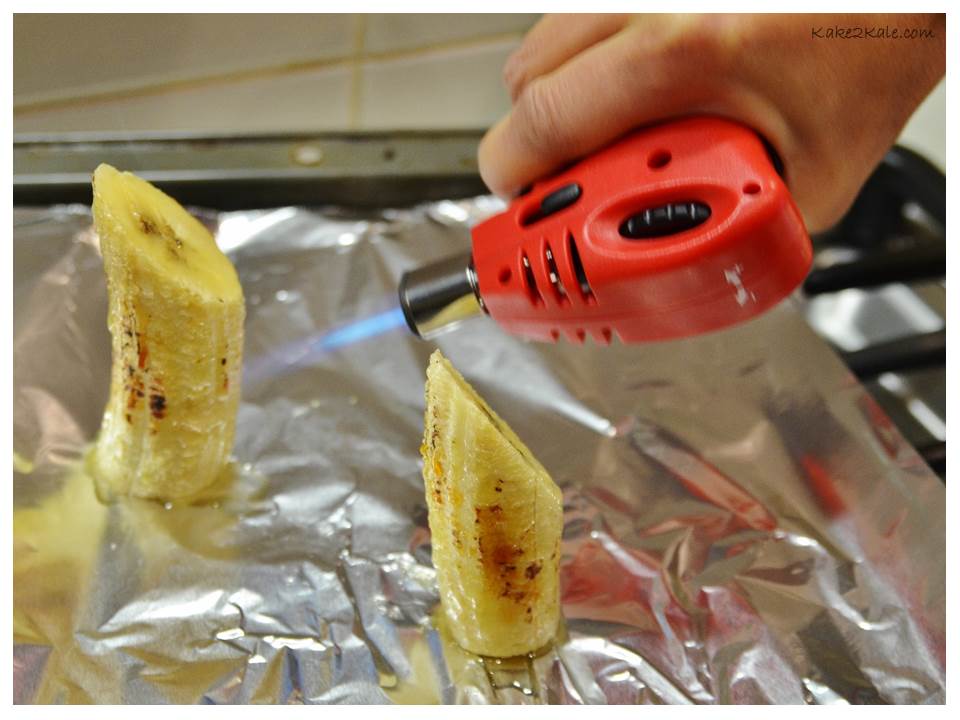
  • Broil for about 5 minutes (keeping an eye on it), until sugar caramelizes.  Or alternately use a mini torch to brulee the banana.
  • Then spread with almond butter and sprinkle black sesame seeds over the almond butter.
Black Sesame Banana 2 Kake2Kale

I’ve wanted to get a mini torch for quite some time and making this dessert was a good excuse to get one.  For those who want one, note that you’ll also have to get a butane refill.  The torch does not include butane.  Tip: do not get butane for lighters as the nozzle is too small.  I found this out during the photo shoot and had to run out to get the proper refill.
Black Sesame Banana 3 Kake2Kale

There are many ways to incorporate black sesame seeds into your diet besides what I’ve done here in this post.  I encourage you to add them to your smoothies, oatmeal, cookies, or as a coating for salmon as Natalie (The Peaceful Paleo) had done in the previous post.
Black Sesame Banana 1 Kake2Kale

Get your adrenal glands acquainted with this power packed seed!

Eat well, live great! {Kake}

Is Paleo for You?

What do you picture when you hear the word Paleo?  Half clad hairy ape-like people where the men carry big clubs (not for golf) chasing down wild beasts as the women huddle around a fire, while skinning the wild beasts that the men have clubbed to death.  Or do you picture healthy, shiny-faced lean people munching on a plate of veggies with a side of meat.  If the first image is what you see, then you are definitely behind the times and need to catch up.

The word Paleo is gaining popularity like “yoga” once did.  There’s the Paleo lifestyle, Paleo diet, and Paleo workout.  I’ve been hearing of the Paleo diet for a couple of years now, and especially the testaments of weight loss and improved health.  One would think that meat would be a large component of the Paleo diet.  But meat actually comprises only a small percentage of the diet, and the balance is made up of fruits and vegetables.  That’s about all I know about this trend, so when {Kale} recently met a follower of the Paleo lifestyle we wanted to find out more and organized an interview with her for our blog.

Paleo Diet 5 kake2kale

Natalie Cishecki calls herself ‘The Peaceful Paleo’ and I wanted to know why she chose that name.  It started off as an acronym taught by a high school teacher. According to Natalie: “P.E.A.C.E — People Educating Accepting and Celebrating Everyone. This is what I wanted my website to be: A place for people to come together, share their experiences, and build a community of support. Thus, The Peaceful Paleo was born.”

I was curious to know how she adopted the Paleo diet.  “Originally, I had adopted a Gluten-Free diet as a result of some digestive issues I was having, however, the symptoms seemed to persist, and in some cases, worsen. From there, I cut out dairy and refined sugars (gradually) and started to feel a bit better, but still not 100%. After being diagnosed with MS a friend of mine recommended a book called ‘The Paleo Approach: Reverse Autoimmune Disease and Heal your Body’ by Sarah Ballantyne, PhD. I began reading and decided that this diet made sense, not just because of being autoimmune but because it is based in science and history, not just the latest fad.”

Though her health has improved drastically since she has been on the Paleo diet, Natalie is still finding out which foods work better for her and which not, so it’s never really cut and dried.  As Natalie says, ” I am working on making the switch to Autoimmune Protocol or AIP (‘Paleo Approach’) which is a little stricter than a conventional Paleo diet, and I am taking it one step and one day at a time.”

Since our focus at kake2kale is on superfoods I asked how she incorporates them. The focus of the Paleo diet is on eating nutrient-rich foods that are not pro-inflammatory. Consequently, the diet is focused on eating unrefined, whole foods. As a result, there are many superfoods that fit into a Paleo diet, especially fruits, vegetables, proteins (minus Eggs for AIP), herbs & spices, nuts and Seeds; however in very limited quantities (except for AIP which avoids these foods). The main difference is that Paleo eliminates all grains and starches because they have similar scientific effects on the body as gluten does, being highly pro-inflammatory and contributing to leaky gutThis is all explained very thoroughly and comprehensively in the book, The Paleo Approach.”

I also asked Natalie about her favourite superfoods and how she likes to prepare them.  “My top 3 superfoods would have to be avocado, coconut (in all its wonderful forms) and beets. The main reason for this is that they are incredibly diverse! I bake a lot and definitely have a sweet tooth (partially because I am still an infant in the broad spectrum of those living the Paleo lifestyle), so being able to incorporate these delicious superfoods into my baking is not just delicious but also nutritious! Additionally, I cannot eat bananas so avocados are my main potassium source and a great source for fats to sustain me through the day. I eat avocado with everything. It is my favourite burger topping, I eat it plain sometimes, or use it as an egg substitute BUT my favourite thing to do with it is to add it to a salad. I often eat it for breakfast like this: 1/2 avocado cubed; 1 apple cubed; 1/4 cup walnuts, chopped, and some sort of fruity vinaigrette + whatever protein I am eating for breakfast. As for coconut, I use coconut flour mainly in all of my baking, and if I am having a protein shake, I mix it with coconut water. I love shredded coconut, especially in my Chewy Paleo granola bars.  I add beets to my Red Velvet Cake or I love to cut them thin, BBQ them and add them to my lettuce-wrapped burger as beet chips — delicious!

Natalie’s favourite dish is soup and bacon, which she sometimes has for breakfast.Last night’s leftovers are completely suitable at 6am the next morning, and if I want protein-pancakes for breakfast with bacon, then I do it!”  I love that there are no ‘should have’ in terms of breakfast, lunch and dinner, because earlier this week I had leftover pasta topped off with a fried egg for breakfast.” 

One of the main goals for eating Paleo is that it eliminates pro-inflammatory foods and yet red meat is known to be inflammatory, so I asked Natalie about this and she said grass fed beef actually does not promote inflammation and suggested I do some research into this.  You can read more about this topic here.  Thanks Natalie for opening my eyes and my stomach!

I wondered what her challenges are when eating at restaurants.   “Variety.  There are not many places I can go to eat ‘safely’ (meaning Paleo-friendly) that also have a decent selection for me to choose from (more than 2-3 options).  However, I have focused on finding restaurants that are willing to adapt.  Anywhere that is not a chain, or some of the higher end chains (like the Keg) tend to be very understanding and accommodating in my experience.  When in doubt, I just order a steak and veggies.

For my kake2kale recipes, I asked Natalie which are Paleo-friendly?  Her reply was that Kale Pesto with Potato and Egg would be acceptable if only sweet potatoes were used.  For the Cauliflower Steak, it would be Paleo if nutritional yeast and sherry were left out.  And, the Chocolate Peanut Butter Cups would be Paleo if almond butter replaced peanut butter.  Lastly, the 5-minute Chocolate Mousse is Paleo as is.

Finally, I asked what is the top advice she has for someone interested in adopting the Paleo diet. “I can only speak for myself and from my own experience, but I definitely needed to do things gradually, otherwise I would have been very overwhelmed.  I started with (cutting out) gluten, then dairy and sugar, grains and starches, and then legume.”

Will I become Paleo?  Well I don’t adhere to any one particular way of eating, but if I were to have health challenges, I would definitely give Paleo a good go, especially after meeting Natalie and hearing her story.

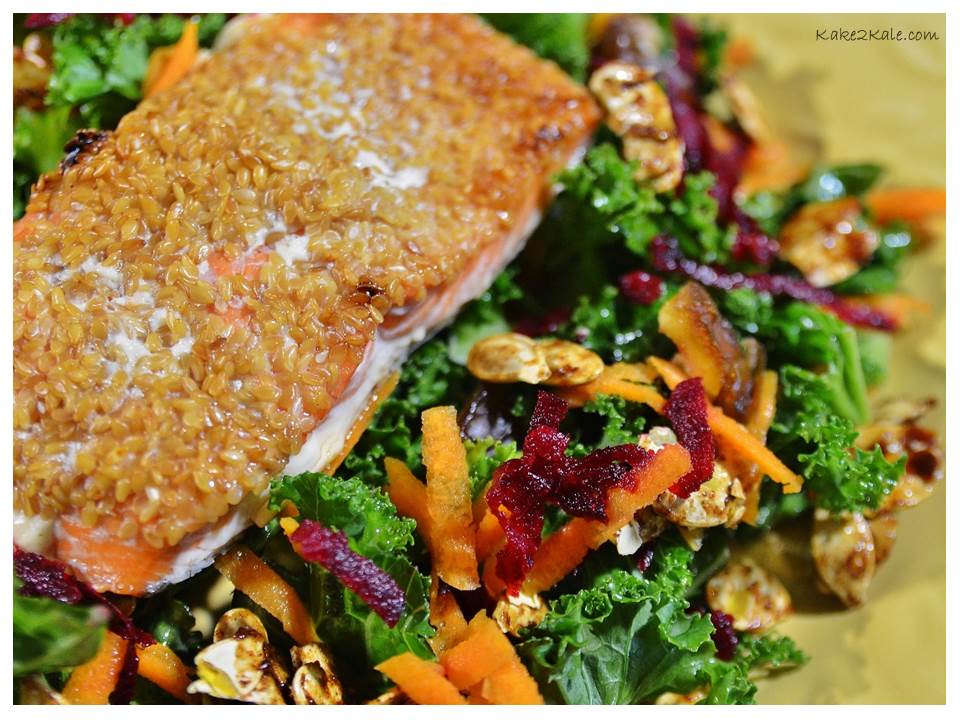
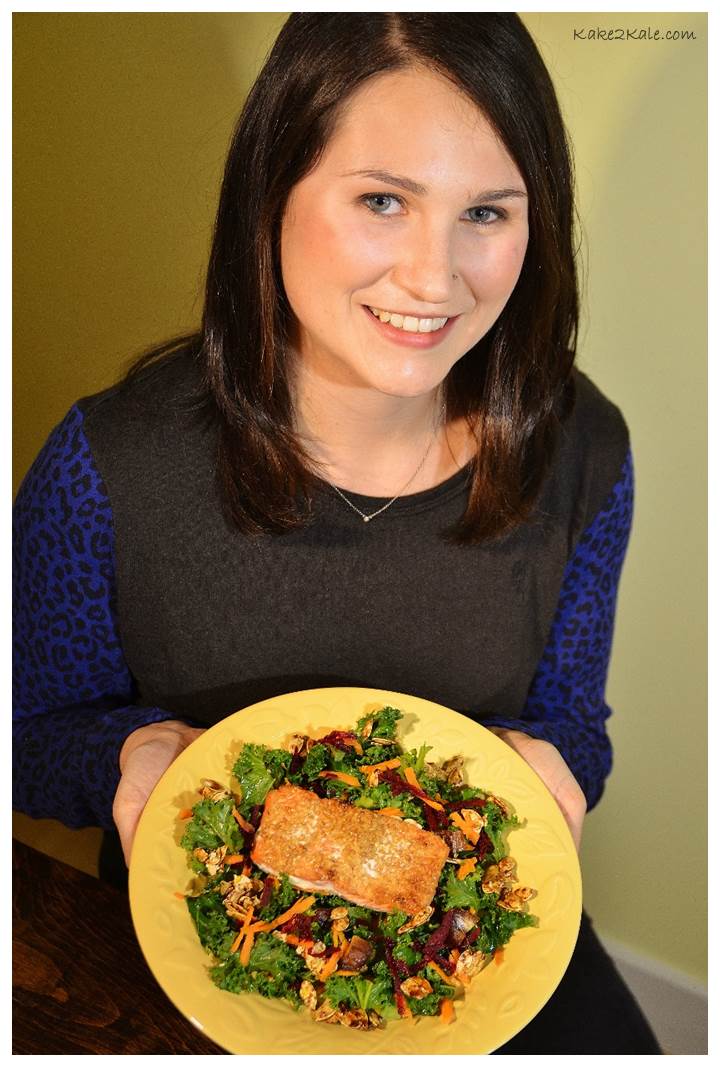
We asked Natalie to share a Paleo-superfood recipe.  Below is her Maple Smoked Sesame Crusted Salmon with Candied Pumpkin Seeds and Kale Slaw which serves 5-6 people.   It is superfood-friendly, scrumptious, and is definitely worth making!

Paleo Diet 2 kake2kale

Pumpkin-Spice Candied Pumpkin Seeds

Ingredients

  • 1 ½ – 2 Cups Pumpkin Seeds
  • ½ TSP each Cinnamon, Ginger, & Cayenne
  • ¼ TSP Nutmeg
  • 1/8 TSP Cloves & All Spice
  • 2 TBSP Maple Syrup or Honey
  • Salt & Pepper to taste

Directions

  •     Preheat oven to 350˚F. Line a baking sheet with parchment paper.
  •     Mix together Maple Syrup or Honey with the spices.
  •     Add in Pumpkin Seeds and stir until seeds are evenly coated.
  •     Spread Pumpkin Seeds in a single layer on the parchment paper.
  •     Place in oven and bake for 10 minutes.
  •     Remove from oven, stir, and let cool entirely.

Paleo Diet 3 kake2kale

Paleo Pumpkin-Spiced Kale-Slaw

Ingredients

  • 1 Bundle Green Kale
  • 2 Medium Beets, Peeled & Shredded
  • 2-3 Large Carrots, Peeled & Shredded
  • 1 – ½ C Medjool Dates
  • 1 batch Pumpkin-Spice Candied Pumpkin Seeds *see above*
  • 1 batch Sesame & Apple Cider Vinaigrette *see below*

Directions

  • Wash and dry Kale thoroughly.
  • Cut Kale across the leaf in ½ inch-thick strips. Stop when the base of the leaf meets the stalk and discard the remaining stalk or save it for soup broth.
  • Place in a bowl.
  • Peel and shred beets and carrots and add to the bowl of Kale. Toss until all ingredients are thoroughly coated with the Sesame & Apple Cider Vinaigrette (below) and allow to sit in the fridge for a minimum 1 hour or up to overnight. The acid from the Apple Cider Vinegar will break down the starches of the beets making them softer to bite into.
  • Cut the dates lengthwise and remove the pit. The date will fold open like a butterfly. Cut down the middle, so the date is split into two, lengthwise halves. Then cut these halves lengthwise once more. You will have four strips. Cut these strips horizontally so that each yields 3-4 pieces. Do this with all the dates. (Of course you can chop the dates however you want, this is just how I do them to yield the size shown in the photograph).
  • When ready to serve, add the dates and the Pumpkin-Spice Candied Pumpkin Seeds to the slaw, toss, and plate. I initially served this slaw as a side for wings at a movie night I hosted, and the next time, I paired it with my Maple-Smoked Sesame-Coated Salmon – Delicious!

Paleo Diet 1 kake2kale

Sesame & Apple Cider Vinaigrette

Ingredients

  • ½ C EVOO
  • ¼ C + 1 ½ TBSP Apple Cider Vinegar
  • 2 TBSP each Sesame Oil & Coconut Aminos
  • Salt to taste

Direction

  •  Mix together EVOO & Apple Cider Vinegar by pouring one into the other slowly and whisking continuously.
  •  Add in Sesame Oil, Coconut Aminos, and Salt to taste. Mix thoroughly.

The dressing is under-seasoned because the spices from the Pumpkin-Spice Candied Pumpkin Seeds will integrate throughout the dish, bringing lots of flavour.

Paleo Diet 4 kake2kale

Paleo Maple-Smoked Sesame-Coated Salmon

Ingredients

  • 5 – 4oz Salmon Fillets
  • ¼ C Apple Cider Vinegar
  • ¼ C + 2 TBSP Maple Syrup
  • Liquid Smoke
  • ½ C + 2 TBSP Water
  • 1 C toasted Sesame Seeds
  • Salt & Pepper to taste
  • Grapeseed Oil

Directions

  • For the marinade, mix together Apple Cider Vinegar, ¼ C Maple Syrup, ½ C Water & 3-4 splashes Liquid Smoke. Add Salt and Pepper to taste.
  •  Place Salmon Fillets skin-side down in a glass pyrex baking dish or equivalent large enough that they are not overlapping. Pour marinade over Salmon. Cover and place Salmon in the fridge, setting a timer for 30 minutes. Fish is very delicate and will begin to cook if marinated for more than 30 minutes. Additionally, this is as long as it takes for fish to absorb flavour, so any marinating in addition to this is unnecessary.
  • Preheat oven to 350˚F.
  • While Salmon is marinating, mix together 2 TBSP Maple Syrup, a few splashes of Liquid Smoke, and 2 TBSP water in a shallow plate.
  • Cover another place entirely with toasted sesame seeds. If you want to add additional Salt or Pepper, add it to the seeds.
  • Prepare 5 square sheets of aluminum foil by placing them shiny-side up, and putting a small dot of Grapeseed Oil in the centre of each one (~ 1 TBSP).
  • When the fish is done marinating, remove each piece one at a time from the liquid. Dip it flesh-side into the Maple Syrup mixture, and then into the sesame seeds, and lay it in the centre of the foil, skin-side down. Fold the foil to create a small house shape around the fish so that the foil is not touching the sesame seeds. Repeat for all fillets and place them on a baking sheet.
  • Place the baking sheet into the oven for 10 minutes. After 10 minutes, turn the oven to broil and open up the houses. Let the salmon cook an additional 2-5 minutes at this temperature or until the seeds are golden brown.
  • Remove from the oven and enjoy with a generous helping of Paleo Pumpkin-Spiced Kale Slaw.

Paleo Diet 6 kake2kale

Thank you Natalie for sharing your inspiring story, insights about the Paleo diet, and recipe with us!!  You can find her blog at www.ThePeacefulPaleo.com.

Eat healthy, live like you mean it! {Kake}

From the Culinary Trail – An Appetite for Argentina Part 4

Long live the Gaucho Way!

At the end of our lengthy road journey around the Andes (described in my parts 1 to 3 previous posts), our party of four wanted to unwind and try another quintessential experience in Argentina, that is – staying at a horse ranch and enjoy riding the gaucho way.  For me, it had to be a genuine guest ranch and we were thrilled with our stay at Estancia San Agustin, which is no ordinary B&B.  It is the old world kept real! Without a doubt, it was the ‘local’ highlight of our trip. It is worthy of a dedicated post.

With its white chapel, tiled verandas, thick adobe walls, and hand-hewn rafters, Estancia San Agustin still looks very much like the colonial estate it was in the 18th century.   The head of the household, Carlos, along with his wife La Negra, and their staff went above and beyond to make our stay amazing++! Their warm welcome and hospitality made us feel right at home.

San Augustin 3 Kake2kale

Beautifully situated in the countryside, about 25 kms south of Salta, the sprawling estate has been part of the family for centuries.  Carlos and La Negra’s children have been married onsite, as they did and their ancestors before them. Rich in history and character, San Agustin is very much their home and not purpose-built for tourist.  We were grateful that they opened and trusted their home to us and other international visitors.   Every massive room or space is graced with beautiful colonial decor – family heirlooms, art, tapestry and furnishings.

San Augustin 1 Kake2kale

The house alone would make this Estancia worth a visit; but, San Agustin is also a working ranch for Peruvian Paso horses.  These horses are a special breed known for their gentle, smooth-gaited ride.  They were first bred in the 17th century in Peru as a cross between the Jennet, Barb and Andalusian horses which were brought to South America by Spanish Conquistadors.  The Paso horse has an elegant prancing gait, allowing for a comfortable ride whether in a trot or gallop.

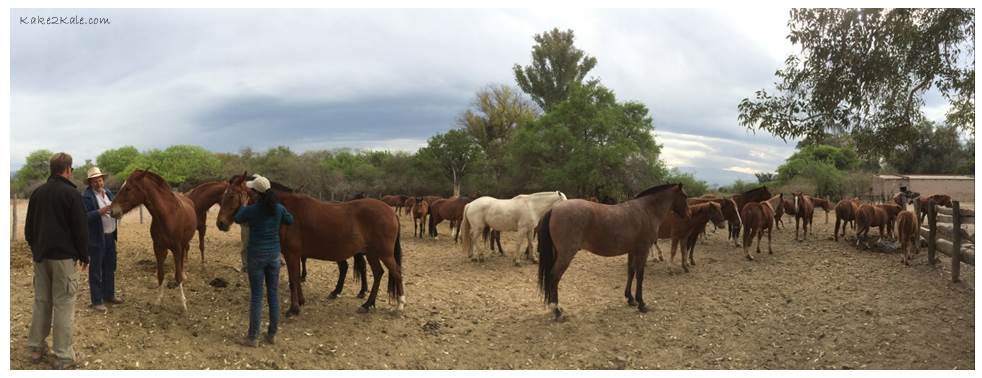
Carlos has been breeding Paso horses for 26 years.  He knows the name and personality of each of his many horses, and loves them like family.  Carlos told us that they are a very tame and elegant breed.  This we found to be true.  When we went into the corral, his beloved Paso horses sauntered over to meet us and many nuzzled us affectionately.

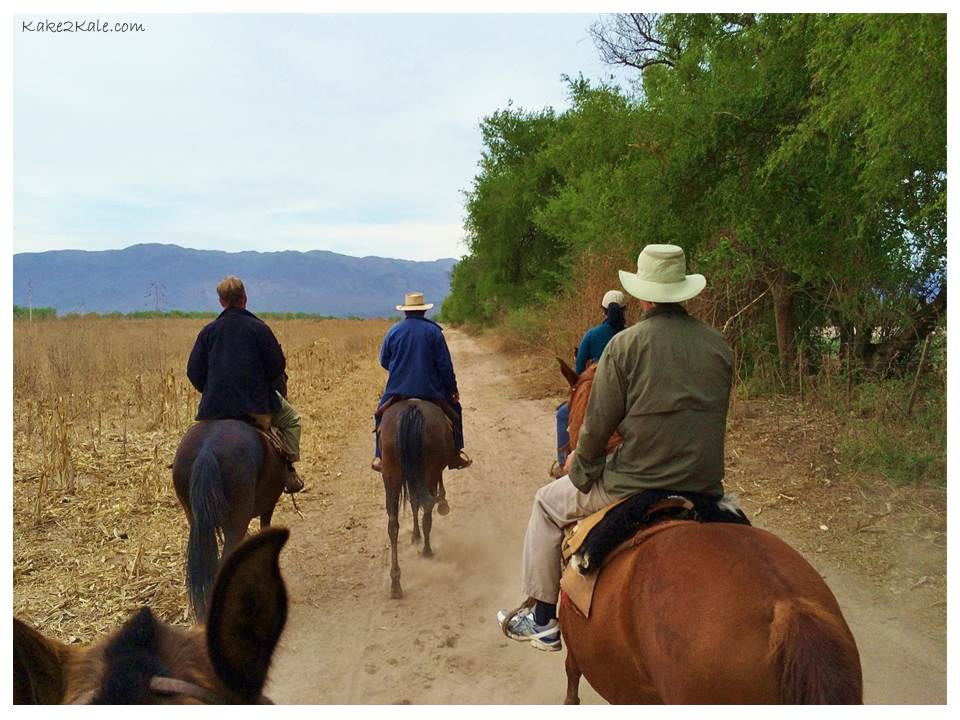
We were invited to ride with Carlos in the country-side and farm lands that he owned.  Indeed, the ride was incredibly smooth and comfortable.  Our horses were very responsive to our lead and I felt they enjoyed the ride as much as we did.  I now understand Carlos’ affection for his beautiful Paso horses. I share it too.

San Augustin 7 Kake2kale

San Augustin 4 Kake2kale

As we rode, Carlos told us about the gauchos and their long distance rides on Paso horses.  Gauchos are the Argentinian version of a North American cowboy.  They are excellent horsemen and worked at estancias to herd cattle.  Gauchos were a celebrated way of life in Argentina during the 18th to 19th centuries and are today an important part of the country’s folk history!  However, we got the impression that the gaucho culture is alive and well in these parts. But, whatever you do, don’t call them cowboys!

San Augustin 2 Kake2kale

During our stay, we were also treated to exquisite home-made meals.  The most memorable was the Asado which was personally prepared by Carlos.   No doubt, you’ve heard about Argentina’s cattle and tender beef.   For the gauchos living a nomadic life on the wild plains, grilling meat was their main way of cooking.  Today, an Asado is the name given to a style of grilling or BBQing and also refers to the social event where the BBQ is the focal point.

As explained by Carlos, the Asado is prepared several hours in advance when he slowly reduces a fire to hot coals.  The coals are placed under a grill in a rectangular shape to create a gentle but even heat.  On the side is a reserve of additional coals that can be added to keep the grill hot for an extended period.  Carlos continued to tell us it is important that meats are cooked slowly and at the right temperature. While he cooked, we sat around his grill socializing and watching the meat cook to perfection.  Although not superfood-related, it was wonderful to get the real Asado experience! That night, we feasted on scrumptious sausages, steak and tenderloin.

San Augustin 5 Kake2kale

For dessert, there were two distinctly memorable dishes that we enjoyed at the Estancia which we didn’t see elsewhere.  The first was a dish made with spaghetti squash and sweet syrup.  Spaghetti squash is a superfood and contains lots of nutrients – folic acid, potassium, vitamins A and C.  The other dessert was dulce vigilante, a plain cheese topped with candied fruit such as quince or prunes (pictured below, lower left).

On the topic of desserts, other notable sweets that we tried in Argentina (and not necessarily at the Estancia) include dulce de leche (sweet milk) products such as cookies or cakes (pictured below, upper right).  We also had churros (deep fried fritters) in plain or chocolate (pictured below, lower right).

Although coffee goes well with all these desserts, I preferred to have coca tea (pictured below, upper left).  It is a herbal tea made from leaves of the coca plant, native to South America.  In case you didn’t know, coca is used to make Coca-cola products.  But, you may be surprised to learn, as I was, that coca plants are used for making cocaine.  But, chewing or making tea from the plants’ leaves do not produce any cocaine-related stimulating effects.  Instead, coca is rich in nutrients and has potential health benefits. Its alkaloids help to reduce body fat.  Its inulin can boost energy.  Its high concentration of vitamins and antioxidants are beneficial for the immune system. Coca also  aids in oxygen absorption which helps ease indigestion and altitude sickness.  I consider coca a superfood!

San Augustin 6 Kake2kale

Staying at Estancia San Agustin was the perfect end to a wondrous and memorable trip in NW Argentina, where nature reigns and time stands still. We felt the pull of the open road and loved it. The art of being authentic is perfected in this part of the country.  However, it may not last.  Our visit coincided with the region’s largest travel trade show which attracted international tour operator buyers wanting to develop packaged tours.   The truth is, NW Argentina is an up-and-coming destination so my advice is to visit soon, before Ruta 40 gets paved and mass tourism hits.

Travel Far, Explore More! – {Kale}

From the Culinary Trail – An Appetite for Argentina Part 3

What does quinoa, salt and llamas have in common?

After Cachi, it was time to move off Ruta 40 and make our way further north in Argentina, towards the border of Chile and Bolivia .   The anticipation of a new destination was trumped by the joy of driving on paved roads.  Our car hummed along the highway towards Salta and we were finally moving faster than 40 km/hour. Woo hoo!  The scenery continued to impress us as we crossed the massive Los Cardones National Park (home of giant cacti) and peaked at the Piedra del Molino Pass (3347 m, pictured below), offering incredible views of the mountains, canyons and valleys below.  As we descended steeply into the Quebrada de Escoipe and Cuesta del Obispo, the lovely paved road turned to a narrow dusty track that clung to the cliff side.  In several spots, the road’s edge collapsed from erosion.  We descended 2200 m in a 2-hour white-knuckle kinda drive, but we managed to find comfort in the dramatic landscape and in knowing that we we left early to miss all the tour buses crawling up the same road.

Salta 2 kake2kale

Quinoa, the ‘mother grain’

Another staple ingredient in Argentinian cooking is quinoa.  It’s a grain-like seed that has its origins in the Andean regions between Chile, Bolivia, Ecuador, Peru and Argentina.   The Incas referred to it as the ‘mother grain’, while the Spanish named it Quinoa, derived from the Quechua word for kinwa.  It is a powerhouse superfood!  Incredibly nutritious, quinoa contains all 9 essential amino acids making it a complete protein, which is perfect for vegetarians. It is high in fiber (higher than most grains), antioxidants, and minerals, while being gluten free and low on the glycemic index. It also contains Kaempferol and Quercetin, which may have anti-inflammatory, anti-viral, anti-cancer and anti-depressant effects, according to various studies.

Quinoa bake kake2kale

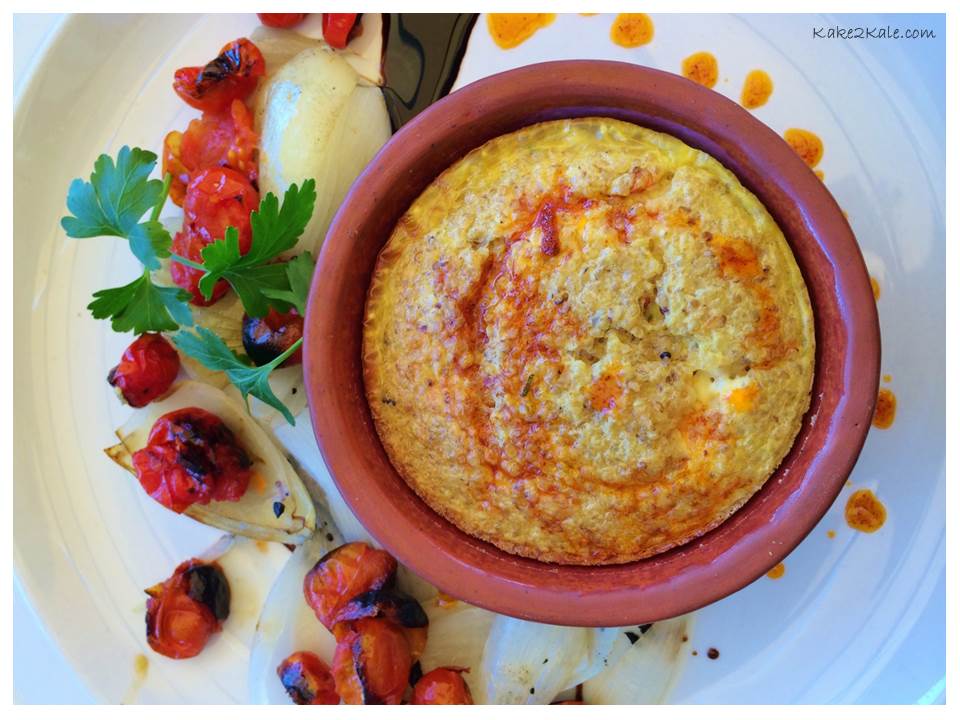
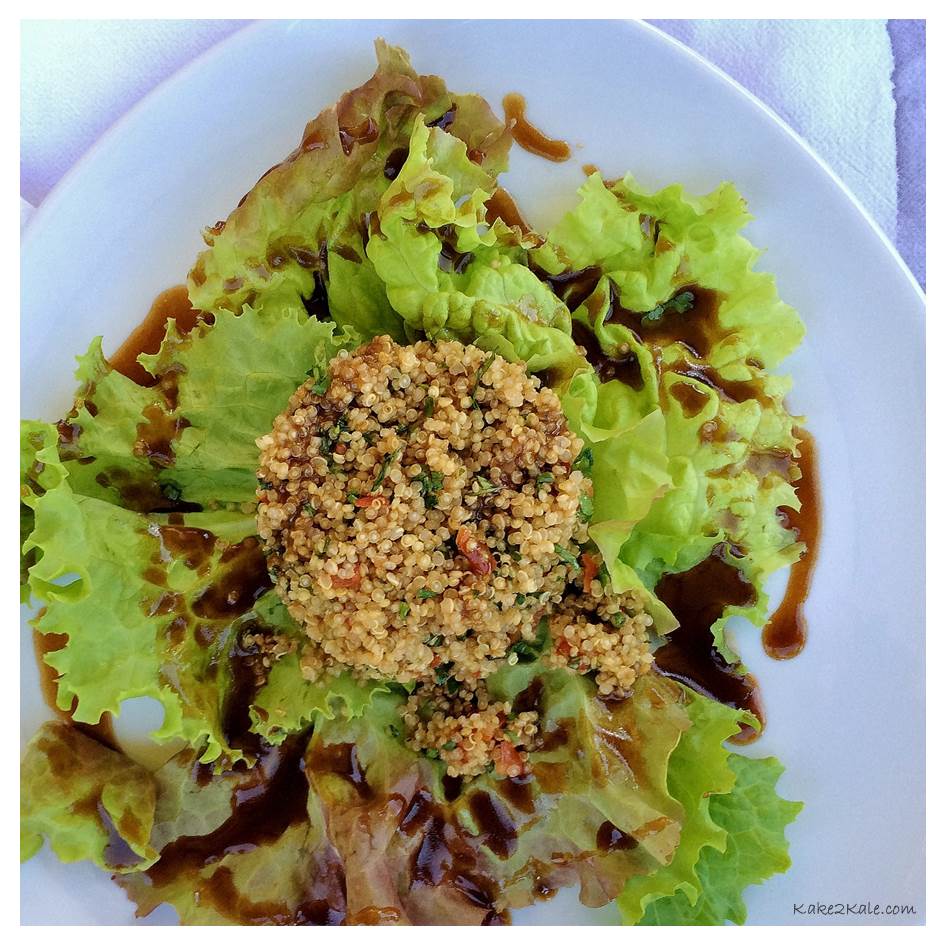
I started eating quinoa back in the early nineties, when it was lesser-known.  These days, quinoa is often in the spotlight.  In fact, the Food and Agriculture Organization of the United Nations declared 2013 as the ‘international year of quinoa’! At home, I mainly prepare quinoa as a salad with sauteed veggies; but on occasion, I have added it to make a flourless chocolate cake. While in northern Argentina, it was interesting to see how the locals prepared this superfood.   My two more memorable dishes was a baked quinoa pie (pictured above), and a quinoa tower salad (pictured below). Both delicious and appealing!

Quinoa salad kake2kale

Llamas and Salt

Our destination was Tilcara (2465m), a small village about 175 km north of Salta in the Jujuy province.  Located in the Quebrada de Humahuaca Gorge (Unesco World Heritage Site), Tilcara is quaint and rustic – perfect as a base for exploring yet another fascinating part of northwestern Argentina.

Tilcara 1 kake2kale

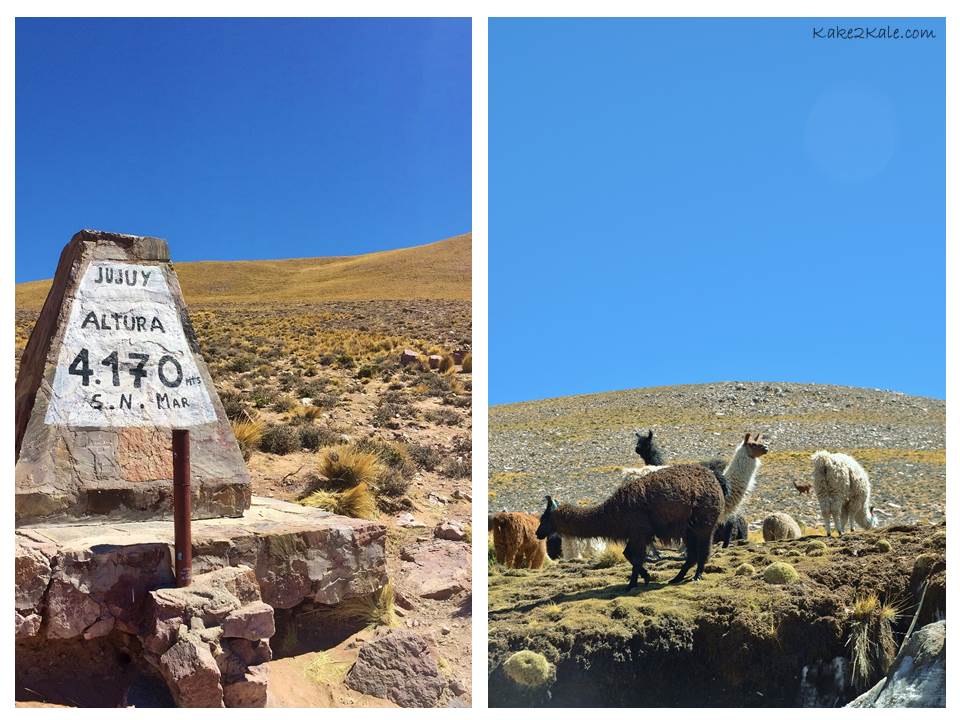
There are three must-do highlights in Tilcara! The first is La Garganta de Diablo (Devil’s Throat) hike which starts from the village. The 7 km trail takes hikers up along a striking red-rock gorge (pictured below), surrounded by panoramic views.  At the end, there is a steep trail down to the bottom, followed by a stroll along a river to view hidden waterfalls.  Then, the next top experience is the archaeological site of Purcara de Tilcara. Declared a National Monument,  it is a well preserved pre-Inca fortification located on a hillside overlooking the village.  After hiking around the Diablo and the ruins, we were famished.  This leads to the third highlight, which was dining at the El Neuvo Progresso restaurant. We felt it was the best choice in town and certainly had the best llama dishes.  Llamas (pictured below) are camel-like animals found in the Andes Mountains and used for their wool, meat, skin and transporting goods.  I seldom find llama meat at home, and while it’s not a superfood, I wanted to try it.  It was served to me in three styles – carpaccio, grilled and stewed, and all were really tasty.  The meat is fairly lean and the flavour is comparable to bison.

Tilcara 2 kake2kale

Salinas Grandes 2 kake2kale

Beyond Tilcara, we ventured higher into the Andes to seek out one of the largest salt desserts in South America – Salinas Grandes – covering about 8000 square kms and located at 3400 m above sea level.  To give you a comparison, this salt flat is about the same height as the Mount Etna volcano in Sicily and nearly as high as Mount Fuji in Japan.  The drive to and from the salt dessert was another big road adventure.  A short distance from Tilcara is the town of Parmamarca, which is famous for its ‘hill of seven colours’ and artisan market.  From this town, a paved road winds up the side of the valley in a ribbon of switchbacks to a mountain pass at 4170 m.  Beyond the pass is the Salinas Grandes.  All the while, we’re surrounded by huge stretches of wild and barren land.

Salinas Grandes was once a lake. Now dried up, the salt concentrations are being mined for its sodium, potassium, and lithium brime.  Nothing appeared to live or grow on the salt.   The sheer size and scale of the dessert is what makes it captivating.  The patterns and texture of the salt was interesting; but most of all, the brightness of the salt was dazzling.  One could easily kill many hours wandering around, enjoying a picnic, and taking goofy pictures…as we did.

Salinas Grandes kake2kale

Salinas Grandes 3 kake2kale

So, what does quinoa, salt and llamas have in common? They simply all co-exist in this wild Andes environment. When we set out to explore this corner of Argentina, we were hoping to find remote and unspoiled places with unique local flavours.  Well, we got what we wanted, and more!

Travel Far, Explore More! – {Kale}