The Ultimate Hot Chocolate

Is it too early to talk about chocolate?  Valentine’s Day is a month away, but oh what the heck.  Chocolate never goes out of style, is never passé, and no one will ever says “Chocolate is so yesterday!”

One year when the season of Lent was approaching, I was wondering what I would give up for 40 days.  Christians observe Lent by going through a season of self-denial to make room for the presence of God in our lives, and as a preparation for Easter.  One should give up something that will be missed, something that will hurt a little.  And so I gave up chocolate for 40 days because it had become something I had to have every day.  It did hurt, but it made me aware of how much I thought I needed it.  Was I on my way to becoming a chocolate addict?  This might be overstating it, but I want to live a life where I am free to choose.  And the act of giving up chocolate was a stark slap in the face, that is – I wasn’t free to choose chocolate as it had become something I had to have and not something I “get” to have.  Once Lent was over, that first bite of chocolate tasted divine!

My relationship with chocolate has since become more balanced, and I don’t have to have it everyday.  When I do have it, it should be really good.  So, as I  think about some food related highlights from 2014, I feel that visiting Chocolaterie de la Nouvelle France with {Kale} was one of them.  You can read about our visit here.  We had the drinking chocolate and I have been meaning to make a version that was a little less rich, but no less satisfying.  As a result, here is my ultimate hot chocolate!

Hot Chocolate 1 kake2kale

Continue reading

The Ginger Bomb

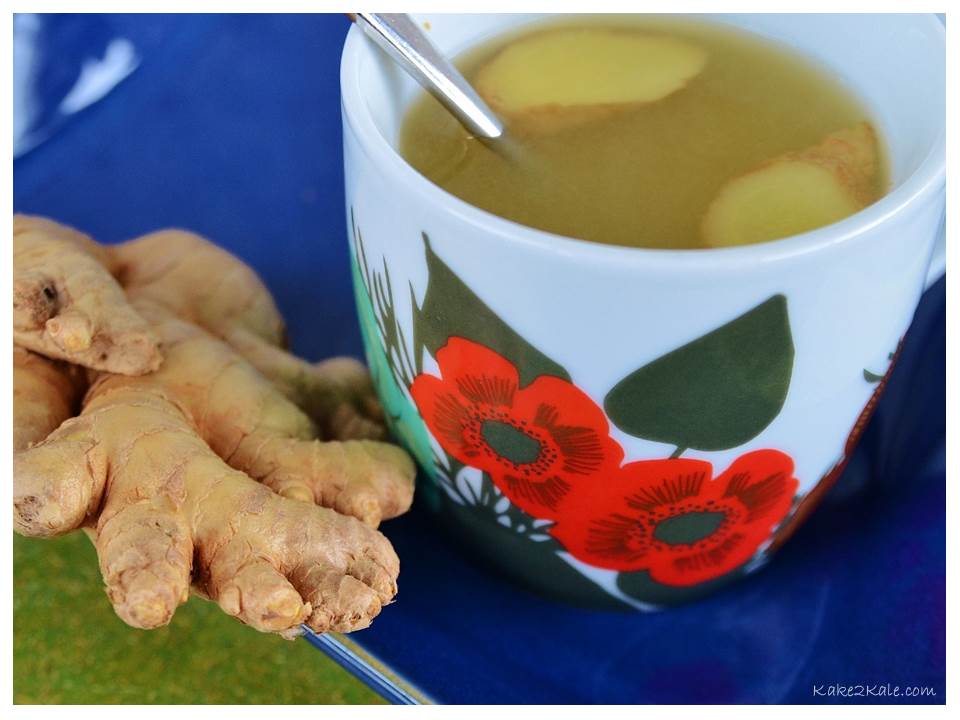
Who knew cola could be a medicinal drink? When I had the sniffles or a sore throat as a child, I was given a hot drink of cola, boiled with ginger and lemon.  And, by gosh, after drinking this delicious concoction I seemed to feel better.  Once in a while, I order this drink, which is still served at Hong Kong style cafes, and let it transport me back to my childhood.

Now, instead of hot cola, my husband and I make a hot drink with ginger when we feel under the weather.  “Shall I make you the concoction?” offered by my wonderful husband is music to my ears when my nose is runny and my chest is congested.  After a cup or two of this drink, the congestion loosens up and I am able to expel the, ahem..mucous.  Since this drink does such a good job of chasing away those nasty symptoms I am calling it the Ginger Bomb!

Ginger Drink 2 Kake2kale

Ginger is a rock star in the superfood realm, it might not look very pretty with its knobby physique, but it is packed with medicinal and therapeautic properties.  You may think of it as a root, but in fact is the subterranean stem of the plant, called a rhizome, from which roots and shoots extend from.  It has been used in China for thousands of years, and spread to many other cultures via the Silk Road.

It is full of antioxidants like zingerones and gingerols, as well as having antibacterial, antiviral, anti-parasitic, and antiseptic properties.  Ginger may also be just as effective as non-steroidal anti-inflammatory drugs in helping with pain relief.  Studies have found a significant decrease in pain from muscle soreness in women athletes, and a reduction in migraine headaches and even in menstrual cramps.  It is also well known to be effective in reducing nausea and upset stomachs.  It is also great for coughs because it helps drain the lungs of mucuous, which is why it is in our concoction!

Ginger is usually sold in pretty large chunks, so when I can’t use it up fast enough, I put it in the freezer, and just grate what I need.

Naturally, you can enjoy my Ginger Bomb concoction even if you don’t have a cold or the sniffles!  It’s a cozy and healthy drink anytime of year.

Other Superfoods in the recipe:
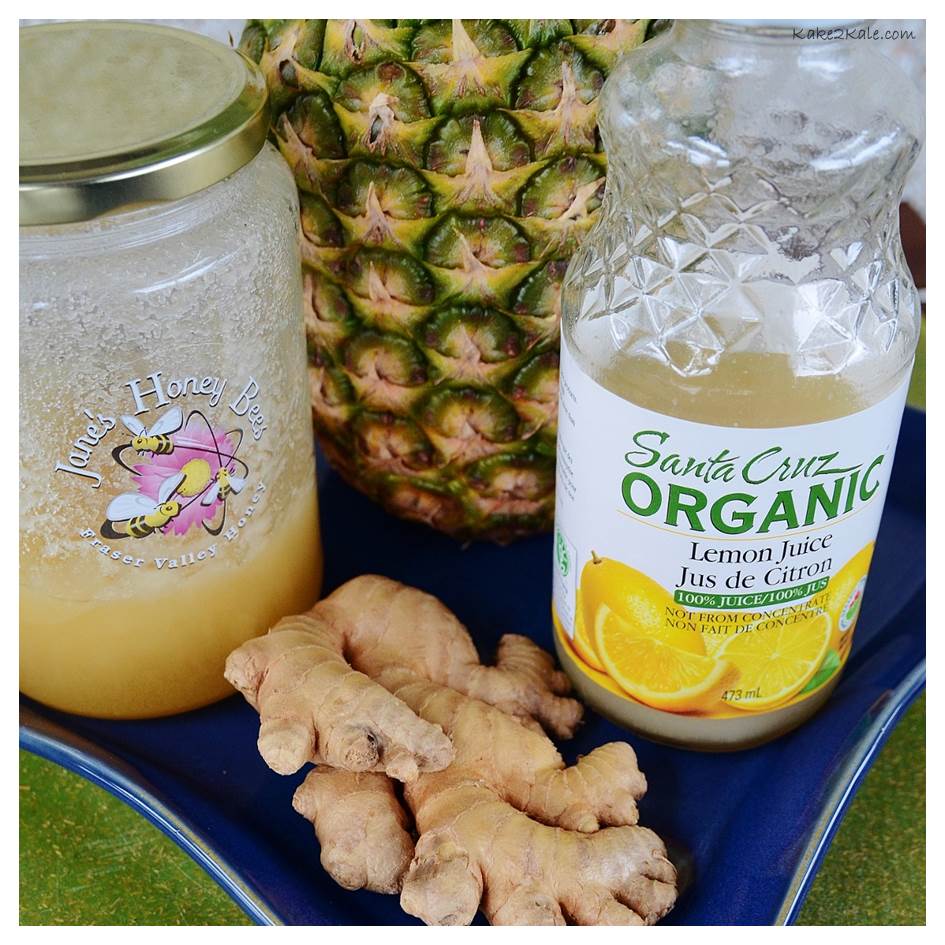
Pineapple – Contains Vitamin C, bromelain which is a digestive enzyme.
Lemon – Contains Vitamin C and lots of phytochemicals.
Honey – May help in treating seasonal allergies if you take a daily dose of honey made from your local area.  It fights infections, in particular manuka honey, which is made from the tea tree plant.

Ginger Drink Kake2kale

The Ginger Bomb serves 2

Ingredients:

  • 1 ½ cup water
  • 5 slices ginger*
  • 1 cup pineapple juice
  • 2 T. honey
  • 2 T. lemon juice

Directions:

  • Put ginger slices into a pot of water and bring to a boil for 10 minutes.
  • Add pineapple juice and heat through for about 2 minutes.
  • Then add honey and lemon juice. Serve immediately while hot.

*You may save the ginger slices to be used for another bomb.

Eat well and stay healthy!  {Kake}

From the Culinary Trail – An Appetite for Argentina Part 4

Long live the Gaucho Way!

At the end of our lengthy road journey around the Andes (described in my parts 1 to 3 previous posts), our party of four wanted to unwind and try another quintessential experience in Argentina, that is – staying at a horse ranch and enjoy riding the gaucho way.  For me, it had to be a genuine guest ranch and we were thrilled with our stay at Estancia San Agustin, which is no ordinary B&B.  It is the old world kept real! Without a doubt, it was the ‘local’ highlight of our trip. It is worthy of a dedicated post.

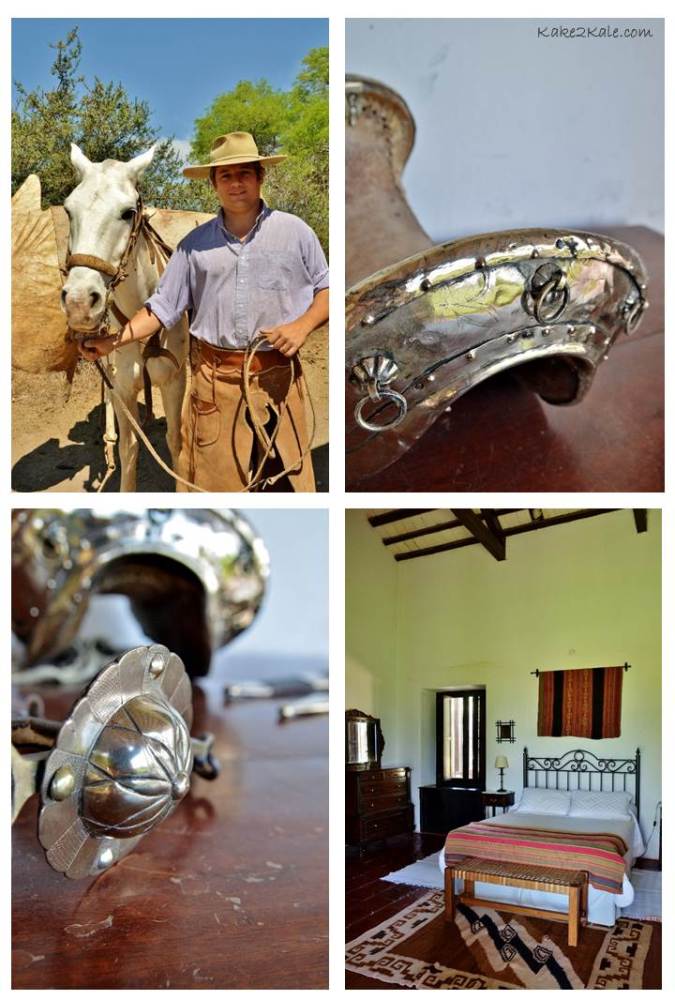
With its white chapel, tiled verandas, thick adobe walls, and hand-hewn rafters, Estancia San Agustin still looks very much like the colonial estate it was in the 18th century.   The head of the household, Carlos, along with his wife La Negra, and their staff went above and beyond to make our stay amazing++! Their warm welcome and hospitality made us feel right at home.

San Augustin 3 Kake2kale

Beautifully situated in the countryside, about 25 kms south of Salta, the sprawling estate has been part of the family for centuries.  Carlos and La Negra’s children have been married onsite, as they did and their ancestors before them. Rich in history and character, San Agustin is very much their home and not purpose-built for tourist.  We were grateful that they opened and trusted their home to us and other international visitors.   Every massive room or space is graced with beautiful colonial decor – family heirlooms, art, tapestry and furnishings.

San Augustin 1 Kake2kale

The house alone would make this Estancia worth a visit; but, San Agustin is also a working ranch for Peruvian Paso horses.  These horses are a special breed known for their gentle, smooth-gaited ride.  They were first bred in the 17th century in Peru as a cross between the Jennet, Barb and Andalusian horses which were brought to South America by Spanish Conquistadors.  The Paso horse has an elegant prancing gait, allowing for a comfortable ride whether in a trot or gallop.

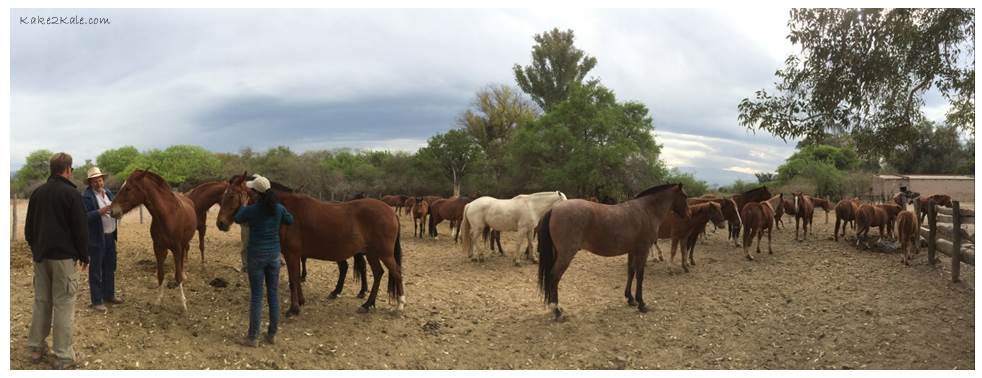
Carlos has been breeding Paso horses for 26 years.  He knows the name and personality of each of his many horses, and loves them like family.  Carlos told us that they are a very tame and elegant breed.  This we found to be true.  When we went into the corral, his beloved Paso horses sauntered over to meet us and many nuzzled us affectionately.

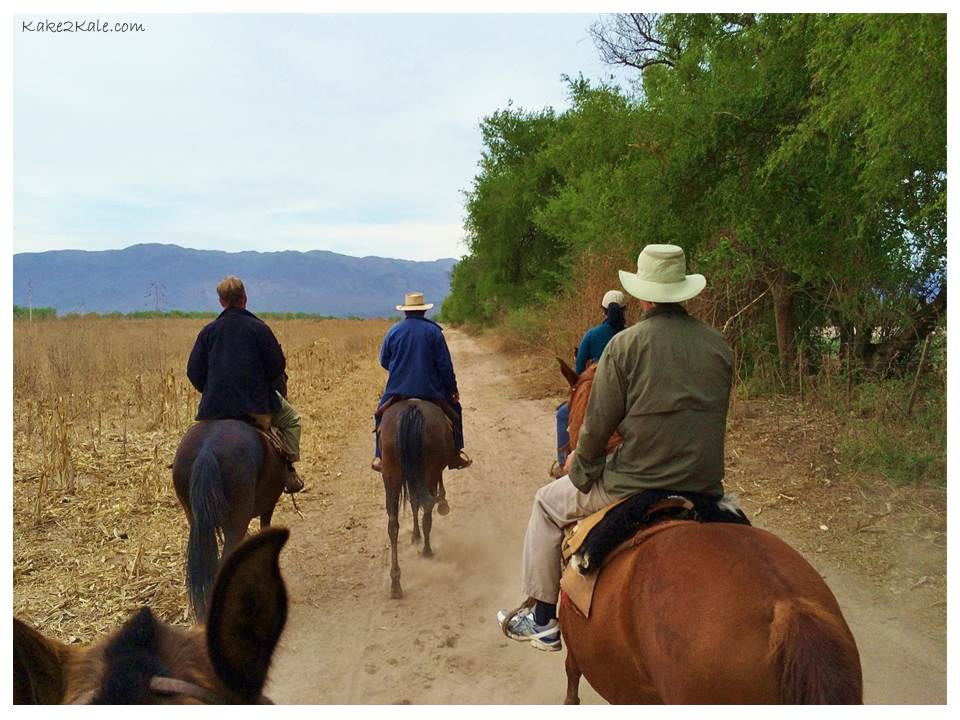
We were invited to ride with Carlos in the country-side and farm lands that he owned.  Indeed, the ride was incredibly smooth and comfortable.  Our horses were very responsive to our lead and I felt they enjoyed the ride as much as we did.  I now understand Carlos’ affection for his beautiful Paso horses. I share it too.

San Augustin 7 Kake2kale

San Augustin 4 Kake2kale

As we rode, Carlos told us about the gauchos and their long distance rides on Paso horses.  Gauchos are the Argentinian version of a North American cowboy.  They are excellent horsemen and worked at estancias to herd cattle.  Gauchos were a celebrated way of life in Argentina during the 18th to 19th centuries and are today an important part of the country’s folk history!  However, we got the impression that the gaucho culture is alive and well in these parts. But, whatever you do, don’t call them cowboys!
San Augustin 2 Kake2kale

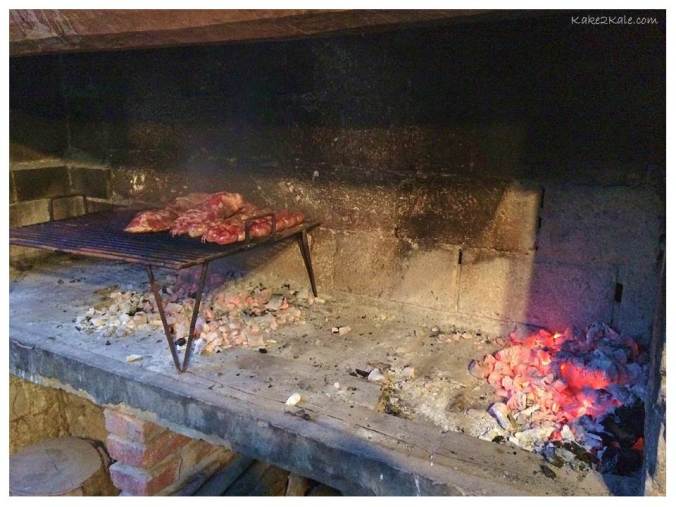
During our stay, we were also treated to exquisite home-made meals.  The most memorable was the Asado which was personally prepared by Carlos.   No doubt, you’ve heard about Argentina’s cattle and tender beef.   For the gauchos living a nomadic life on the wild plains, grilling meat was their main way of cooking.  Today, an Asado is the name given to a style of grilling or BBQing and also refers to the social event where the BBQ is the focal point.

As explained by Carlos, the Asado is prepared several hours in advance when he slowly reduces a fire to hot coals.  The coals are placed under a grill in a rectangular shape to create a gentle but even heat.  On the side is a reserve of additional coals that can be added to keep the grill hot for an extended period.  Carlos continued to tell us it is important that meats are cooked slowly and at the right temperature. While he cooked, we sat around his grill socializing and watching the meat cook to perfection.  Although not superfood-related, it was wonderful to get the real Asado experience! That night, we feasted on scrumptious sausages, steak and tenderloin.
San Augustin 5 Kake2kale

For dessert, there were two distinctly memorable dishes that we enjoyed at the Estancia which we didn’t see elsewhere.  The first was a dish made with spaghetti squash and sweet syrup.  Spaghetti squash is a superfood and contains lots of nutrients – folic acid, potassium, vitamins A and C.  The other dessert was dulce vigilante, a plain cheese topped with candied fruit such as quince or prunes (pictured below, lower left).

On the topic of desserts, other notable sweets that we tried in Argentina (and not necessarily at the Estancia) include dulce de leche (sweet milk) products such as cookies or cakes (pictured below, upper right).  We also had churros (deep fried fritters) in plain or chocolate (pictured below, lower right).

Although coffee goes well with all these desserts, I preferred to have coca tea (pictured below, upper left).  It is a herbal tea made from leaves of the coca plant, native to South America.  In case you didn’t know, coca is used to make Coca-cola products.  But, you may be surprised to learn, as I was, that coca plants are used for making cocaine.  But, chewing or making tea from the plants’ leaves do not produce any cocaine-related stimulating effects.  Instead, coca is rich in nutrients and has potential health benefits. Its alkaloids help to reduce body fat.  Its inulin can boost energy.  Its high concentration of vitamins and antioxidants are beneficial for the immune system. Coca also  aids in oxygen absorption which helps ease indigestion and altitude sickness.  I consider coca a superfood!

San Augustin 6 Kake2kale

Staying at Estancia San Agustin was the perfect end to a wondrous and memorable trip in NW Argentina, where nature reigns and time stands still. We felt the pull of the open road and loved it. The art of being authentic is perfected in this part of the country.  However, it may not last.  Our visit coincided with the region’s largest travel trade show which attracted international tour operator buyers wanting to develop packaged tours.   The truth is, NW Argentina is an up-and-coming destination so my advice is to visit soon, before Ruta 40 gets paved and mass tourism hits.

Travel Far, Explore More! – {Kale}

From the Culinary Trail – Sailing & Savouring the Gulf Islands Part 1

As a kid, my friends found it amusing that I wanted to sail yachts when we lived in a landlocked Canadian province.  I’m not sure how or when I got the sailing bug but I started with sailing lessons on Laser class sailboats at our small reservoir.   Back then, I must have been really brave or stupid because I also didn’t know how to swim.  I was terrified of going into the water and avoided the exercise of flipping the boat.   My fear of water is probably what drove me to like larger sailboats – to stay as high off the water as possible!  After years of travelling far for ocean sailing, I now live on the coast with easy access to cruising, and I am a better swimmer.

Gulf Islands
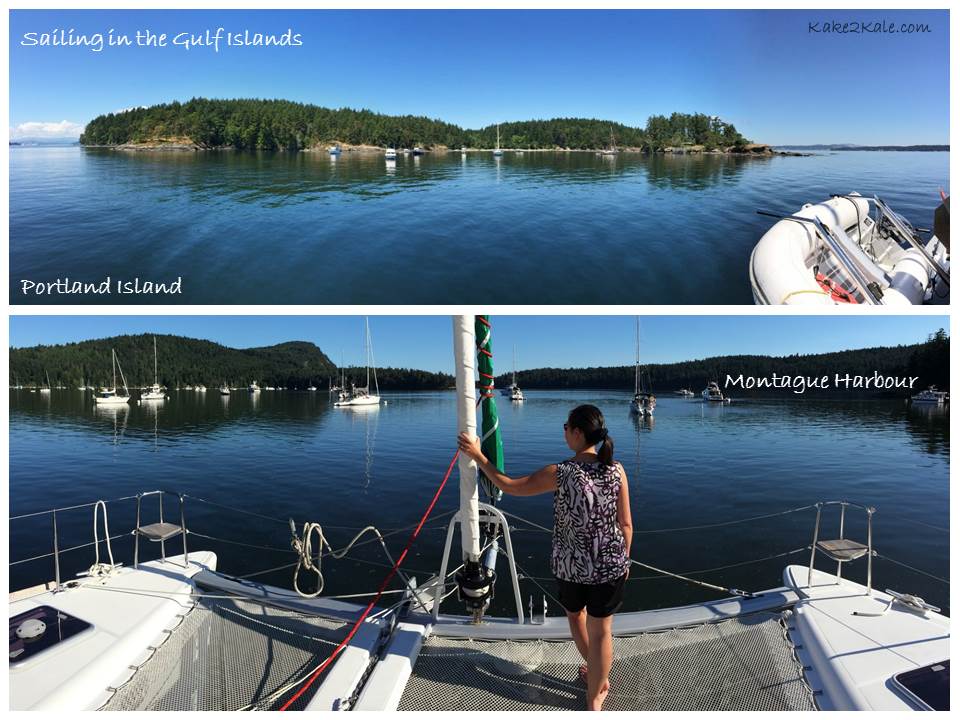
Gulf Islands Sailing kake2kaleSailing continues to be one of my favourite activities.  I feel lucky to live on one of the most spectacular coastlines in North America and one of the top cruising areas in the world.  There is an abundance of cruising destinations to enjoy and one of my top picks is the Gulf Islands in British Columbia, a beautiful archipelago located between Vancouver and Vancouver Island, comprising of 13 major and 450 smaller islands.  On a recent sailing trip through these islands, I took more time to explore the flourishing local food and wine scene, which I’m happy to share with you over two blog posts.  This is part 1 of 2 posts and captures our visit to the charming Saturna Island Winery.

Amritha Catamaran
Amritha kake2kale
Our group of six set sail in the Gulf Islands on a gorgeous Lagoon 400 catamaran named Amritha.  If you’re interested, she’s available for sailing charters – click here for more information about this catamaran, BC sailing and catamaran sailing.

Saturna Island Vineyards
Saturna Winery kake2kale
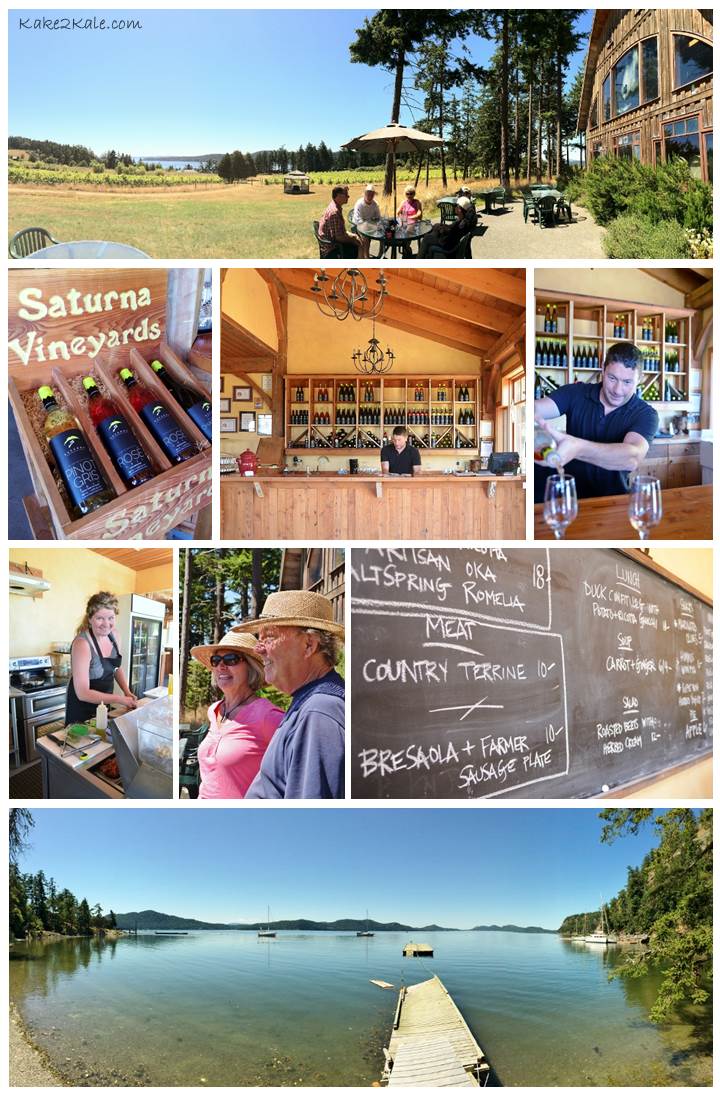
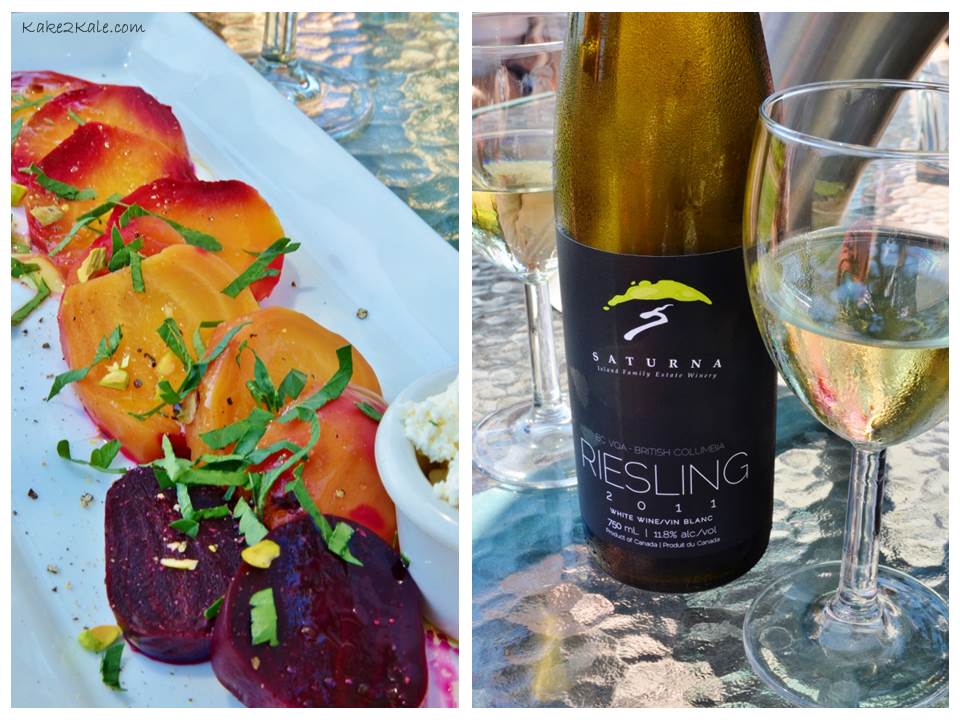
Each of the major islands has their own unique personality and special spots.  I’ve been to all of them, except Saturna Island.  The key attraction of this Island, and the main reason we wanted to go, is the Saturna Island Family Estate Winery which is one of ten wineries in the Gulf Islands and the largest with an annual production of 20,000 cases of wine.  If I’m not mistaken, it is the only island winery that has their own beach access, with an easy 15 minute walk to the vineyard.  We’ve tried several times to get there but one thing or another stopped us.  On the morning of our planned visit, there was an electrical issue on the boat and we almost didn’t make it.  I was beginning to think that the universe didn’t want us to go to Saturna Island!  Luckily, the problem got fixed. We sailed into and docked at Saturna Beach for a visit.   The uniquely hand-crafted barn (post and dowel frame with no steel nails) with their tasting room, wine shop and bistro is in a lovely spot, surrounded by vineyards and ocean views.   Forty acres of the property is planted with Chardonnay, Pinot Gris, Gewurztraminer, Pinot Noir, Pinot Meunier, and Merlot grapes. We sampled seven wines, all made on property from grapes grown on the island and from growers in the Okanagan.  The wines, which include a rose and port, are pleasant and good value compared to other BC wines.   The 2011 Riesling ($14.90) is fantastic and is my new favourite BC Riesling! We also sampled the food at the bistro.  The chef, Agi, is a locavore who strives to feature products grown or produced on the islands. I sampled her roasted beet salad, which was delicious.  Whether you’re sailing or visiting the Gulf Islands by ferry, I highly recommend a visit to this delightful and special island winery.  The owners, Larry and Robyn, and their team are amazing and look forward to welcoming all visitors.

Superfoods on this Visit
beets and wine kake2kale

Wine: Consumed in moderation, wine is considered one of the top 10 superfoods! Red wine contains resveratrol, an antioxidant that is thought to help fight cancer, prevent blood clots, lowers the risk of diabetes and hinders fat storage.  While white wine contains less resveratrols,  it has two antioxidants that are not found in red wine – tyrosol and hydroxytyrosol, which are in olive oil and considered good for the heart.

Beets:  Beets have a range of vitamins, antioxidants and minerals.  Beets are low in calories, zero cholesterol, known to lower blood pressure, and is packed with potassium, fiber, folate and vitamins A, B,C, B9. Red beets and Golden Beets have similar nutritional value but differ in pigment.  Red beets have betalains that help prevent cancer and degenerative diseases.  Golden beets, rich in b-xanthin, are thought to be good for the heart and helps cleanse the body. Best of all, golden beets do not stain your hands when you’re working with them!

Travel Far, Explore More! – {Kale}